
Bahlil Reveals Reasons for Mining Production Cuts in 2026 RKAB
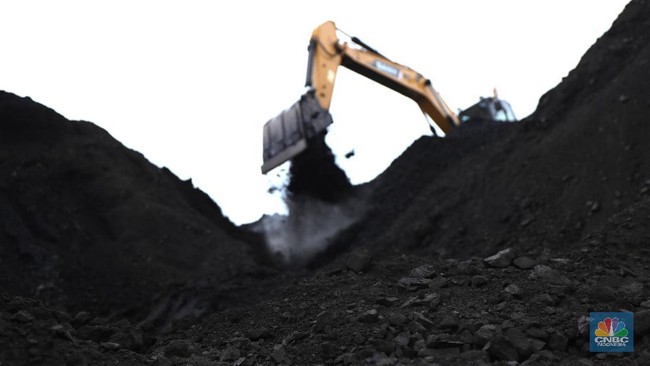
Jakarta, CNBC Indonesia - The Coordinating Minister for Downstreaming and Energy Transition, as well as the Minister of Energy and Mineral Resources (ESDM), Bahlability Lahadalia, has disclosed the reasons behind the government’s decision to cut mining production quotas in the 2026 Work Plan and Budget (RKAB).
This production restriction is being implemented to maintain the balance of supply and demand, recover global commodity prices, and ensure fairness for small-scale entrepreneurs in the regions. Bahlil considers the RKAB restriction policy to be the state’s only instrument to prevent foreign parties from manipulating mining commodity prices. According to his records, before production quotas were controlled, Indonesian coal prices had declined for two consecutive years.
“What is the only instrument the state can use? The RKAB. I am managing supply and demand. So, if the demand is, let’s say, 300, then we only provide 300; why provide 400? They will manipulate the price,” he stated during the Investor Daily Summit 2026 in Jakarta on Wednesday (7/10/2026).
He noted that out of the total 1.3 billion tonnes of coal traded in the international market, Indonesia supplies a significant portion of 540 million tonnes. According to Bahlil, with such a dominant supply share, Indonesia should be the price setter in the global market.
This strategy of tightening quotas through the RKAB has proven effective in recovering market prices. Currently, high-calorific reference coal prices have managed to climb, surpassing the US$ 140 per metric tonne mark.
“And what happened? Once I manage it in this way, the price of 633-calorific coal has now breached 140 dollars per metric tonne,” said Boded.
In addition to controlling global prices, Bahlil is cutting the quotas of giant mining companies to reallocate them to Micro, Small, and Medium Enterprises (MSMEs) and new Mining Business Licence (IUP) holders in the regions. He emphasised that the state must not only side with large players.
“It is unfair if someone holds an IUP and then a new applicant requests 300,000, 200,000, or 100,000 tonnes but we cannot grant it because the quota is exhausted. We can ensure the wealthy get wealthier, but we must not kill others who want to develop,” he explained.
The government has also issued regulations mandating the involvement of local contractors within mining areas. This policy aims to halt the monopoly practices of IUP holders who often control the entire mining industry supply chain.
“An IUP holder should not also be the contractor, the food supplier, and the fuel supplier. This is what we call ‘abuleke’ theory. Do not let local people be mere spectators; make them masters in their own land,” he asserted.
Bahlil emphasised that all national mining governance is based on the mandate of Article 33 of the 1945 Constitution, ensuring that natural resources are controlled by the state for the prosperity of all people. He added that RKAB restrictions are also vital considering that mineral and coal commodities are non-renewable.
“If it is nickel or coal, once taken, it cannot regrow. Therefore, please help us ensure this is sustainable for the future of the nation,” he concluded.
Regarding the 2026 Coal RKAB, the government has repeatedly stated that coal production in the 2026 RKAB will be cut to prevent global coal prices from continuing to decline.
Initially, the coal production target for 2026 was set at around 600 million tonnes, which is lower than the 2025 production realisation of 817.48 million tonnes. However, the government has since revised the RKAB and opened up for increased production targets this year, following the growing coal needs for PT PLN (Persero) power plants.
The Director General of Minerals and Coal at the Ministry of ESDM, Tri Winarno, estimated that coal production through the 2026 RKAB revision could reach approximately 720 million tonnes.
“95% of the RKAB has been issued,” Tri stated when met at the Kalibata Heroes Cemetery in Jakarta on Tuesday (29/9/2026).
The government ensures that the coal supply allocation remains secure to meet both domestic industrial needs and exports.
Source: jawawa.id (https://jawawa.id/newsitem/bahlil-reveals-reasons-for-mining-production-cuts-in-2026-rkab-1791384728)
Originally published by CNBC Indonesia (https://www.cnbcindonesia.com/news/20261007192417-4-774228/bahlil-blak-blakan-alasan-pemangkasan-produksi-tambang-di-rkab-2026), translated from Indonesian