
Bahlil Reveals Golkar's Proposal Regarding Parliamentary Threshold
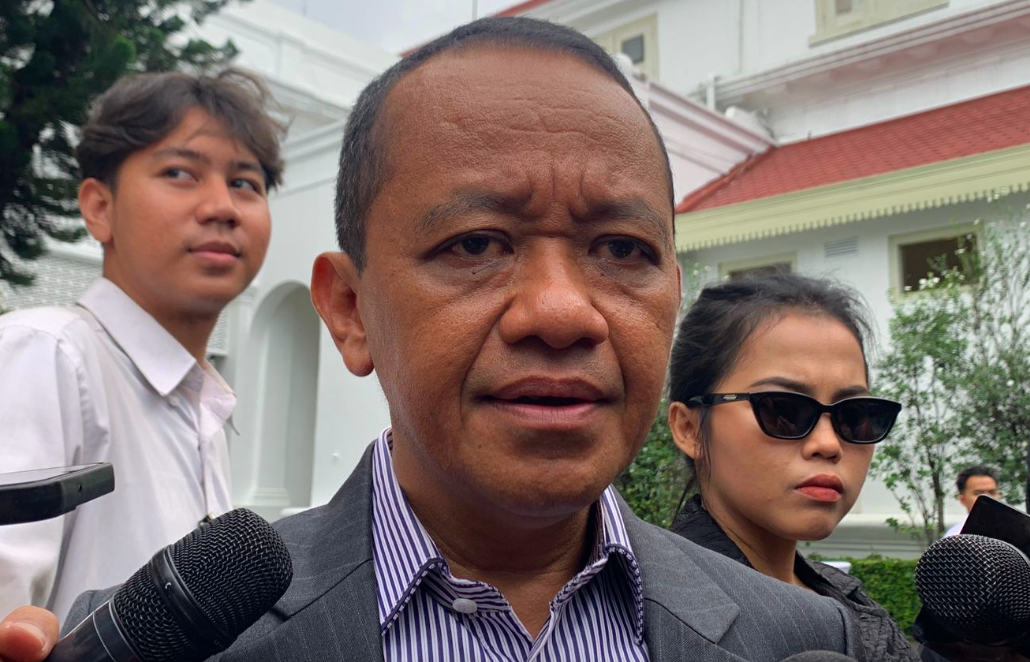
The General Chairman of the Golkar Party, Bahlil Lahadalia, believes that an ideal parliamentary threshold for parties to enter parliament is 5%. In recent days, discussions regarding the Election Bill (RUU Pemilu) have been underway in the House of Representatives (DPR), although the Deputy Speaker of the House, Sufmi Dasco Ahmad, noted that the discussions are still in the early stages.
“Regarding the parliamentary threshold, in our communications with various parties, some desire 6%, some 7%, some 5%, and some even lower. However, the ideal figure is likely 5%,” said Golkar Chairman Bahlil Lahadalia, responding to journalists during his activities at the Presidential Palace in Jakarta on Thursday.
Nevertheless, Bahlil did not further explain his party’s stance regarding the specific choice of a 5% threshold, nor did he answer questions regarding meetings between the chairmen of political parties in the government coalition concerning the parliamentary threshold discussion.
So far, Golkar is not the only party suggesting 5% is ideal; several political parties currently holding seats in the House have also proposed a 5% figure for inclusion in the Election Bill. Parties that have openly stated a 5% preference include Gerindra, PDI Perjuangan, PKS, and Golkar.
Gerindra Party General Secretary Sugiono, when questioned by journalists at the MPR/DPR/DPD Complex in Jakarta on Wednesday, stated that his party agrees with a 5% parliamentary threshold in the discussions for the new Election Bill. Sugiono also mentioned that the 5% figure was discussed during a meeting of chairmen of political parties in the government coalition, which took place while he was accompanying President Prabowo Subianto on his visit to New Delhi, India, last week.
Similarly, PDI Perjuangan, as stated by the Head of the Honourary Board of the PDI Perjuangan, Komarudin Watubuna, considers the 5% threshold proposal to be ideal. “The 5% figure is ideal. There will certainly be considerations regarding the efficiency and effectiveness of governance. Therefore, the more political parties are simplified, the easier it will be for power consolidation,” Komarudin told journalists in Jakarta on Wednesday.
Meanwhile, PAN has stated that its party objects if the parliamentary threshold is set above 4%. PAN Deputy Chairman Viva Yoga Mauladi explained that a threshold set above 4% has the potential to contradict the Constitutional Court (MK) ruling. The Constitutional Court Decision Number 116/PUU-XXI/2023 mandates that the parliamentary threshold must consider political representation and prevent a large number of valid votes from being wasted. Viva Yoga believes that a higher threshold leads to a tendency for valid votes to be unable to be converted into seats.
“PAN’s stance is not because we fear failing to secure seats in the DPR; PAN has proven to consistently pass into the House from the 1999 to 2024 elections,” said Viva Yoga.
Dasco stated that the discourse regarding a 5% parliamentary threshold is one of the views developing within the discussions.
NasDem Party General Secretary Hermawi Taslim emphasised that his party remains consistent in pushing for a parliamentary threshold of 7%. He stated that the threshold must accommodate the voices of all citizens, responding to the statement by Gerindra Secretary General Sugiono regarding the agreement of the coalition parties supporting President Prabowo Subianto on the 5% figure.