
Bahlil Reveals Global Inconsistency in Energy Transition
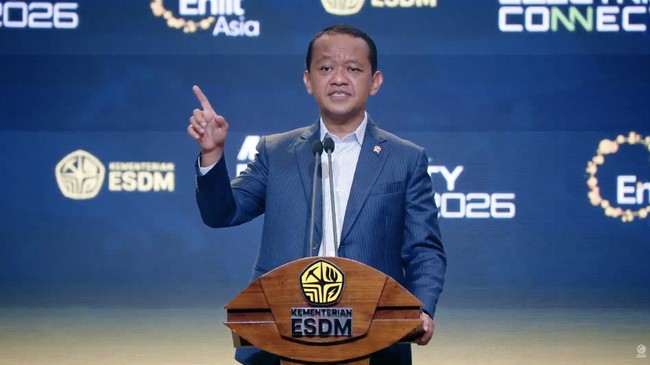
Jakarta, CNBC Indonesia - The Minister of Energy and Mineral Resources (ESDM), Bahlil Lahadalia, has revealed that several countries worldwide are not yet consistent in their energy transition towards Net Zero Emission (NZE), despite having agreed to the Paris Agreement.
Initially, Bahlil noted that many nations have reached a consensus through the Paris Agreement to achieve NZE by 206/2060, or sooner if possible. Consequently, during 2022-2023, much of the global discourse focused on transitioning from fossil fuels to renewable energy (EBT).
“But I must be honest in saying that the world is also not yet fully consistent with the decisions of the Paris Agreement consensus. In fact, some countries that initiated the Paris Agreement to move towards net zero emissions have withdrawn,” Bahlil explained on Wednesday (22/09/2026).
“And some of these are developed nations. We know that conducting an energy transition using renewable energy requires significant costs; the expenses are quite substantial,” Bahlil added.
As for Indonesia’s position, Bahlil emphasised that the nation remains committed to reaching NZE by 2060 or earlier. An example of this commitment is the Electricity Supply Business Plan (RUPTL) for 2025-2034, which incorporates 70% of electricity from renewable energy, amounting to 69.5 Gigawatts.
“I believe this forum is very important to convey this. Even if other nations withdraw from the Paris Agreement regarding net zero emissions by replacing their fossil fuels with renewable energy, President Prabowo has instructed us that even if those great nations exit, Indonesia will remain consistent in meeting our net zero emission targets between 2050 and 2060,” Bahlil stated.