
Bahlil Prepares Phased Ethanol Mandate, E20 Targeted for 2028
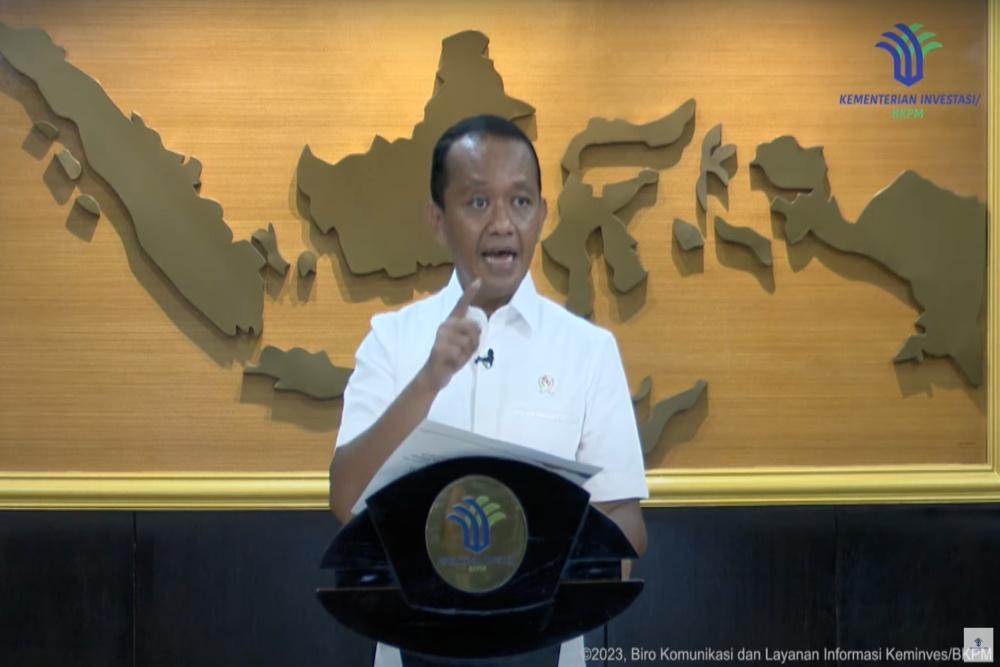
Bisnis.com, JAKARTA — Minister of Energy and Mineral Resources (ESDM) Bahlil Lahadalia has revealed that the government is preparing the phased implementation of a mandatory ethanol blend in petrol. The programme will begin with E10 before rising to E20, which is targeted to take effect between 2028 and 2029.
Bahlil made the remarks after attending a Plenary Cabinet Session and a meeting with President Prabowo Subianto at the State Palace in Jakarta on Monday (20/7/2026).
Bahlil said the ethanol mandate policy was also discussed during the meeting with the President. According to him, studies on the programme have been under way since 2025 and are now nearly complete.
“During the meeting with the President earlier, the proposal for the mandatory ethanol policy has indeed been worked on since 2025, and our study is nearly finished,” Bahlil said.
He explained that the government is currently planning the application of a 20 per cent ethanol blend (E20) in petrol within the 2028 to 2029 timeframe.
“E20 is in the planning that we will set later, up to 2028-2029,” he said.
According to Bahlil, the ethanol mandate aims to reduce Indonesia’s dependence on fuel imports, particularly petrol.
“Because once we make ethanol mandatory, we can achieve efficiency or savings in petrol fuel imports,” he said.
However, the government does not want the policy to instead increase dependence on imported ethanol. For that reason, the government is first building domestic industrial capacity.
“But we don’t want to implement E20 only to import the ethanol. So for now we are preparing the industry first,” Bahlil said.
He said the main raw materials for the ethanol industry will come from domestic agricultural commodities such as cassava, sugarcane, maize and several other crops.
“Where is the industry? Its feedstock is cassava, sugarcane, then maize and several other commodities. Over the next one to two years we will carry out preparations, and after that we will go fully mandatory with E20,” he said.
When asked whether the E20 implementation target could begin in 2027, Bahlil said the government would seek to accelerate the rollout if all preparations were sufficient.
“The sooner the better,” he said.
Regarding the readiness of sugarcane supply as one of the main ethanol feedstocks, Bahlil said the government is preparing the development of sugarcane plantations integrated with downstream industries.
He cited Brazil’s industrial model, which can switch production between sugar and ethanol according to market price movements.
“In Brazil, everything is mechanised and they can run their industry on two models. When ethanol prices rise, they switch to ethanol. But when sugar prices rise, they switch to sugar. So we will adopt these two models,” he said.
According to Bahlil, the government is currently finalising plans to develop the industry together with a number of companies.
When asked whether the government would implement E20 directly, Bahlil confirmed that implementation would be carried out in stages.
“In stages. We will probably start in stages with E10 first,” Bahlil concluded.