
Bahlil Prepares New Formula for Subsidised Fuel Users
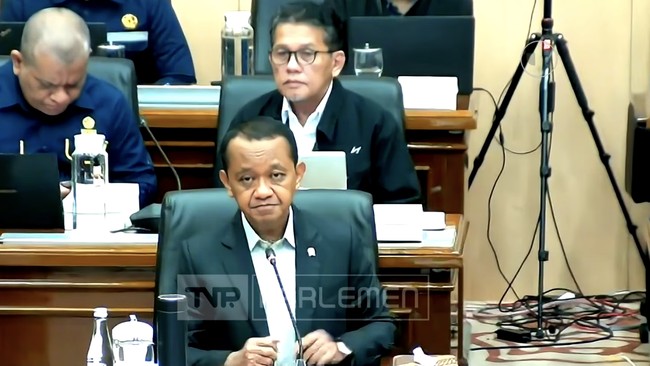
The Minister of Energy and Mineral Resources (ESDM), Bahlil Lahadalia, has revealed that the government is currently formulating new regulations regarding the criteria for users of subsidised fuel (BBM).
Bahlil stated that this effort is part of the government’s initiative to prevent a phenomenon where the public shifts consumption from non-subsidised fuel to subsidised fuel, particularly among affluent citizens. “Indeed, we are currently formulating the regulations,” he explained when met at the DPR RI Building, Jakarta, on Wednesday (16/09/202ള്).
In addition to formulating regulatory rules, Bahlil urged affluent groups driving high-end vehicles to act wisely and refrain from using subsidised fuel facilities. He emphasised that the subsidy quota is specifically allocated for underprivileged groups who are truly entitled to it.
“Therefore, on various occasions, I have encouraged my brothers and sisters who are capable, who drive nice cars, to please not use subsidised fuel, because that fuel is for our brothers and sisters who are entitled to receive it,” said Bahlil.
This shift in public consumption has been one of the triggers for long queues of vehicles at petrol stations (SPBU), as recently experienced in the South Sulawesi region.
“What happened in South Sulawesi recently was indeed long queues due to many factors. One of them is that there are parties—media friends already have the data—queuing at petrol pumps for… well, there are other intentions, so to speak. And there is plenty of evidence,” he added.
Nevertheless, Bahlil emphasised that the national fuel stock reserves remain in a safe position, ranging between 18 to 20 days.
“Our national fuel stock reserves are within the national minimum limit, 18 to 20 days,” he concluded.
Pertalite Consumption Surges
Previously, the Downstream Oil and Gas Regulatory Agency (BPH Migas) recorded a surge in the consumption of the subsidised fuel type, Pertalite, particularly when non-subsidised fuel prices, specifically Pertamax, increased.
The Head of BPH Migas, Wahyudi Anas, revealed that the movement in consumption patterns shows a change in public behaviour following the price movements of non-subsidised fuel.
“This graph shows the movement of fuel prices, particularly RON 90, which is Pertalite; its consumption has risen significantly following the price increase of non-subsidised fuel, both Pertamax and Pertamax Turbo,” explained Wahyudi during a meeting with Commission XII of the DPR RI on Wednesday (26/08/2026).
According to him, when non-subsidised fuel prices rise, the price disparity with Pertalite widens. This condition causes some members of the public to shift consumption from non-subsidised fuel to subsidised fuel.
“The factor causing the increase is, first and foremost, the widening price disparity,” he said.
Conversely, if the price of Pertamax decreases, Pertalite consumption is also observed to decrease. This was evident in August 2026. When the price of Pertamax dropped on 1 August 2026, Pertalite consumption throughout August also decreased on average compared to July 2026.
However, he continued, even though the price of Pertamax has now decreased, the price disparity with subsidised fuel remains quite high, resulting in Pertalite consumption remaining somewhat high compared to the normal daily average before the Pertamax price increase in June 2026.
“Although at the end of August, prices for the Pertamax category, such as Pertamax and Pertamina Dex, including the Dex series, experienced a decrease, the price disparity is still quite wide and high, and many people are shifting their usage to subsidised fuel and state compensation,” he said.
Based on his presentation, the average daily consumption of Pertalite reached 82,760 kilolitres (kl) in June 2026. This figure surged by 6,965 kl or 9.19% compared to the normal daily average of 75,795 kl before the Pertamax price increase on 10 June 2026.
Then, in July 2026, the average daily consumption of Pertalite rose again to 85,589 kl. This figure jumped by 9,794 kl or 12.92% compared to the normal daily average of 75,795 kl.
In August 2026, the average daily consumption of Pertalite decreased slightly to 84,368 kl compared to July 2026. This figure showed a decrease in line with the drop in Pertamax prices on 1 August 2026.
However, the figure remained up by 8,573 kl or 11.31% compared to the normal daily average of Pertalite before the Pertamax price increase on 10 June 2026.
“Meanwhile, for the period from August to the present, it has decreased slightly because the price (of Pertamax) also corrected from Rp 16,250 (per litre) to Rp 15,950, resulting in a decrease in its consumption as well,” he said.