
Bahlil: Philippines' Electricity Transmission to Join Trans Borneo Network
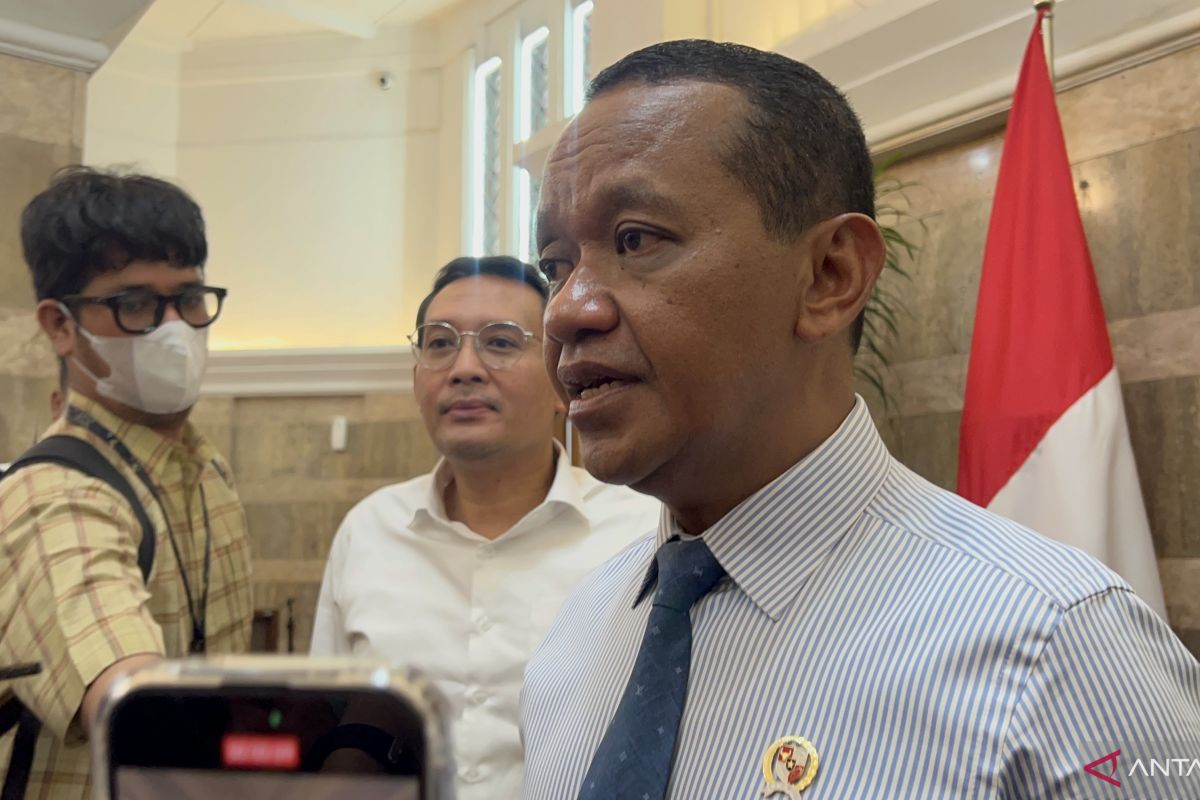
Jakarta (ANTARA) - Minister of Energy and Mineral Resources (ESDM) Bahlil Lahadalia stated that the Philippines’ electricity transmission will join the Trans Borneo Power Grid network to enable more efficient energy distribution in the Southeast Asian region.
“Now we have built the network between Malaysia and Indonesia. Soon, the Philippines will join,” Bahlil said when met at the Ministry of ESDM office in Jakarta on Monday.
He explained that Indonesia has already established a network with Malaysia. In the cooperation between Indonesia and Malaysia, he said Indonesia imports electricity from Malaysia’s hydroelectric power plants (PLTA) for Kalimantan.
According to him, such cooperation is beneficial as it is mutually advantageous, especially in providing equitable, reliable, and affordable electricity access to the most remote areas.
“That’s good. The price is reasonable,” he said.
Beyond the Trans Borneo Power Grid electricity transmission network development plan, Bahlil revealed Singapore’s plan to purchase clean electricity from Indonesia.
According to Bahlil, if Singapore wants to import electricity from Indonesia, the price must also be reasonable and fair for Indonesia.
“For Singapore, we will also export, but the price must be reasonable. As long as we haven’t discussed win-win, I think it’s important to conduct a more in-depth study,” he said.
President Prabowo Subianto invited ASEAN countries to accelerate the creation of an energy network, given that energy resilience is a major urgent challenge to be addressed together due to global pressures and geopolitical instability in the Middle East.
The Head of State stated that the Brunei Darussalam-Indonesia-Malaysia-Philippines East ASEAN Growth Area (BIMP-EAGA) has great potential in developing new renewable energy, ranging from hydropower, solar power, wind power, to fertile land that has not yet been optimally utilised.
Regarding this, the President raised the readiness of member countries to utilise that potential to meet regional needs while supporting ASEAN’s energy transition.
“The question is whether we are ready to act based on that potential. Not only to meet our subregional needs, but also to contribute to ASEAN’s energy transition,” Prabowo said.
Furthermore, he encouraged concrete steps to accelerate clean energy development in the region, such as hydropower development in Borneo, expansion of solar energy projects in Palawan, and utilisation of wind energy in coastal areas.
On that occasion, President Prabowo also outlined several steps that Indonesia is currently taking to accelerate solar energy development.
“Full speed ahead, 100 GW of solar power, invite our friends, enhance our energy infrastructure, we have the potential,” said the President.