
Bahlil Outlines Four Policies in Support of Small Businesses
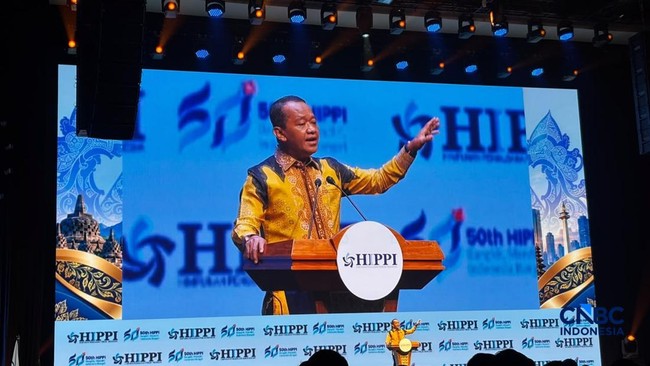
Jakarta, CNBC Indonesia — Coordinating Minister for Downstreaming and Energy Transition and Energy and Mineral Resources Minister Bahlil Lahadalia said the government was committed to promoting more equal economic growth through policies supporting micro, small and medium-sized enterprises (MSMEs) and regional entrepreneurs.
Drawing on his experience as a regional entrepreneur, Bahlil has introduced four policies in support of MSMEs and local businesspeople. They cover mining permits for regional MSMEs and cooperatives without a tender, the legalisation of community oil wells, a ban on affiliated contractors coupled with a requirement to prioritise local contractors, and the allocation of coal production quotas.
Bahlil said regional businesses needed government support to compete fairly with large corporations. Without equitable regulations, he said, small businesses outside major centres would continue to struggle to secure a share of economic activity.
“Based on my experience as an entrepreneur, regional businesspeople generally need affirmative support. Without backing and support, it is difficult for them to compete on a large scale with established, bigger businesses,” Bahlil said at the 2026 national working meeting of the Indonesian Indigenous Entrepreneurs Association (HIPPI) in Jakarta on Monday (12 October 2026).
The first policy grants priority Mining Business Permits (IUPs) without a tender specifically to MSMEs and regional cooperatives. Bahlil said the measure was intended to correct the previous auction system, which he said consistently favoured large businesses from the capital.
The provision is set out in the Mineral and Coal Mining Law (Minerba Law).
“We amended the Minerba Law to give cooperatives and MSMEs priority IUPs without a tender, restoring the rights of local people to be masters in their own land,” he said.
The second policy legalises 43,000 community oil wells in areas including Sumatra, Java and Aceh. Under the regulations, wells that were previously considered illegal can now operate officially. Pertamina buys their output — around four to five barrels per well — at 80 per cent of the Indonesian Crude Price (ICP).
“Until now, we have tended to think that only national and foreign businesses manage oil blocks. But Article 33 of the 1945 Constitution gives all Indonesians the opportunity to manage natural resources, provided they meet the requirements,” he said.
“Across the country, there are nearly 40,000 active oil wells. But in Sumatra, Java and Aceh, local people had been operating wells behind their homes since before Indonesia’s independence. They had no permits, so they were pursued by the authorities. The authorities were not at fault either, because the operations were unlicensed,” he said.
“What did we do? I asked the director general to check how many wells belonged to local communities. There are 43,000. I issued a ministerial regulation: all community wells that previously had no permits have been licensed, so local people can manage them in their own areas. They are now operating without being pursued. A well can produce four to five barrels a day; one barrel is 159 litres. The oil is bought by Pertamina at 80 per cent of the current ICP. This is one of the initiatives we have taken, and it creates jobs,” he said.
The third policy prohibits companies holding IUPs from using affiliated contractors based in Jakarta. Mining companies must instead give supporting project work to local businesses in the areas where they operate.
“Companies with IUPs must not use affiliated contractors; they should give the work to local people,” he added.
The fourth policy concerns the arrangement of coal Work Plans and Budgets (RKABs). With Indonesia accounting for 43 per cent of global coal supplies, the government has cut some quotas held by the largest companies and allocated them to regional MSME operators, whose capacity ranges from 200,000 to one million tonnes.
Bahlil said the affirmative policies were designed to ensure that the benefits of economic growth from downstream processing were shared more evenly with people in the regions.
“Downstreaming is important as a trigger for economic growth, but high growth without equitable distribution is, in my view, not right. This is where the government must step in to promote a more equal distribution,” he said.
Source: jawawa.id (https://jawawa.id/newsitem/bahlil-outlines-four-policies-in-support-of-small-businesses-1791798676)
Originally published by CNBC Indonesia (https://www.cnbcindonesia.com/news/20261012144456-4-775395/bahlil-blak-blakan-pro-umkm-rilis-4-kebijakan-berpihak-ke-usaha-kecil), translated from Indonesian