
Bahlil Opens Door to Moratorium on Certain Downstream Industries
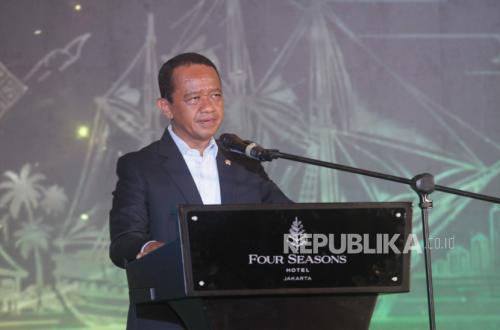
REPUBLIKA.CO.ID, JAKARTA – Coordinating Minister for Downstreaming and Energy Transition Bahlil Lahadalia has opened the option of a moratorium on certain downstream industries that are considered to have produced too many semi-finished products. The policy is being prepared to ensure that the management of Indonesia’s natural resources delivers greater and more sustainable added value.
Bahlil said that downstream output, particularly in the nickel sector, remains predominantly at the 50-60 per cent processing level and has not fully reached finished products. As a result, some semi-finished raw materials are still shipped abroad to be processed into finished goods.
“Going forward, we want to address industries that have already produced too many semi-finished raw materials. It may be important for us to hold a meeting, and we will report to the President, but in my discussions with the team, it is important to start choosing which industries we will continue and which industries need a moratorium,” said Bahlil, who also serves as Minister of Energy and Mineral Resources, in Jakarta, quoted on Thursday (8/10/2026).
According to Bahlil, the government needs to reassess the direction of downstream industrial development so that growth does not stop at increasing the production capacity of semi-finished materials. The government wants to ensure that downstreaming generates greater added value domestically.
Bahlil said the policy is also linked to the sustainability of natural resource management. In his view, Indonesia must take into account the availability of natural resources for future generations.
“So that our natural resource management is not reckless, because we believe this country is meant to be sustainable, and we still have our children and grandchildren to whom we must pass these resources,” he said.
Bahlil said nickel downstreaming has brought major changes to Indonesia’s export value. He noted that exports, which were only around US$3.3 billion in 2017-2018, rose to around US$34 billion in 2023 after the government halted nickel ore exports and encouraged smelter construction.
For 2026, Bahlil estimated that export value could reach around US$38-40 billion. However, he stressed that the increase in export value is not yet sufficient as a measure of downstreaming success.
“That’s right, we stopped nickel ore exports, then we required the construction of smelters, everything. And in 2023 we were able to reach exports of US$34 billion. In 2026 this could reach roughly US$38 to 40 billion,” he said.
Bahlil affirmed that the government will re-evaluate which industries should be continued and which should be restricted. This step forms part of the government’s efforts to deepen downstreaming while keeping the use of natural resources sustainable.