
Bahlil Likens Global Geopolitical Uncertainty to Malaria as It Disrupts Indonesia's Oil Supply
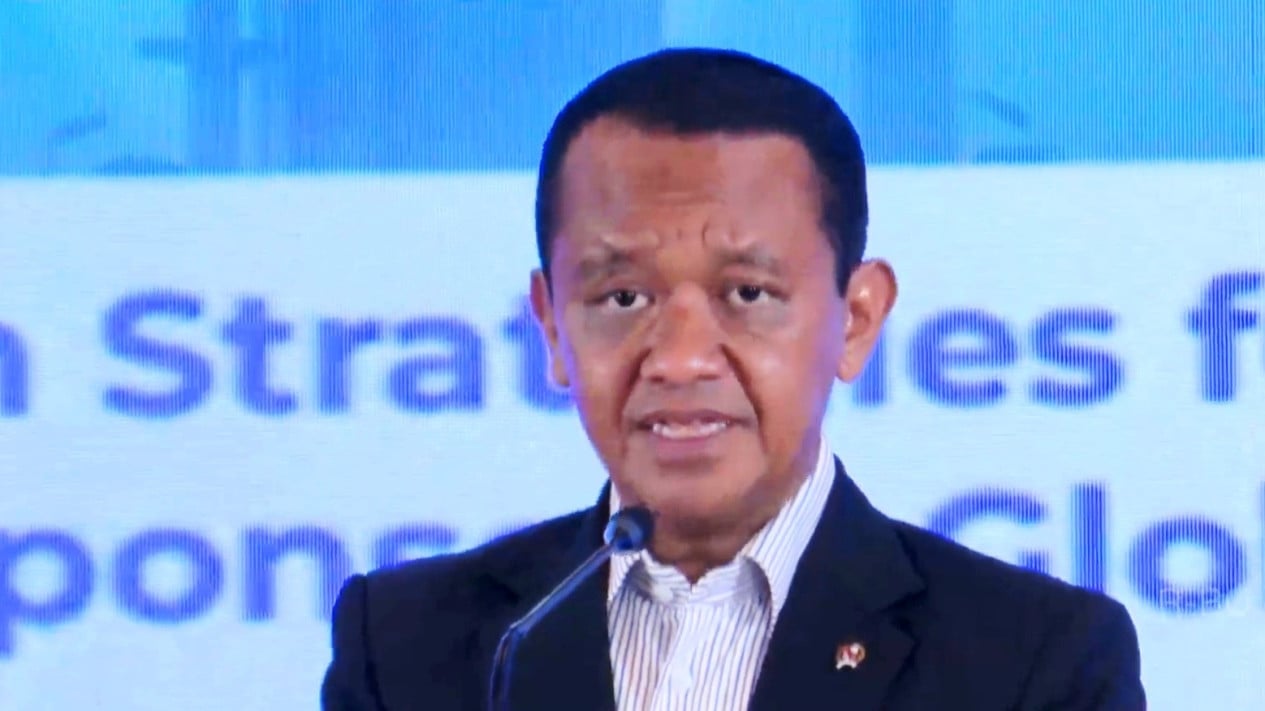
Energy and Mineral Resources Minister Bahlil Lahadalia has acknowledged that current global geopolitical conditions remain shrouded in uncertainty, with dynamics shifting extremely rapidly. He likened the swift changes in the geopolitical situation to a patient suffering from malaria, whose condition often fluctuates between day and night. “(The geopolitical condition) is like malaria. In the morning you recover, by noon it spikes again, and by evening it drops. If you are well in the morning, you get cold sweats by noon. That is roughly the state of geopolitics now,” Bahlil said at the Energy Forum in Jakarta on Thursday, 25 June 2026. Bahlil admitted this uncertainty is compounded by the current state of national oil production, which he said is the complete opposite of the situation in the mid-1996 to 1997 period. At that time, national oil production reached up to 1.6 million barrels per day, a situation Bahlil described as the golden era of Indonesia’s energy sector. “In fact, 43 per cent of our state budget in 1996-1997 came from the oil and gas sector, so that was the peak,” Bahlil stated. Today, however, Indonesia’s oil production is the polar opposite of the 1996-1997 situation. National oil lifting now only reaches a level of 610,000 barrels per day, while demand stands at 1.6 million barrels, resulting in imports of 1 million barrels every day. Consequently, the highly dynamic and uncertain geopolitical conditions today pose a distinct challenge to the readiness of the national energy sector. This is what prompted President Prabowo to conduct a roadshow to several oil-exporting countries to seek alternative sources of oil supply while geopolitical conditions, particularly in the Middle East, are heating up. “So because our imports reach 1 million barrels, it is due to this geopolitics that we are ultimately affected here,” Bahlil said. “That is why, when geopolitical tensions frequently occur, Alhamdulillah the President took the initiative, and we conducted a roadshow to the US and the Middle East to anticipate this.”