
Bahlil: Indonesia Can Determine Natural Resource Commodity Prices Through Mineral Exchange
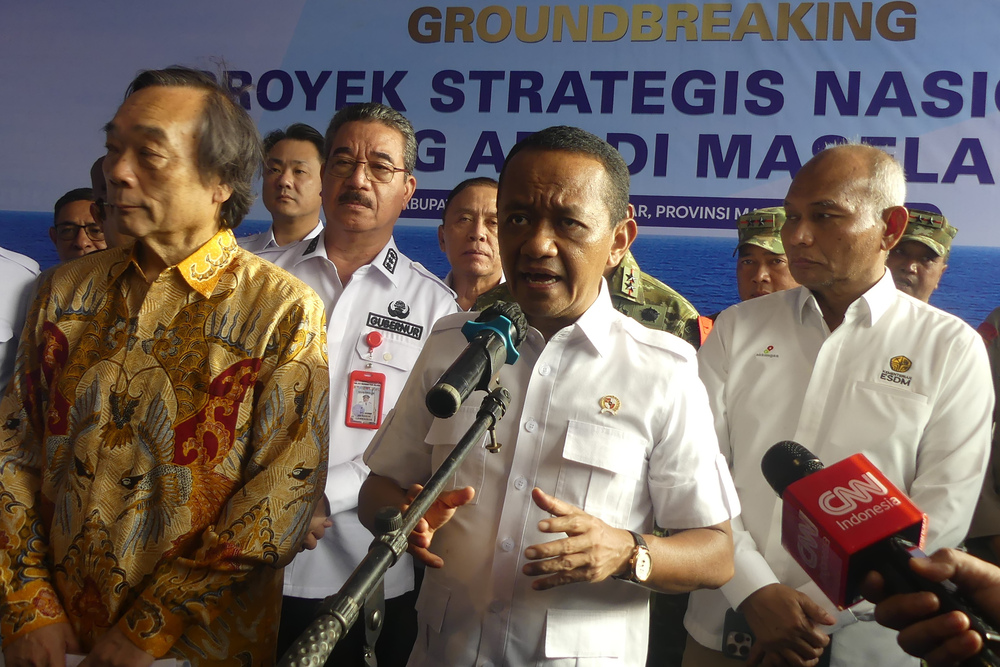
Energy and Mineral Resources (ESDM) Minister Bahlil Lahadalia has stated that Indonesia has the opportunity to gain greater control over natural resource (SDA) commodity prices through the establishment of a Mineral and Strategic Commodities Exchange.
Bahlil said the existence of the exchange is expected to enable Indonesia, as a producer country, to determine the prices of commodities produced domestically.
“With the commodity exchange ordered by the President, it is hoped that all of our natural resource commodities, which we produce from our own country, will have their prices regulated by ourselves,” said Bahlil when met on the sidelines of The 12th Indonesia International Geothermal Convention & Exhibition (IIGCE) 2026 in Jakarta on Wednesday (19/8).
According to Bahlil, the prices of several Indonesian natural resource commodities have so far been heavily influenced or determined by markets and other countries. He cited the example of coal prices, which had been at US$97.65 per tonne in the second period of July 2025.
However, the government subsequently implemented tightening measures and maintained a balance between supply and demand.
“Once we implemented tightening and maintained supply and demand, the price has now started to improve,” said Bahlil.
The Ministry of Energy and Mineral Resources recorded that the Coal Reference Price (HBA) for the second period of August 2026 reached US$124.06 per tonne. This figure is higher than the coal reference price in July 2025.
Given these conditions, Bahlil considers the existence of the Mineral and Strategic Commodities Exchange to be an important instrument for Indonesia to gain flexibility in determining natural resource commodity prices independently.
“President Prabowo wants all the wealth within our country to be fully regulated by our country with good economic pricing,” said Bahlil.
President Prabowo Subianto has targeted the Mineral and Strategic Commodities Exchange to begin operations on 1 January 2027.
The establishment of the exchange is part of the government’s policy to strengthen the governance of national strategic commodities. Prabowo said the move is a continuation of the single-door export policy currently being implemented by the government.
The government has also held discussions regarding the plan to establish the exchange together with the Financial Services Authority (OJK).
Indonesia itself has for decades been known as one of the world’s main producers of various strategic commodities. These commodities include palm oil, nickel, tin, coal, coffee and rubber.
Prabowo considers Indonesia’s position as a producer country has not been fully matched by the ability to determine commodity prices in the global market. This is because a number of Indonesian commodity prices still refer to commodity exchanges located abroad.
Through the Mineral and Strategic Commodities Exchange, the government wants to strengthen Indonesia’s position in setting export commodity prices.
The exchange will operate under the supervision of the OJK. One of the government’s main targets is the establishment of the Indonesia Reference Price, namely an Indonesian reference price for various key commodities that are the mainstay of national exports.