
Bahlil: Ensure E10 to E50 Ethanol Blends Do Not Rely on Imports
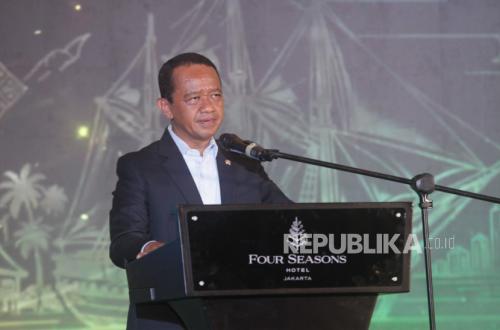
The Minister of Energy and Mineral Resources (ESDM), Bahlil Lahadalia, has warned that the development of ethanol blends in petrol, from E10 to E50, must be supported by domestic ethanol production. The government does not want the implementation of these biofuels to result in Indonesia becoming dependent on ethanol imports.
Bahlil stated that the government is beginning to design a roadmap for E50 development following discussions in the National Energy Council (DEN) session. The stages will be adjusted according to industrial readiness and domestic ethanol production capacity.
“Therefore, we want to utilise our domestic production,” said the Minister of ESDM in Jakarta on Monday (2
21/9/2026).
According to Bahlil, developing E50 serves as an alternative to strengthen energy security amidst uncertain global conditions. The government does not want national energy needs to remain dependent on supplies from other countries.
He explained that ethanol raw materials can be derived from several commodities, such as sugarcane, cassava, and corn. These commodities can be processed into ethanol, which can then be used as a fuel additive.
“Ethanol raw materials come from sugarcane, cassava, and corn, which are processed to produce ethanol. This is capable of creating new jobs and fostering regional growth in various areas,” Bahlil said.
The Minister of ESDM continued, noting that the government is currently drafting the implementation stages for ethanol blending, taking industrial development into account. He cited the potential implementation of E10 in 2027 and the development of E20 in 2028 before moving towards higher blending levels.
Bahlil believes that E50 development could reduce Indonesia’s dependence on finished petrol imports. By producing ethanol from domestic resources, energy needs can simultaneously be supported by domestic commodities and industries.
“If we can achieve E50, God willing, our target is that we will no longer need to import finished petrol products,” said the Minister of ESDM.
Bahlil mentioned that E50 development is also part of the effort to find alternative energy sources, similar to Indonesia’s success in developing biodiesel up to B50. He noted that this experience serves as a foundation for developing ethanol-based fuels.
He stated that Indonesia can look to the experiences of other countries that have developed ethanol use in fuel. He noted that Brazil has implemented E100, while several states in the United States also utilise E100.
However, Bahlil emphasised that the implementation of ethanol blending levels must go hand-in-hand with the development of domestic industry and raw material production. The government does not want the programme to merely shift dependency from petrol imports to ethanol imports.
“So, we do not want to implement E10, E20, or E50 only to have the ethanol imported from abroad; that would be the same thing,” he asserted.