
Bahlil: Downstreaming Must Strengthen Energy Sovereignty and Increase State Revenue
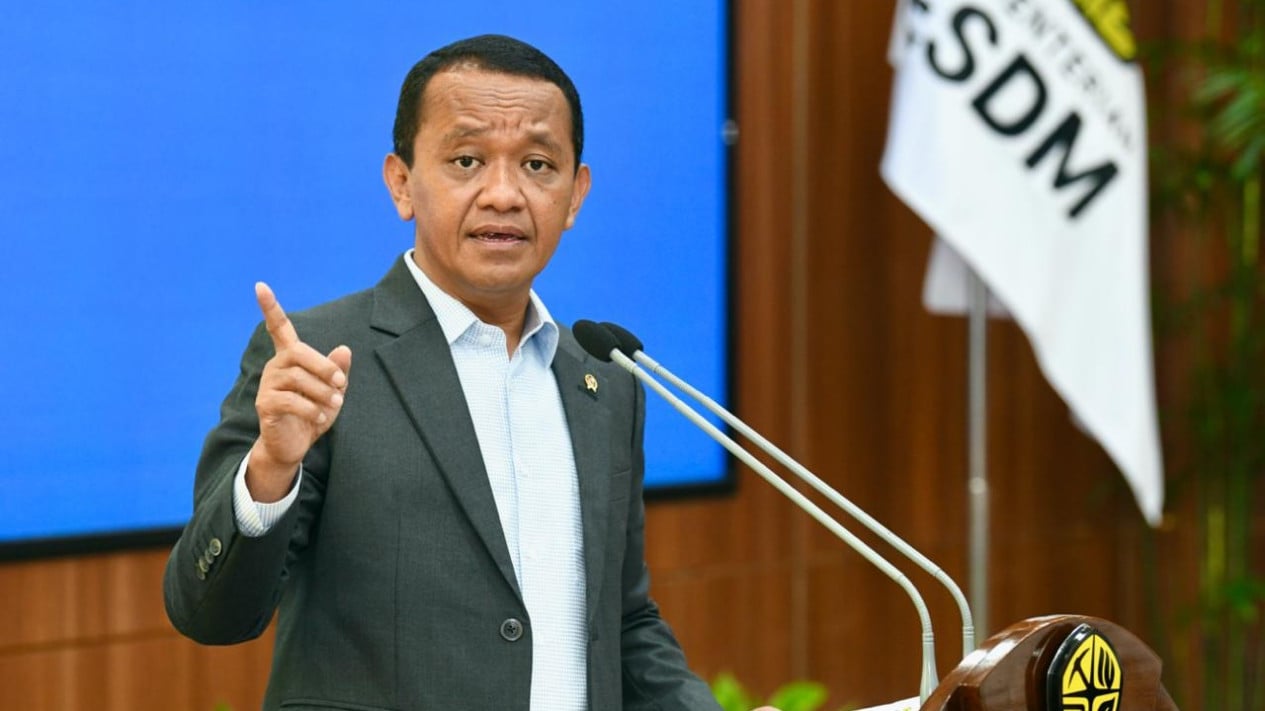
Minister of Energy and Mineral Resources, who also chairs the Task Force for Accelerating Downstreaming and National Energy Resilience, Bahlil Lahadalia, has stressed that President Prabowo has prohibited the export of raw natural resource commodities, requiring them to undergo downstream processing to increase their economic value.
He emphasised that downstreaming must serve as a strategic instrument to strengthen national energy resilience, enhance the added value of natural resources, and reduce dependence on imports.
“We can no longer just be exporters of raw materials. Downstreaming must be a tool to strengthen energy sovereignty, increase state revenue, create jobs, and ensure that Indonesia’s natural wealth is truly enjoyed by the Indonesian people,” said Bahlil in his statement on Thursday, 30 April 2026.
Therefore, Bahlil assured that downstreaming projects have a strong planning foundation. This underpins the laying of the first stone or groundbreaking for strategic downstreaming projects, as a concrete follow-up to the feasibility studies (FS) prepared by the Downstreaming Task Force.
Once all studies and FS preparations are completed by the Downstreaming Task Force, the next stage is carried out by BPI Danantara for execution as a national strategic investment project.
Thus, according to him, the groundbreaking of projects in Phase I and Phase II marks the results of the Downstreaming Task Force’s work and has entered the phase of real implementation in the field.
Bahlil stated that the downstreaming projects that have been groundbreaking in Phases I and II demonstrate that the Downstreaming Task Force’s work does not stop at the study stage but is immediately followed up with real projects that provide economic benefits to the community.
“The FS prepared by the Task Force serves as an important foundation so that every downstreaming project runs with thorough calculations, is on target, and provides maximum benefits for the state and the Indonesian people,” said Bahlil.
According to him, the Downstreaming Task Force is tasked with ensuring that downstreaming projects have a strong planning foundation, while the subsequent execution and investment stages are handled by Danantara to make implementation faster and more measurable.
“Once the FS is complete, those projects enter the implementation stage and it becomes Danantara’s task to ensure investments proceed, projects are realised, and their benefits are felt by the community,” he said.
For information, in the first phase groundbreaking on 6 February 2026, the ESDM sector projects include an alumina smelter into aluminium and bauxite into smelter-grade alumina in Mempawah; a bioavtur production facility from used cooking oil in Cilacap; and a bioethanol production facility in Banyuwangi.