
Bahlil Confirms 3 kg CNG Canister as LPG Replacement Enters Third Trial Phase
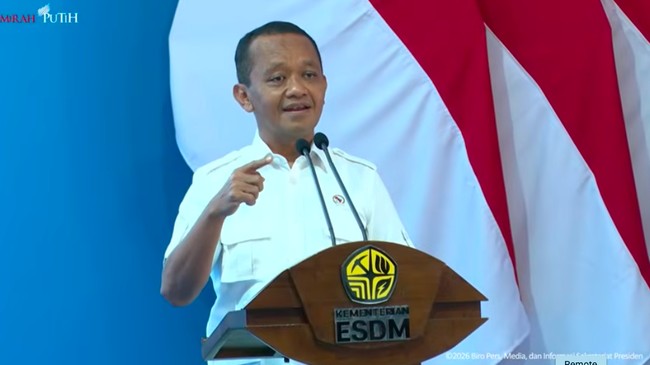
Karawang, CNBC Indonesia – Energy and Mineral Resources Minister (ESDM) Bahlil Lahadalia is finalising the testing of Compressed Natural Gas (CNG) as an alternative to subsidised 3-kilogram (kg) Liquefied Petroleum Gas (LPG). The development process for the high-pressure CNG cylinder has now entered its third testing phase.
He stressed that the government is continuously monitoring each trial phase to mitigate technical risks, given that CNG has different characteristics from conventional LPG.
“What we are currently testing is the cylinder for the 3 kg (CNG). The pressure is 200-250 bar. This is still in its third testing phase, due in mid-July. Once that is completed, I will report back,” Bahlil said on the sidelines of the official launch of the mandatory B50 programme at the KM 57 Rest Area on the Jakarta-Cikampek toll road, quoted on Friday (10/7/2026).
Bahlil explained that the government had previously completed two initial testing phases for the gas cylinder. The government is optimistic that the third phase, scheduled for mid-month, will deliver results that meet the established safety standards.
“Phase one is done, phase two is done, phase three is in mid-July. It has not even been trialled yet and you are already asking about the results. Masya Allah. Pray that the trial succeeds,” he added.
Previously, the Director General of Oil and Gas at the Ministry of Energy and Mineral Resources, Laode Sulaeman, said the distribution of 3 kg CNG will use the same mechanism as LPG to make it easier for the public to adopt.
“There is a role for agents and a role for base stations, and that indeed has to be coordinated with Pertamina. The point is that the model being implemented for CNG is exactly like one of the forms of LPG distribution,” Laode explained some time ago, quoted on Monday (29/6/2026).
Laode explained that the public will not need to purchase CNG cylinders. The government will implement a gas refill exchange system, while ownership of the cylinders will remain with the providing business entity.
“The cylinders will not be purchased by the public; they will belong to the business entity. So people will simply exchange them,” he asserted.
For the initial implementation stage, the government has decided to import CNG cylinders from China. This step was taken because the high-pressure cylinder manufacturing technology required is not yet mass-produced domestically.