
Bahlil Comments on Chinese Businessmen's Letter to Prabowo
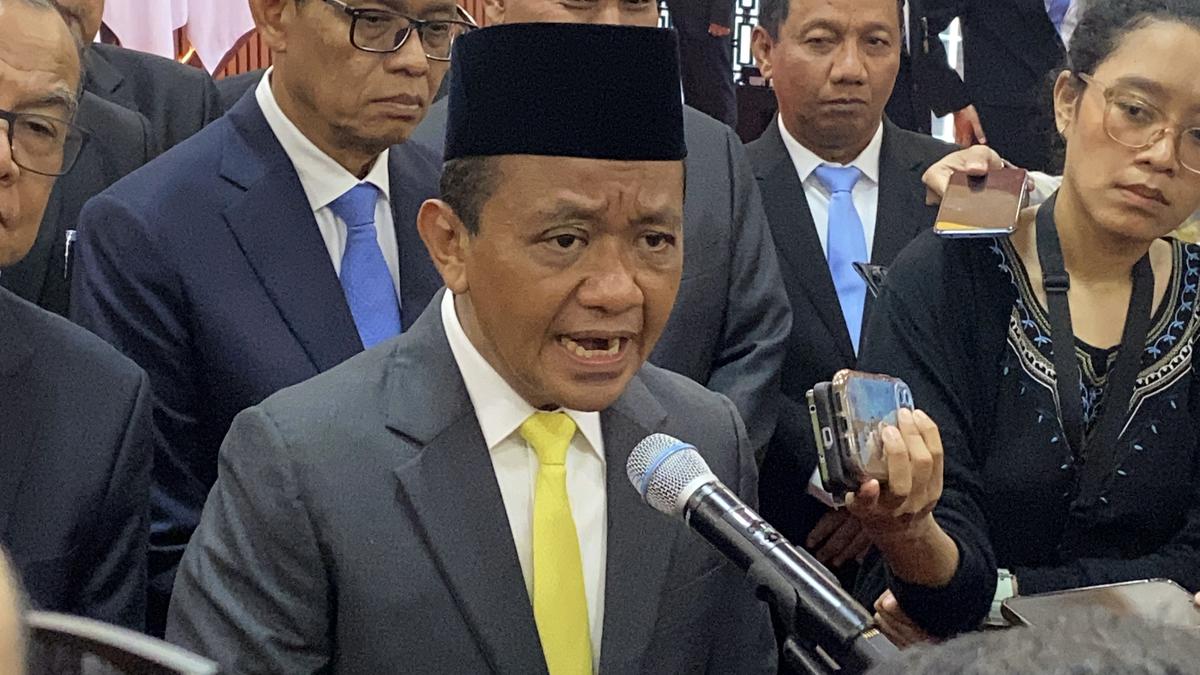
Minister of Energy and Mineral Resources (ESDM), Bahlil Lahadalia, has responded to concerns from Chinese business actors regarding several regulatory changes in Indonesia, ranging from mineral reference price (HPM) rules, taxes, royalties, to the investment climate.
Bahlil stated that he has communicated directly with businessmen as well as the Chinese Embassy to provide explanations.
According to Bahlil, communication with the Chinese side was conducted following concerns about various new government policies in Indonesia that are deemed to affect investor confidence.
“Some have already communicated with me, the ambassador has talked with me. I have given good explanations,” Bahlil said, quoted from Antara, Wednesday (13/5/2026).
Nevertheless, Bahlil admitted that he has not yet received the letter directly from the Chinese Chamber of Commerce containing notes and concerns from business actors from the Bamboo Curtain country.
“Have not received the letter yet,” he said.
Chinese business actors are reported to have highlighted several Indonesian government policies. Issues of concern include plans for tax and royalty increases, law enforcement, increasingly strict work visa rules, and policies on withholding export proceeds.
Chinese investors assess that regulatory changes that are too rapid can affect business certainty and the future investment climate in Indonesia.
Chinese Businessmen Write to Prabowo, Complain About Regulations
Previously, the China Chamber of Commerce and Industry (Kadin) in Indonesia or China Chambers of Commerce in Indonesia (CCCI) sent a letter to President Prabowo Subianto regarding the investment and business climate conditions in Indonesia.
In the letter, Chinese businessmen investing in Indonesia conveyed several concerns ranging from regulatory tightening, export proceeds policy (DHE), to reductions in nickel mining quotas.
Based on a circulating copy of the letter, the investors actually still view the investment prospects in Indonesia quite positively. However, they admit to facing challenges deemed to disrupt business operations.
Some issues highlighted include regulatory tightening, law enforcement considered excessive, to corruption practices and extortion by certain authority officials.
“These problems have seriously disrupted normal business activities, directly weakening long-term investment confidence, and causing widespread concerns among Chinese investment companies regarding the current business climate and their development prospects in Indonesia,” the letter stated, quoted on Wednesday (13/5/2026).
In the letter, there are six main issues of concern to Chinese investors.
First, increases in various taxes and levies, including mineral resource royalties as well as the imposition of fines and taxes deemed too large.
Second, the obligation to place natural resource export proceeds (DHE SDA) in national banks, which is seen as potentially disrupting company liquidity.
Third, the reduction in nickel ore quotas, said to reach 70% or around 30 million tonnes. This condition is assessed to impact the development of downstream industries such as electric vehicles and stainless steel.
Highlighting Law Enforcement and Work Visas
In addition, Chinese businessmen also highlighted law enforcement in the forestry sector, deemed too tight.
“Fourth, forestry law enforcement has been tightened excessively. The Indonesian Forest Management Special Task Force has imposed a record fine of USD180 million on a Chinese investment company on the grounds of not having a valid Forest Area Utilisation Approval,” the letter wrote.
Fifth, investors also mentioned the suspension of several major projects due to floods, including a hydropower plant project built by a Chinese company.
Sixth, work visa rules deemed increasingly strict with high costs and requirements. This condition is assessed to hinder the mobility of technical workers from China to Indonesia.
Not only that, the Chinese Kadin also criticised plans for new export levies, reductions in tax incentives in special economic zones (KEK), and the elimination of several electric vehicle incentives.
Investors also highlighted the increase in the Nickel Mineral Reference Price (HPM) and changes to the pricing formula that now includes cobalt, iron, and other associated minerals.
These policies are assessed to trigger a surge in nickel ore production costs of up to 200%.
Source: jawawa.id (https://jawawa.id/newsitem/bahlil-comments-on-chinese-businessmens-letter-to-prabowo-1778788057)
Originally published by liputan6.com (https://www.liputan6.com/bisnis/read/6491489/bahlil-buka-suara-soal-surat-pengusaha-china-ke-prabowo), translated from Indonesian