
Bahlil Admits Coal Supply Constraints for Power Plants, Here's Why
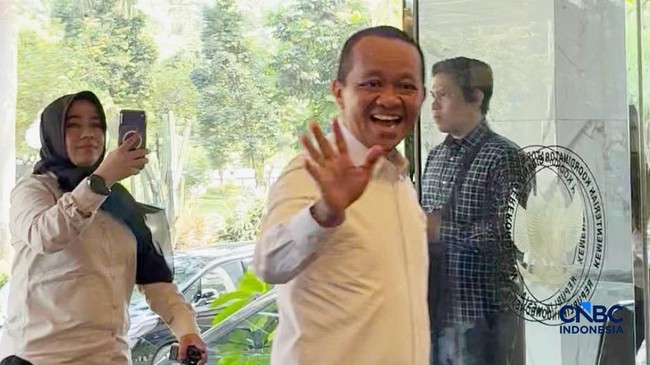
The Ministry of Energy and Mineral Resources (ESDM) has acknowledged obstacles in the supply of coal for national power generation. One of the main causes is the declining calorific quality of coal coupled with increasingly high production costs for mining companies. Minister Bahlil Lahadalia explained there is currently a shortfall of approximately 18 to 20 million tonnes from the total requirement of PT PLN (Persero), which stands at 154 million tonnes for 2026. He revealed the government is seeking solutions for the constrained supply of medium-grade 5,200 kcal coal, whose availability is naturally diminishing. “As of our meeting up to June, it is clear there is a slight constraint regarding medium-calorie 5,200 coal. We know that the calorie content of our coal is getting lower day by day. We are now looking for a solution,” he said when met at the Coordinating Ministry for Economic Affairs office in Jakarta on Thursday (18/6/2026). The decline in medium-calorie coal reserves is accompanied by rising production costs due to stripping ratios that have now reached levels of 8% to 12%. This situation has triggered discussions on evaluating domestic selling prices so that producers can still obtain reasonable economic value to cover escalating operational costs. “We must also be wise so that our business players are not forced to sell at prices that are too low. If they sell at a loss, that is not feasible. We need to protect business players so they do not incur losses,” Bahlil stated. To ensure transparency and smooth delivery to power plants, the ministry has formed a special joint procurement team involving the Directorate General of Minerals and Coal, the ESDM Inspectorate General, the Finance and Development Supervisory Agency (BPKP), and PLN. This is intended to oversee field execution so that supplies genuinely reach the power plants without burdening state finances. “It should not be the case that ESDM has assigned the task to PLN but it is not executed, so the goods do not arrive at the power plant. This requires collaboration, cooperation, and transparency, including on pricing,” he explained. Furthermore, the government is considering complaints from business actors regarding the Domestic Market Obligation (DMO) price benchmark, which is deemed no longer relevant to current production cost conditions. Bahlil stressed that his ministry is conducting calculations to determine a fair pricing policy for the sustainability of the industry and the affordability of electricity tariffs. “We are calculating the pluses and minuses so that PLN is not disadvantaged, but business players are also not disadvantaged,” he concluded.