
Badung Waste Hits 876.1 Tonnes Per Day, 70.2% Managed Properly
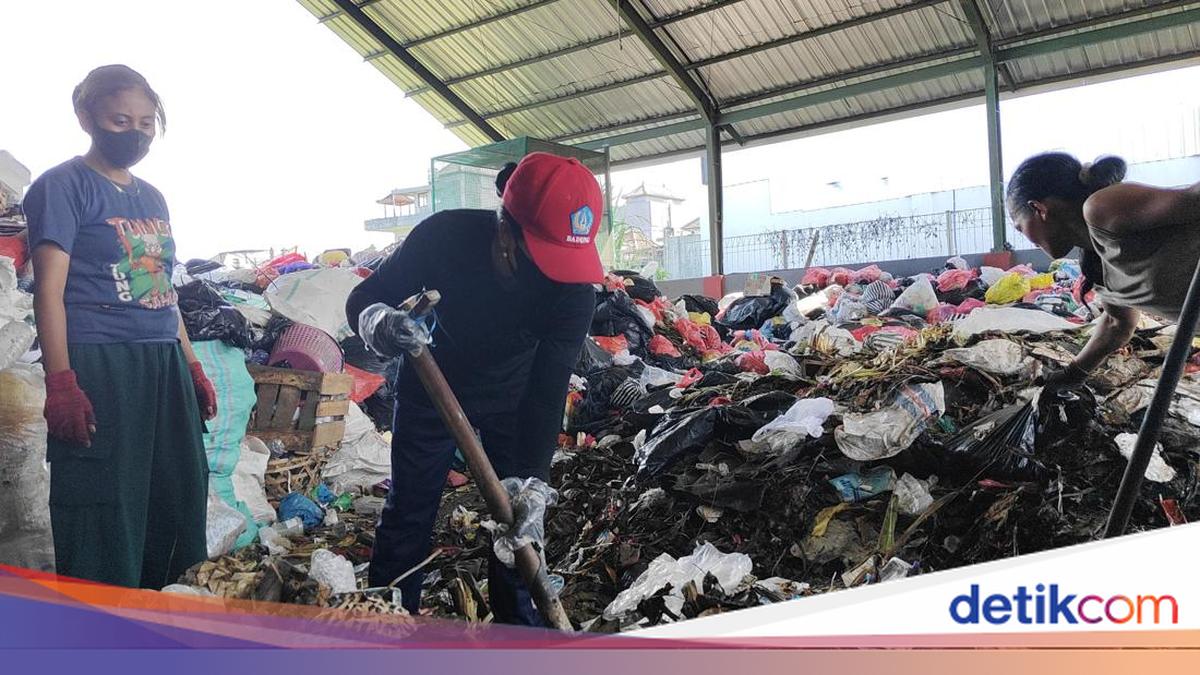
Total waste generation in Badung has now reached a staggering 876.1 tonnes per day, according to data from the Badung Environmental and Hygiene Agency (DLHK).
Head of DLHK Badung, Made Rai Warastuthi, stated that 70.2 per cent, or the equivalent of 614.4 tonnes, has been successfully managed. Meanwhile, the remaining 29.8 per cent, or 261.7 tonnes, is residue that is currently being optimally reduced.
In response to this large volume, the Badung Regency Government is tightening field validation and pursuing an ambitious target of independent waste management to completely eliminate residue sent to final disposal sites (TPA).
“Our main target is independent waste management from households, schools, markets, tourist accommodations, and businesses. We want to completely cut off the residue disposed of at the Final Disposal Site,” Rai Warastuthi asserted on Thursday (2/7/2026).
DLHK Badung relies on macro data accuracy as the primary capital for intervention and strict supervision. As of early July 2026, out of a total of 134,270 family heads across 62 villages and sub-districts, 91 per cent, or 122,951 family heads, have been surveyed door-to-door.
Rai revealed that the portrait of waste sorting at the village level shows significant performance variation. There are 17 villages/sub-districts in the excellent category with sorting rates above 90 per cent, 10 areas in the good category, 22 areas in the medium category, and 13 areas still on priority status because their sorting compliance is below 50 per cent.
“These survey results are our main capital for conducting strict validation and supervision in the field. Through accurate data, government interventions such as the distribution of facilities and citizen education can be more targeted,” Rai explained.
To boost the performance of low-performing areas, the Badung Regency Government is maximising the operation of 47 reduce, reuse, recycle waste processing sites (TPS3R) with a total management capacity of 298.2 tonnes per day. Furthermore, public participation is being expanded by activating 207 waste banks and engaging the education sector through regular coaching in 662 educational units involving at least 99,250 students.
Hundreds of Supermarkets Under Guidance
Not only targeting the domestic and education sectors, DLHK Badung is now beginning to apply firmness to the commercial, tourism, and trade sectors. These productive sectors are now required to implement periodic waste sorting systems to maintain environmental sustainability in the Badung area.
Based on the latest data, intensive guidance has targeted hundreds of modern retail and traditional market operators. Currently, 327 out of a total of 1,473 supermarkets and modern shops across Badung are reported to have entered the guidance programme and are actively complying. Similar steps have also been successfully applied to 21 out of 54 public markets.
Rai Warastuthi stressed that the integration between modern shopping centres and traditional markets is a crucial key to cutting the waste residue chain directly from the source. The compliance of the business sector is expected to significantly reduce the 261.7 tonnes of residue within the next few months.
“The synergy of all elements, from traditional markets to modern shops, must be continuously optimised without pause. This is a shared commitment to realise a clean, green, and prosperous Badung environment for the future,” Rai explained.
Meanwhile, Badung Regent I Wayan Adi Arnawa has instructed all village governments to prioritise village income and expenditure budgets (APBDes) for funding upstream waste management. This policy was taken to accelerate the Source-Based Waste Management Acceleration Action (PSBS) in Badung.
“Village budgets must be shifted to optimise transport fleets, strengthen TPS3R, and organic processing facilities. This year’s Mangupura Award assessment also officially includes PSBS achievements as one of the main indicators,” said Adi Arnawa in his statement on Thursday (2/7/2026).
Adi, together with Regional Secretary Ida Bagus Surya Suamba, affirmed this in front of regional apparatus leaders, sub-district heads, village heads, and sub-district heads throughout Badung. This evaluation is focused on real behavioural change in the community to sort household waste independently.
“I ask sub-district and village heads to check directly in the field, ensure the distribution of composters and sorting facilities is truly working. If organic waste is collected routinely, residents will surely get used to sorting from home and it will become a new culture,” said Adi Arnawa.