
Badung Regency Government Absorbs Citizen Issues via 'Kontak Bupati' Complaint Channel
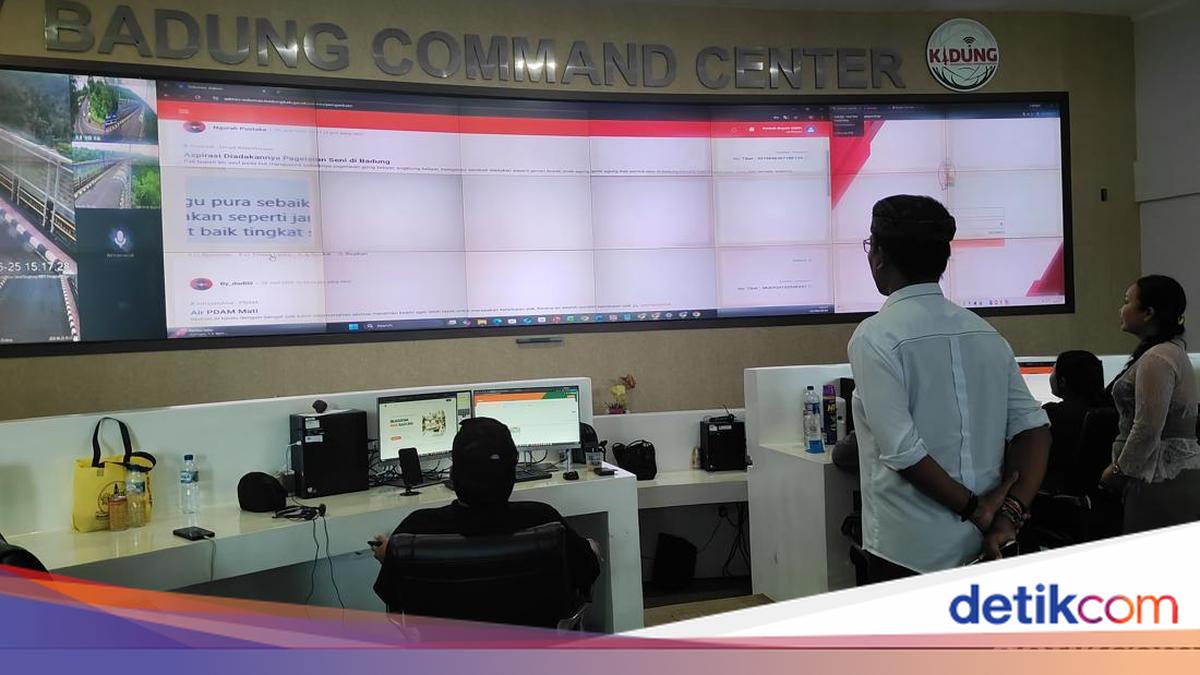
The Badung Regency Government is continuously striving to improve the quality of public services by directly involving community participation. One such effort is through the ‘Kontak Bupati’ (Contact the Regent) complaint channel, a digital platform designed to accelerate the handling of issues on the ground.
Kontak Bupati serves as a space for Badung residents to convey aspirations, complaints, and feedback directly to the local government. The channel, which is integrated with the national SP4N LAPOR! system and managed by the Badung Communication and Informatics Agency (Diskominfo), utilises platforms such as WhatsApp, Instagram, Facebook, and TikTok.
‘This reporting channel is expected to answer, simplify, and shorten the bureaucracy involved in handling problems in the field. So, people do not need to go through complicated procedures; they can just report via social media,’ said I Ketut Gede Arta, Head of Diskominfo Badung, on Thursday (25/6/2026).
Since its launch at the end of 2025, the service has received an extraordinary response, with the regency government receiving more than 3,000 reports. The issues raised span multiple sectors, including disaster infrastructure, health, traffic, waste management, the regulation of homeless people and beggars, public order disturbances, and criminality.
‘After it was launched at the end of 2025, the number of complaints that came in was very high, reaching thousands of reports. Through this digital government initiative, we are building transparency via electronic-based services that help residents voice their problems,’ Gede Arta explained.
The high level of participation is reflected in the volume of data received periodically. In May 2026 alone, the channel recorded 528 citizen reports. ‘Interestingly, out of that number, there were also around 36 complaints from outside the Badung service area that came in via WhatsApp, Instagram, mobile apps, and Facebook,’ he added.
Gede Arta noted that the high number of complaints does not indicate poor bureaucratic performance but rather a high level of public trust in the government’s responsiveness. ‘In the future, we will enhance interactive features so residents can provide feedback in the form of star ratings, similar to common applications. This rating feature will be embedded directly into Kontak Bupati so the public can assess our services as an indicator for measuring the Community Satisfaction Index,’ said the former Kuta Selatan Sub-district Head.
To ensure all complaints are handled swiftly, Diskominfo Badung has stationed dedicated officers 24 hours a day on the first floor of the agency’s office. These officers monitor screenshots from social media tags, then identify, classify, and distribute daily reports to the relevant agencies. ‘Our task here is to classify and coordinate reports to the technical regional apparatus organisations. There are officers on duty 24 hours a day. Every night, daily reports are sent to us,’ Gede Arta stated.
The distribution of reports covers all levels of regional apparatus, from sectoral agencies and sub-district governments to external coordination with the police. The highest volume of complaints is directed at the Public Works Agency regarding infrastructure, followed by reports to the Environmental and Hygiene Agency concerning waste and to the Transportation Agency regarding street lighting. ‘When classified, the agency receiving the highest number of reports is the Public Works Agency,’ he detailed.
Resolving these complaints requires collective awareness and cross-cutting programmes. Based on periodic evaluations reported directly to the Regent of Badung, the resolution rate for public complaints through this digital channel has reached 90 per cent. Gede Arta revealed that as of 25 June 2026, 2,976 reports had been fully resolved, while 33 complaints were still in progress. ‘Once the relevant agency completes its task in the field, the system will automatically categorise the complaint as processed,’ he explained.
All performance data, complainant identities, and the duration of case handling from the initial digital report are recorded in a dashboard system. The Badung Regency Government has set a maximum response waiting time of one hour after a report is submitted. ‘We try to respond to these reports as quickly as possible, adjusting to the conditions and distance in the field, where the maximum response time for follow-up is one hour after the public reports it,’ Gede Arta said. ‘In our dashboard system, everything is fully recorded, from the date of entry, the responsible institution, the completion status, to reports that are closed because upon checking, the issue has already been resolved,’ he concluded.