
Badung Faces Teacher Crisis, Shortfall of 340 Primary and Junior Secondary Teachers
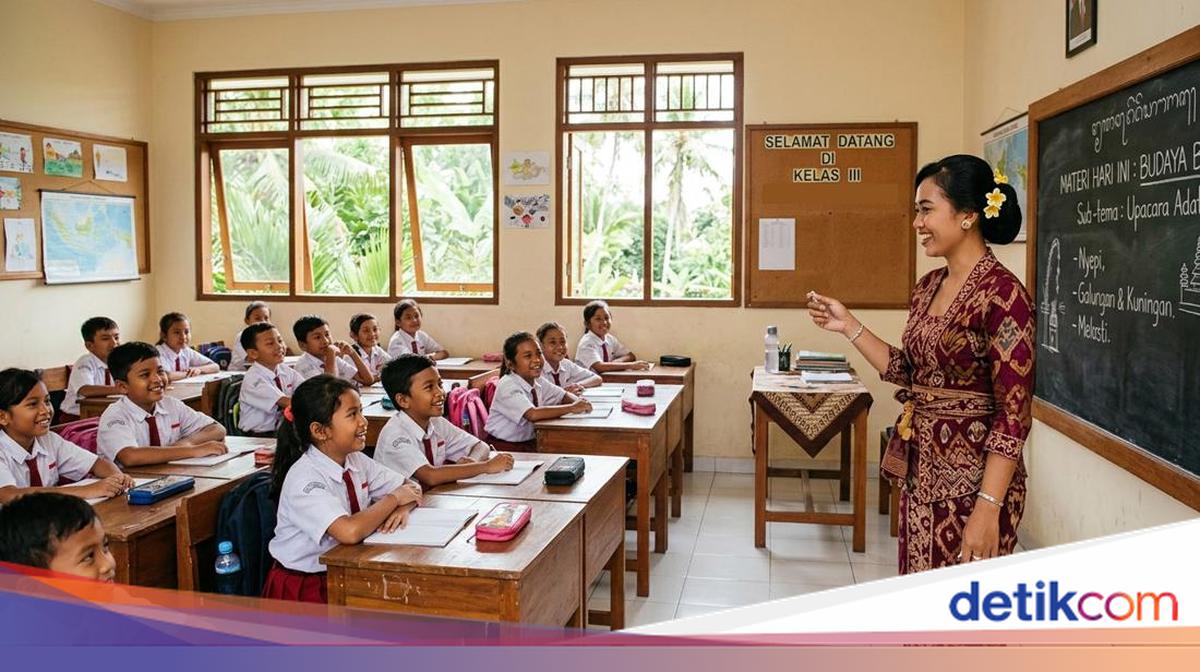
The Badung Regency Government has acknowledged that it continues to face a shortage of teachers because the number retiring each year is not matched by new recruitment. This has limited its ability to hire, as regulations prohibit the creation of non-civil-servant positions at primary and junior secondary schools, which fall under local government authority.
“We are short of around 300 teachers, and quite a large number retire each year — between 30 and 40 — while there has been no recruitment,” said I Gusti Made Dwipayana, head of Badung’s Education, Youth and Sports Office, during a working meeting with the Badung Regional House of Representatives’ Commission IV on Tuesday (3 November 2026).
The teacher shortage has also been exacerbated by the latest School Operational Assistance (BOS) funding policy, Dwipayana said, which limits the share allocated to human resources. The funds are now sufficient only to pay cleaning staff and school security personnel.
“Under the latest rules, the amount of BOS funding for human resources has been reduced, so it is no longer enough to pay teachers, except at schools with large numbers of pupils,” Dwipayana said.
The education office has been allocated 140 teacher positions, down from an initial request for 170. However, this number is still not enough to cover the overall shortage across Badung.
As an interim measure, the local government is seeking to make better use of existing teachers by transferring staff from schools with a surplus to those with insufficient teaching hours. The office is also using student interns from the PLP programme to help cover empty classrooms under the supervision of experienced teachers.
“Our temporary strategy is to redistribute teachers from schools with a surplus to those that are short, with additional help from student interns from Undiksha to cover empty classrooms,” Dwipayana said.
He said the office remained open to alternative arrangements and was ready to coordinate with the relevant central-government authorities to keep teaching and learning running smoothly.
“Let us work together to find a way to appoint teachers, through whatever mechanism may be possible. We will discuss it with the higher authorities because we are indeed short,” he said.
Meanwhile, I Nyoman Graha Wicaksana, chair of the Badung Regional House of Representatives’ Commission IV, said the critical teacher shortage stood in contrast to the regency’s capacity to fund new hires. The Badung administration was constrained by central regulations requiring teachers to be recruited through the civil-servant (CPNS) process.
“Badung Regency is still short of around 340 teachers. The Education Office says Badung can in fact afford to fund or employ teachers, but it is constrained by central regulations that classify teaching as a profession and require recruitment through the CPNS process,” said Graha, a politician from Kuta.
Councillors have proposed involving student interns from teacher-training programmes, as has been done in Surabaya. However, the proposal faces an administrative obstacle: the teaching hours of interns are not recorded in the Basic Education Data system, or Dapodik.
“Their teaching hours cannot be counted in Dapodik. That is the problem. At the outset they may be willing, but after three months, based on previous experience, they start raising concerns,” Graha said.
Graha said Commission IV was also considering further consultations directly with the Ministry of Primary and Secondary Education to seek a solution to the central-government rules.
Source: jawawa.id (https://jawawa.id/newsitem/badung-faces-teacher-crisis-shortfall-of-340-primary-and-junior-secondary-teachers-1793753429)
Originally published by detikBali (https://www.detik.com/bali/berita/d-8737138/badung-krisis-guru-kekurangan-340-tenaga-pengajar-hingga-sd-smp), translated from Indonesian