
Badung DPRD Requests Re-inspection of Villas and Boarding Houses in Kuta to Mengwi
The Regional People’s Representative Council (DPRD) of Badung is pressing the local government to carry out a fresh sweep of the existence of villas, accommodations, and boarding houses in several strategic areas. The sweep is necessary to ensure legal compliance regarding building erection permits (IMB), business permits, and local tax payment obligations.
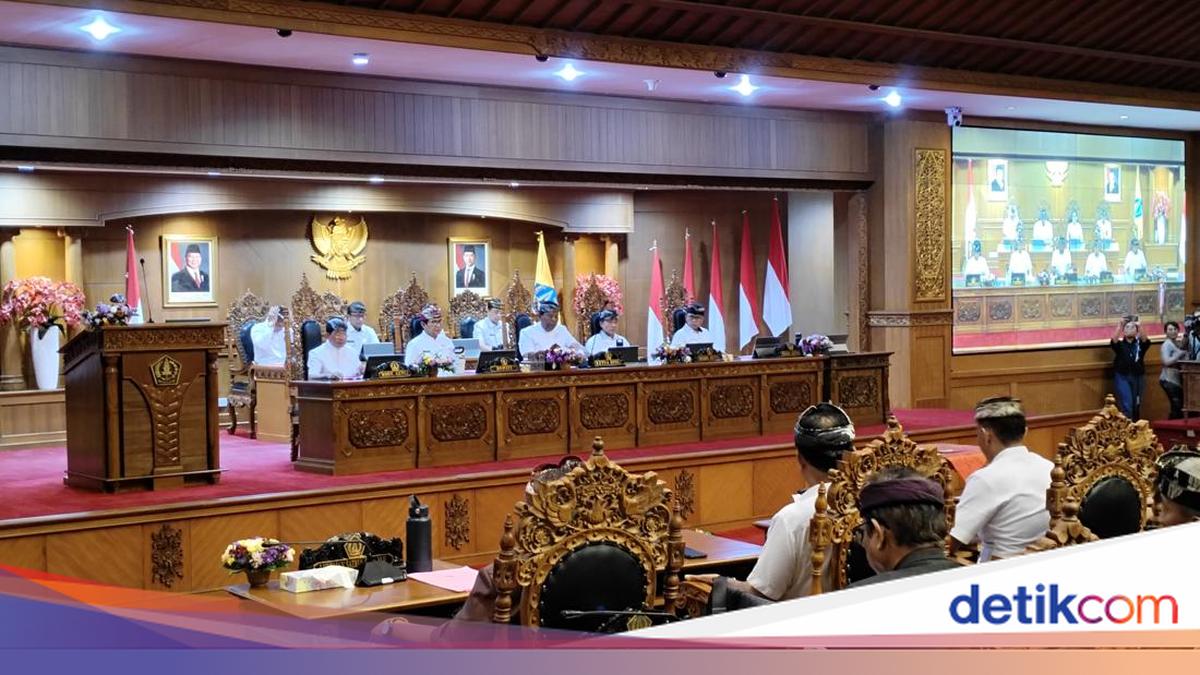
This was conveyed by the Deputy Chairman of the Badung DPRD, Anak Agung Ngurah Ketut Agus Nadi Putra, during the plenary session of recommendations from the Badung DPRD on the Regent of Badung’s Accountability Statement Report (LKPJ) for the 2025 Fiscal Year at the DPRD Badung Building on Thursday (23/4/2026).
“We request a thorough study and field supervision of villa buildings, accommodations, including boarding houses and entertainment venue permits in South Kuta, Kuta, North Kuta to Mengwi. Everything must be checked again, both in terms of building permit compliance and the realisation of tax payments to the regional treasury,” said Agus Nadi Putra.
Agus Nadi Putra emphasised the importance of strengthening supervision of other revenue sources and implementing digitalisation of the tax collection system. These efforts are expected to prevent revenue leakages in the tourism sector, which has long been the backbone of the region’s fiscal health.
“The government needs to carry out intensification and extensification through digitalisation of the system so that there are no more loopholes for tax leakages. In addition, we encourage a reward system for work units that innovate in financial management to make targets more optimal,” said Agus Nadi Putra.
This sharp scrutiny arises after reviewing the 2025 fiscal year regional revenue realisation, which only reached Rp 9.1 trillion or 81.12% of the revised target of Rp 11.2 trillion. Specifically, the Locally Generated Revenue (PAD) achievement of the Badung Regency Government (Pemkab) also missed the Rp 10.1 trillion target and was only realised at Rp 8.06 trillion.
“If compared, the revenue achievement in this revised APBD is even smaller than the initial target in the main APBD. This shows that our 2025 revenue performance is not yet optimal and falls into the category of less effective because it only reached 79.20%,” said Agus Nadi Putra.
Agus Nadi Putra assessed that the macroeconomic assumptions used in compiling the revenue estimates in the revised APBD were inaccurate and not cautious. As a result, there is legal uncertainty in running the wheels of government due to repeatedly unachieved budget targets.
“The macroeconomic assumptions in compiling revenue estimates need to be studied more deeply in a scientific manner so that future targets are more realistic. Do not let this target failure continue to recur because it greatly impacts the stability and legal certainty of our government,” stressed the Golkar Party politician.
In addition to target accuracy issues, the PAD structure of Pemkab Badung is still seen to have a very high structural dependency on central transfer funds and entertainment taxes. Meanwhile, the contribution of local levies is currently very small even though their effectiveness reaches 114.03%.
“Our revenue structure is still dominated by local taxes with an effectiveness of only 77.37%, while the contribution of levies is still very minimal. We must immediately seek alternative innovation strategies so that this high dependency on the entertainment tax sector can be balanced soon,” explained Agus Nadi Putra.
As a solution, Agus Nadi Putra recommended that Pemkab Badung diversify PAD sources and optimise the utilisation of regional assets as alternative revenue. This must be accompanied by improving the quality of performance-based budget planning so that regional spending is more efficient.
“We suggest prioritising productive capital expenditure for economic development that directly impacts the community. Monitoring and evaluation of budget implementation must also be strengthened so that there is no more minimal absorption or unused idle funds,” said Agus Nadi Putra.
Finally, Pemkab Badung is asked to prepare integrated fiscal policies between revenue, expenditure, and financing to maintain fiscal continuity. Controlling the Budget Balance Surplus (SiLPA) is also an important note to avoid reflecting planning inefficiencies.
“The quality of fiscal forecasting must be improved so that future planning is far more accurate and sustainable. Remaining budget or SiLPA also needs to be well controlled so as not to indicate inefficiencies in the use of regional budgets,” clarified Agus Nadi Putra.
The Regent of Badung, I Wayan Adi Arnawa, expressed his commitment to conducting a thorough evaluation of the APBD preparation process. He emphasised the importance of accuracy in determining the set target assumptions so that development programmes can run more safely and measurably in the future.
“The notes given by the council are very constructive for designing the Badung Regency APBD in the coming years,” said Adi after the meeting at the DPRD Badung Building. This step is expected to create a healthier and more realistic budget posture for implementation.
One of the main points highlighted in the 2025 LKPJ is the Locally Generated Revenue (PAD) achievement. Based on the presented data, the PAD realisation of Pemkab Badung for 2025 was recorded at 79.2% of the set target.
Meanwhile, from the regional expenditure side, budget absorption reached 81.8% or more. Although PAD did not reach 100%, he assessed that this achievement remains the main strength in implementing regional programmes, although a review of target setting is needed to make it more accurate in line with suggestions from the council.
Source: jawawa.id (https://jawawa.id/newsitem/badung-dprd-requests-re-inspection-of-villas-and-boarding-houses-in-kuta-to-mengwi-1777017152)
Originally published by detikBali (https://www.detik.com/bali/berita/d-8457799/dprd-badung-minta-villa-dan-kos-kosan-di-kuta-hingga-mengwi-disisir-ulang), translated from Indonesian