
Badung Catfish Farmers Find Ways to Cope with Soaring Feed Costs
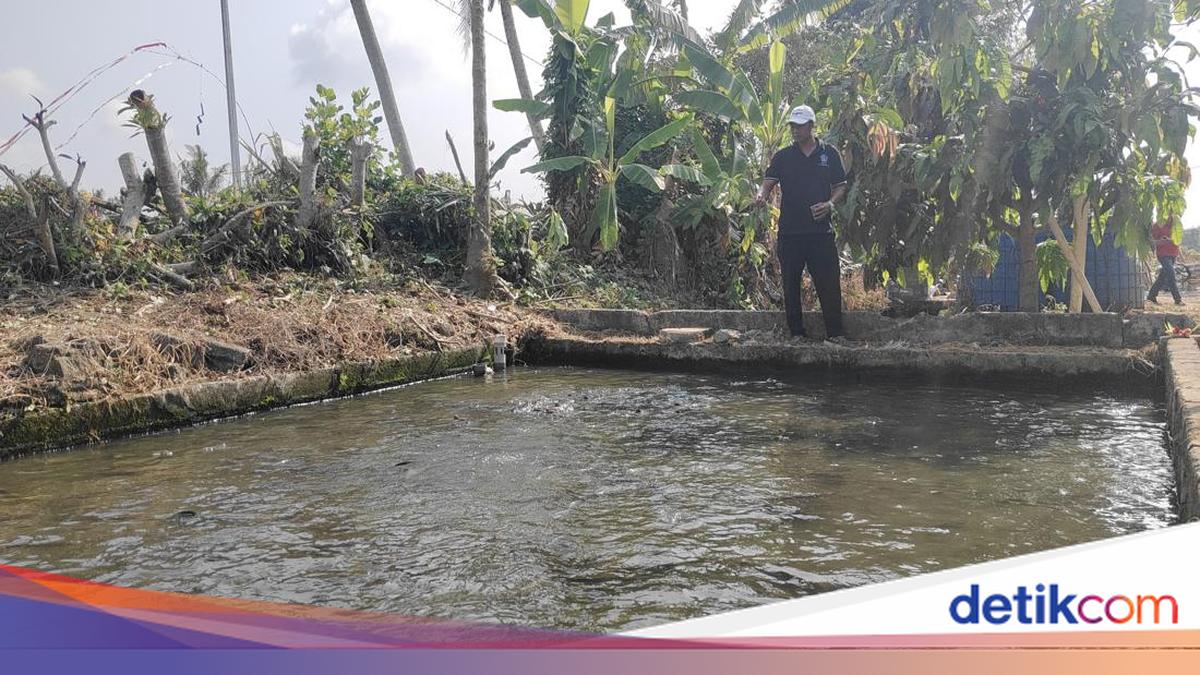
Commercial pellet prices have risen by as much as Rp50,000 per sack. The sharp increase in fish-feed costs has forced catfish farmers in Darmasaba Village, Abiansemal district, Badung, Bali, to find ways to keep their businesses afloat.
One measure farmers have taken is to formulate alternative feed using waste from chicken and pork processing. They use by-products from slaughtering, which are widely available at meat-processing centres in the village.
The waste in question is not animal faeces, but leftover chicken and pork cuts, including soft bones, offal and intestines, as well as tuna heads. The materials are ground, frozen and fermented before being mixed with pellets.
“We make alternative feed by grinding chicken bones with a grinding machine. We freeze them and ferment them before mixing them with the pellets,” said I Wayan Agus Juniartha Saputra, a member of the Mina Utama Fish Farmers’ Group (Pokdakan) in Darmasaba.
The farmers in Pokdakan Mina Utama manage seven ponds in total, covering both fish hatchery and grow-out operations. Catfish harvested from the ponds are generally sold directly to local wholesalers in Badung and Gianyar. “Wholesalers buy consumption-size fish for Rp22,000; for fish used as bait, the price depends on the size,” Agus said.
The catfish farmers hope the government and other relevant parties will give greater support to help ease the burden of high feed prices. They also hope local harvests can be fully absorbed through central and regional government programmes.
“Specifically for catfish for consumption, there are now programmes such as MBG and other regional initiatives providing clean, healthy food to pupils. I have heard that catfish is one of the fish included,” Agus said.
Darmasaba village head Ida Bagus Surya Prabhawa Manuaba said the area’s catfish self-sufficiency programme began with the ‘Berlian’ innovation in 2022. It was designed both to address pollution from slaughterhouse waste and to improve children’s nutrition. The initiative is supported by the Badung Fisheries Agency through its ‘Catfish Village’ programme, which assists five farmer groups and has 49 beneficiaries.
“In the past, residents often complained about waste in the irrigation channels. Over the past two years, complaints have almost disappeared since the Catfish Village programme began putting the waste to use as catfish feed,” Surya said.
Surya said the aquaculture initiative not only tackles environmental pollution, but also plays an important role in supporting community health and has considerable economic potential. Each farmer managing a pond can produce a substantial harvest, directly benefiting landowners and workers.
“Catfish has very good nutritional content for tackling stunting among children. A single farmer can harvest more than 15 quintals at a time,” Surya said.
Although local market demand is strong, the farmers’ main challenge is access to equipment for producing alternative feed independently. Darmasaba village government plans to encourage the provision of more suitable feed-making machines and the development of downstream catfish products.
“If each farmer had adequate, more suitable equipment to make feed, it would greatly reduce the burden. We also need to consider how processed catfish products can continue to be developed,” Surya said.
Source: jawawa.id (https://jawawa.id/newsitem/badung-catfish-farmers-find-ways-to-cope-with-soaring-feed-costs-1793523029)
Originally published by detikBali (https://www.detik.com/bali/bisnis/d-8733482/peternak-lele-di-badung-putar-otak-atasi-biaya-pakan-yang-melonjak-drastis), translated from Indonesian