
Badr Cooperation and the Foundations of Technological Sovereignty
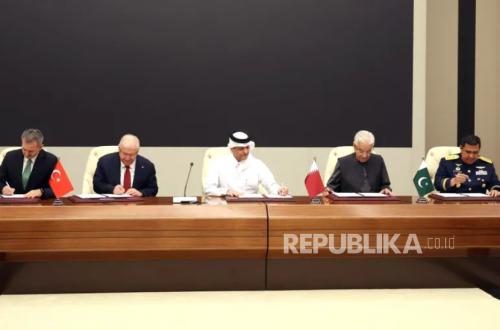
ANKARA — A defence agreement should be judged by the options available to a country when a crisis strikes. Can it maintain its equipment, secure the components it needs and adapt its systems without waiting for approval from an overseas supplier? Can it maintain an independent diplomatic stance when its defence infrastructure depends on decisions made by others?
These questions place Badr Cooperation between Indonesia, Türkiye, Qatar and Pakistan within the broader debate about sovereignty in a technopolar world.
Signed in Doha on 21 October 2026, the Badr Memorandum of Understanding provides a framework for cooperation in military production, technical training, and research and development. The official announcement described the agreement as an industrial and technological partnership, rather than a collective-defence guarantee. This distinction matters because Badr’s immediate significance lies in the capabilities its participants aim to build together.
The agreement comes as governments consider how reliably they can sustain their defence capabilities amid geopolitical pressure. Procuring advanced equipment is only one part of that calculation. Maintenance, software updates, spare parts and access to technical knowledge also determine whether a capability remains usable throughout a crisis. Procurement decisions can therefore create dependencies that outlast the political circumstances in which they were made.
This is one of the defining features of the technopolar world. Power increasingly rests on the infrastructure that enables states to act, from chips, data, computing systems and communications networks to the expertise needed to operate them. Sovereignty must therefore be assessed in terms of a country’s practical capacity to sustain and implement its own decisions. Formal authority remains important, but exercising it increasingly depends on technological foundations.
Badr offers one possible response by bringing together complementary strengths. Türkiye contributes defence technology and experience in systems integration. Indonesia and Pakistan bring manufacturing capabilities, skilled workforces and substantial defence requirements, while Qatar has investment potential.
Together, these resources could support joint development and more resilient production networks. But this complementarity remains an opportunity, not a settled division of responsibilities under the memorandum.
The hard work begins at the implementation stage. Joint production must generate expertise in the participating countries. Assembly facilities may create jobs while leaving critical design knowledge, software access and maintenance authority in the hands of others.
A more meaningful partnership would develop engineers, research institutions, domestic suppliers and the capacity to upgrade systems throughout their operational lives. Pakistan’s official announcement cited joint production, technology transfer and industrial capacity-building as opportunities the partners intend to explore.
Clear arrangements on intellectual property rights, access to technical documentation, export licences and maintenance responsibilities will determine how far those ambitions can be realised. Joint projects also require sustained financing and agreement on costs and benefits. Political solidarity can initiate cooperation, but workable institutions and commercial arrangements must sustain it.
In this context, digital autonomy does not require every country to manufacture every component itself. Such an ambition would be prohibitively expensive and unrealistic in many sectors. Autonomy grows through the ability to understand dependencies, diversify critical strategic relationships and retain meaningful alternatives. Cooperation strengthens sovereignty when it gives participants the knowledge and resources to make decisions independently.
This also provides a useful test of whether defence partnerships contribute to international stability. Building capacity can strengthen deterrence and reduce vulnerability to coercion. But it can also deepen mistrust if accompanied by confrontational rhetoric or unclear strategic aims.
Badr’s participants should therefore explain their objectives consistently, maintain diplomatic channels and link industrial cooperation to credible commitments to conflict prevention. The political purpose of strengthening defence capabilities should remain open to scrutiny and questioning.
Indonesia and Türkiye have considerable scope to advance this agenda. The two countries’ High-Level Strategic Cooperation Council, established in February 2025, provides a basis for closer coordination, including commitments to expand defence cooperation and hold regular consultations between their foreign and defence ministers. This framework could help connect capacity-building with diplomatic priorities.
The partnership could support joint initiatives in mediation, humanitarian logistics, disaster response and peacekeeping training. Cooperation on cyber resilience and the responsible use of artificial intelligence could also address vulnerabilities that conventional defence arrangements have not adequately considered.
From the perspective of cognitive diplomacy, particular attention should be paid to the ability to interpret developments accurately and communicate persuasively. Misperceptions and manipulated information can narrow the space for negotiation even before formal diplomacy begins.
Ultimately, Badr must be judged by tangible results. What capabilities can its participants develop together? What expertise can they retain within their own institutions? How reliably can they keep critical systems operational when disruption occurs? And will the resulting capacity give them greater scope to prevent conflict?
The agreement’s promise lies in the answers to these questions. If Badr can turn political commitments into enduring technological capacity, it could strengthen every participant’s ability to act independently. Their next responsibility is to use that autonomy in ways that make security more sustainable and diplomacy more effective.