
Bad News: Indonesia's Manufacturing PMI Shaken by War, Companies Begin Layoffs
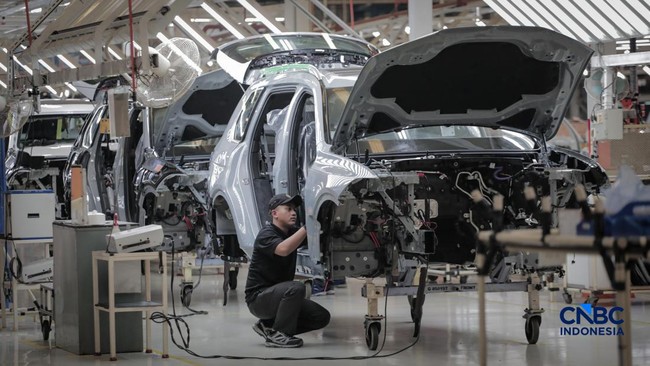
Jakarta, CNBC Indonesia - Indonesia’s manufacturing activity is increasingly eroded by the impact of the war.
Data from the Purchasing Managers’ Index (PMI) released by S&P Global today, Monday (4/5/2026), shows Indonesia’s PMI at 50 in April 2026. This figure is the lowest since July 2025, or the past nine months.
The PMI uses 50 as the starting point. Above 50 means the business world is in an expansion phase. Below that, it indicates contraction.
This means the current PMI is at a neutral level after eight months of expansion.
S&P explained that there was a deterioration in Indonesia’s manufacturing sector conditions in the early second quarter of 2026 due to several factors.
Companies recorded a fairly strong contraction in production volumes. This is the sharpest correction in nearly a year, although there was a slight increase in new orders.
This contraction was driven by a sustained decline in production volumes. The decline occurred for two consecutive months, with the rate of decline accelerating compared to March and becoming the fastest since last May.
Companies cited rising raw material prices, supply shortages, and weakening customer purchasing power as the main factors behind this decline.
On a more positive note, Indonesian producers reported a slight increase in new orders, although this was largely due to earlier ordering to anticipate future price increases and supply disruptions.
The data shows that this increase mainly came from the domestic market, while new export orders experienced a fairly significant decline.
Cost pressures increased during the month, with input cost inflation reaching the highest level in exactly four years.
Businesses linked the rise in input costs to increasing raw material prices and material scarcity.
Companies responded to this cost increase by raising selling prices in the early second quarter, with the rate of increase being the largest since October 2013.
Producers also slightly reduced purchasing activity in line with weakening production needs.
Delivery delays and supply shortages led companies to use existing raw material stocks to maintain production.
At the same time, finished goods stocks increased as producers held unsold items.
“Indonesia’s manufacturing sector is beginning to feel increasingly intense inflationary pressures amid the war in the Middle East. Companies recorded a fairly strong production contraction in April,” said Usamah Bhatti, economist at S&P Global Market Intelligence, quoted from the official website.
“In response, companies also reduced their workforce and purchasing activity during the month, while raw material stocks declined as companies used reserves amid difficulties in obtaining and receiving materials.”
“The positive signal is the slight increase in new orders. However, survey evidence suggests this is often due to customers making earlier purchases to anticipate further disruptions from the conflict,” Usamah added.
He further noted that optimism fell to the lowest level in five months amid uncertainty about the duration of the war.
The data indicates that the war in the Middle East is putting pressure on prices and supplies. In fact, the rise in cost burdens in April was the sharpest since April 2022, driving the fastest selling price increase in 12.5 years.
Companies also recorded a decline in confidence during the month, with optimism dropping to the lowest level in five months.
Companies Reduce Workforce
Companies noted that delivery delays and material shortages due to the war burdened supplier performance in April. As a result, supplier lead times lengthened significantly and have been occurring for seven consecutive months.
In line with production needs, producers reduced employment levels in the early second quarter. The rate of workforce reduction was moderate but the sharpest in 10 months.
At the same time, signs of easing capacity pressures are evident in the April data, with companies again recording a decline in backlogs of work.
Looking ahead, Indonesian producers remain optimistic that production volumes will increase over the next 12 months.
However, that confidence level has weakened to the lowest in five months. This optimism is supported by the launch of new products and hopes for the end of the conflict in the Middle East, although there are concerns that the war could last longer.