
Bad News for Indonesian Coal Entrepreneurs: South Korea Turns to Russia
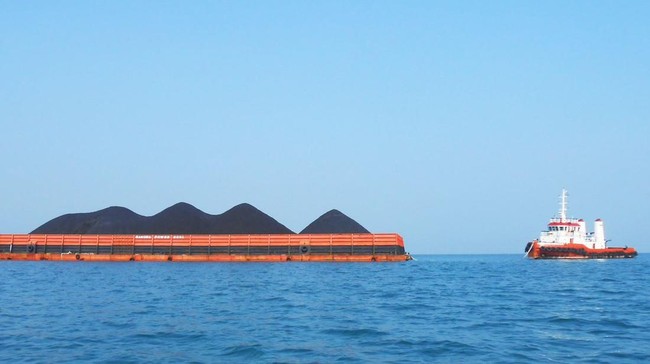
Coal prices continued to strengthen, supported by rising demand. According to Refinitiv, coal prices closed at US$134.75 per tonne on Wednesday (19/8/2026), up 0.37%. The increase extended a positive trend, with coal prices rising 0.86% over the past three days. Tightening supply and demand that has not fully recovered supported coal prices in China. Although mine-mouth prices rose, the sustainability of the rally still depends on whether production tightening can offset China’s coal demand conditions.
Good and bad news for Indonesia. The rise in China’s domestic coal prices could affect the import market. If China’s domestic supply tightens further, power plants and traders could increase purchases of imported coal, including from Indonesia. This is in line with previous market developments where Chinese coal prices strengthened as port and power plant stockpiles declined, while mine safety inspections limited supply. These conditions also increased interest in imported coal for blending.
Uncertainty over Indonesia’s production and exports has made Chinese buyers pay more attention to imported coal, especially for medium and low-calorie coal. Indonesia is an important factor because it is one of the main suppliers of thermal coal to the Asian market. Production disruptions, limitations on production quotas under the Work Plan and Budget (RKAB), and changes to export mechanisms have raised market concerns that Indonesian supply will become tighter.
China is one of the largest buyers of Indonesian coal. When Indonesian supply is disrupted or Indonesian coal prices rise, Chinese buyers have several alternative options such as Australia and Russia. Indonesian coal has advantages, particularly in price and calorie characteristics, so it cannot be easily replaced entirely. Concerns over Indonesian supply may therefore prompt Chinese buyers to make earlier purchases to secure stockpiles.
However, the same is not true for South Korea. Shanghai Metal Market reported a shift in South Korea’s coal supply sources, with Russia and Australia emerging as the main winners, while Indonesia experienced a decline. In the first half of 2026, Russian coal exports to South Korea surged 89.4% to 12.5 million tonnes, up 5.9 million tonnes compared with the same period the previous year. Russia now accounts for around 22% of South Korea’s coal imports, making it the second-largest supplier after Australia.
South Korea’s total coal imports rose 21.3% to 56.9 million tonnes. Notably, around 59% of South Korea’s net additional imports came from Russia. Australia also recorded strong growth, with shipments up 35.4% to 19.5 million tonnes. In contrast, supply from Indonesia fell 2.5% to 11.9 million tonnes. Canada also increased 33.3% to 5.6 million tonnes.
This development is important because it shows Indonesia is beginning to lose part of its South Korean market share. As Russia and Australia aggressively increase supply, Korean buyers have more options to replace Indonesian coal. Overall, additional supply from Russia and Australia reached 11 million tonnes, even larger than the increase in South Korea’s total imports of only 10 million tonnes. This means the increase from the two countries offset the decline in supply from Indonesia, Colombia, and the US.
Coal prices in Europe rose. The global coal market generally strengthened over the past week, although movements differed by region and coal type. European thermal coal prices rose above US$124 per tonne, driven by higher oil and gas prices, geopolitical risks, and lower renewable and nuclear energy production during a heatwave.
Kazakhstan was reported to have secured 4.1 million tonnes of coal at steam power plants in preparation for the upcoming heating season. Kazakhstan’s Ministry of Transport recorded that since 1 May 2026, 17.8 million tonnes of coal had been delivered to power plants and 1.2 million tonnes distributed to the communal sector. Currently, stockpiles stand at 4.1 million tonnes at power plants and around 300,000 tonnes for communal needs.
The Kazakh government is preparing an action plan to ensure coal supply remains smooth during winter, especially for power plants and public facilities. Railway operator Kaztemirtrans operates around 29,000 open wagons, which is considered sufficient to meet coal transport needs for power plants, households, and industry. The government has also implemented an integrated digital system to track coal in real time, from production and delivery to sales.