
Backing the One Data Law, Home Affairs Minister Highlights Need to Align Development Programmes
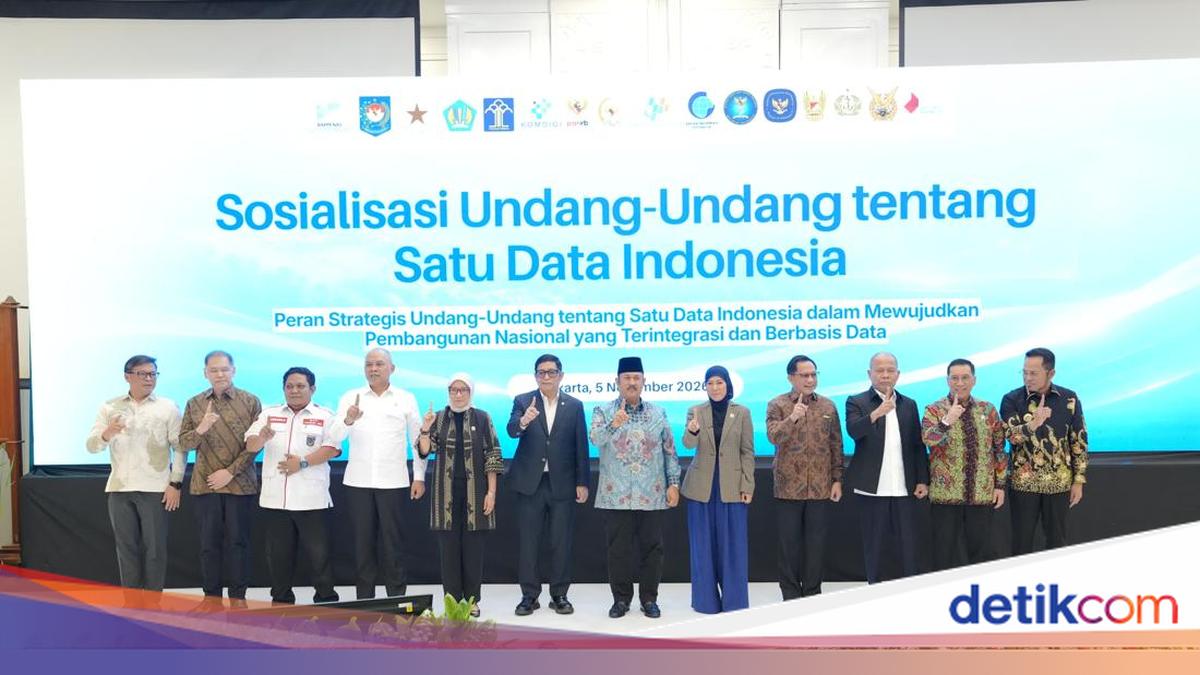
Home Affairs Minister Muhammad Tito Karnavian has affirmed his support for implementing the One Data Indonesia (SDI) Law. He said the policy could strengthen coordination between central and regional government programmes by integrating data across ministries and agencies.
“This is clearly beneficial for regional governments too, because they will not need to make so many official trips and the like. They will be able to see the central government programmes operating in their regions,” Tito said in a written statement on Thursday (5 November 2026).
He made the remarks at a socialisation event for the One Data Indonesia Law at the Ministry of National Development Planning (Bappenas) office in Jakarta on Thursday (5 November).
Tito said one benefit of data integration would be to help regional governments draw up development programmes aligned with central government policy. For example, when the central government builds a national road, a provincial government can adjust its plans for provincial roads that connect to it.
Similar coordination could be applied to other infrastructure projects, including irrigation networks. Regional governments could continue building secondary and tertiary networks within their respective jurisdictions, bringing development planning at central and regional levels into closer alignment.
As well as supporting development coordination, integrated data would make it easier for the central government to monitor programme planning and implementation in the regions. The Ministry of Home Affairs (Kemendagri), through its Regional Government Information System (SIPD), already holds data on regional governments’ work programmes and budgets.
The SIPD data include proposed Regional Revenue and Expenditure Budgets (APBD) and monthly updates on spending realisation. Ministries and agencies can use this information to see which development programmes regional governments have planned and are carrying out.
With this data, central and regional governments can align development from the planning stage through to implementation reviews. Evaluation findings can also inform the preparation of the following year’s budget, making development planning more efficient and focused.
“This will clearly save money and make development planning better. Implementation can be evaluated along the way, followed by a final evaluation to inform the next budget year,” he said.
Alongside these benefits, Tito cautioned that SDI implementation must respect the division of authority among ministries and agencies, which own sectoral data.
He said integration did not mean that all data management authority should be centralised in one body or institution, as this could lead to overlapping regulations and jurisdictions.
Information security must also be considered in implementing SDI. Tito said rules were needed on what data could be shared, particularly information related to national security, so that sensitive data received special protection and was not automatically included in data-sharing systems.
System security is also essential to SDI. Tito said the convenience of digital access must be matched by stronger cybersecurity to protect data from hacking and system disruptions that could hamper public services and government activities.
Taking into account the issues of authority, access rules and data security, Tito reiterated the Ministry of Home Affairs’ support for the One Data Indonesia policy.
“We believe that is all. The Ministry of Home Affairs fully supports the One Data Indonesia Law,” he concluded.
The event was also attended by Bob Hasan, chair of the House of Representatives’ Legislative Body, and its members; National Development Planning Minister and Bappenas head Rachmat Pambudy; Administrative and Bureaucratic Reform Minister Rini Widyantini; Communication and Digital Affairs Minister Meutya Viada Hafid; and National Cyber and Crypto Agency (BSSN) head Nugroho Sulistyo Budi.