
Background of the US-Saudi Arabia Joint Attack on Iraq
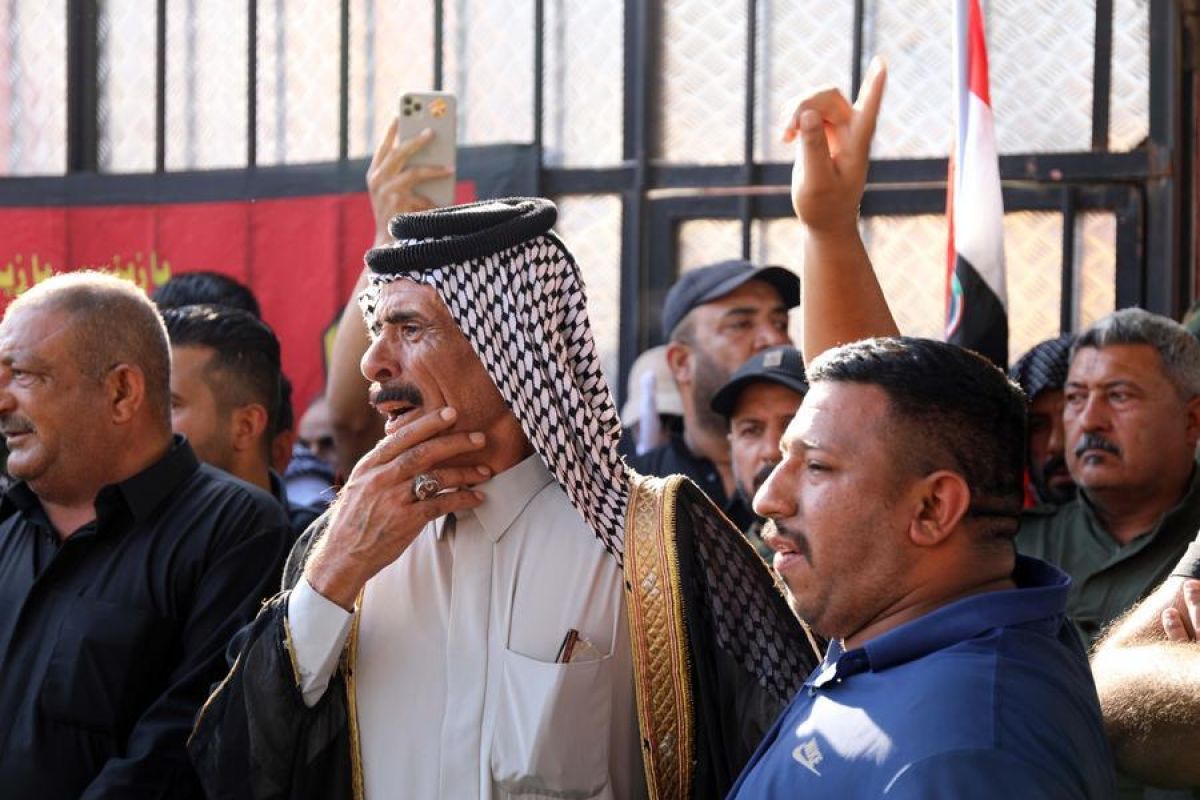
Baghdad (ANTARA) - The United States and Saudi Arabia launched a coordinated airstrike against Iraqi paramilitaries, the Popular Mobilization Forces (PMF), in the early hours of Wednesday (29/7). The attack marks a rare joint military operation between the two nations and has sharply increased tensions in the Middle East.
Analysts suggest that the airstrikes signify a significant shift in the regional security strategies of Washington and Riyadh, while simultaneously triggering concerns that rising tensions with Iran and its allied groups could drag the region into a wider conflict.
The attack targeted several PMF bases across various Iraqi provinces, including Baghdad, Basra, and Nineveh, resulting in at least 20 deaths and 32 injuries, according to a PMF statement. The PMF is a state-sponsored umbrella organisation in Iraq, consisting of dozens of paramilitary factions officially integrated into the Iraqi armed forces following the campaign against ISIS.
US Central Command (CENTCOM) confirmed the strikes. In its statement, the command noted that “US and Saudi Arabian fighter jets attacked several terrorist logistics and weaponry locations in various parts of eastern Iraq in a firm response to more than 30 drone attacks directed by the Islamic Revolutionary Guard Corps (IRGC) over the last 72 hours.”
CENTCOM stated that “Iran-aligned” militias in Iraq had launched over 600 attack attempts against US personnel and facilities between February and April. The command also warned that Iran and its proxies must cease these attacks or face further military responses.
Meanwhile, the Saudi Arabian Ministry of Defence reported earlier this week that its air defence systems had intercepted several drones originating from Iraqi territory that were targeting key oil facilities in the Kingdom.
The joint US-Saudi operation comes amidst diplomatic efforts by Baghdad. Iraq’s Council of Ministers for National Security condemned the attack, stating it occurred while the Iraqi government was actively coordinating with relevant parties to verify and address concerns raised by both Saudi Arabia and the US regarding the targeting of Saudi territory.
Regarding strategic considerations, analysts believe this rare military coordination between Washington and Riyadh indicates a major shift in regional deterrence dynamics, rather than being merely a response to recent drone strikes. Nadhum Ali, an international relations expert from Iraq, stated that the joint attack represents a “highly dangerous security escalation” intended to send a stern warning to pro-Iranian groups that attacks on vital energy infrastructure will not be tolerated.
Mohammed al-Jubouri, a media professor at al-Iraqia University in Baghdad, added that countering Iran-backed militias is one of the most critical considerations. Sabah al-Sheikh, a political science professor at the University of Baghdad, told Xinhua that the operation marks Saudi Arabia’s transition from a defensive posture to a proactive cross-border deterrence strategy.
“These attacks underscore the deepening security alliance between the US and Saudi Arabia at a time when regional stability is at a critical point,” added al-Sheikh.
The joint operation was launched amidst increasing direct military confrontation between Washington and Tehran across various parts of the Middle East, placing Iraq once again in the centre of the conflict. The Iraqi Presidency strongly condemned the US-Saudi attack on Wednesday as “unacceptable aggression” and a “blatant violation of Iraqi sovereignty.”
Experts warn that the operation could further destabilise Iraq’s fragile domestic balance. “The Iraqi government has been attempting to maintain a delicate balance between competing regional powers,” said al-Jubouri. “This joint attack risks destroying that neutrality and dragging Iraq deeper into the US-Iran conflict vortex.”
The risk of escalation remains high. The Islamic Resistance in Iraq, an umbrella organisation for pro-Iranian factions, denied targeting Saudi facilities and accused the US of committing a “new crime” by attacking the Iraqi PMF. “Our response to the American enemy is inevitable and may target its agents in Saudi Arabia whenever the situation demands,” warned the group.
Similarly, the Iraqi armed group al-Nujaba Movement vowed to retaliate, asserting they would never allow the US and Saudi Arabia to attack Iraqi territory without paying a heavy price. Ali noted that PMF factions are among Iran’s closest proxy networks, making the likelihood of further retaliation significant. “The coming days will be crucial,” concluded al-Sheikh. “If Iran chooses to retaliate on various fronts through its proxies in Iraq, Yemen, and Lebanon, the question is whether Washington and Riyadh are truly prepared for the consequences.”
Source: jawawa.id (https://jawawa.id/newsitem/background-of-the-us-saudi-arabia-joint-attack-on-iraq-1785455749)
Originally published by Antara (Indonesian) (https://www.antaranews.com/berita/5673623/latar-belakang-serangan-gabungan-as-arab-saudi-terhadap-irak), translated from Indonesian