
B50 Programme Set to Launch Soon, Indonesia Could Save Rp 48 Trillion on Fuel Imports
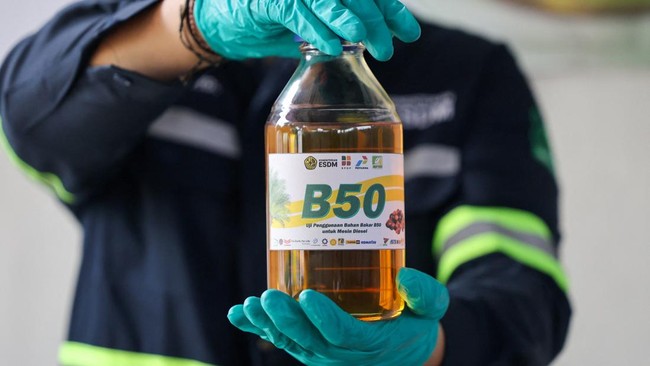
The government has revealed that the implementation of B50, or 50% biodiesel, will provide efficiencies of up to Rp 48 trillion in fuel oil imports.
Staf Ahli Bidang Konektivitas dan Pengembangan Jasa Kementerian Koordinator Bidang Perekonomian Dida Gardera stated that the increased utilisation of palm oil for domestic needs through the biodiesel programme continues to progress. The implementation of B35 in 2024 has been followed by B40 in 2025, and the government is currently preparing for B50 implementation.
“This policy is estimated to provide efficiencies of around Rp 48 trillion through the reduction in fuel oil imports,” Dida said during the Coordination Meeting on the Policy of the National Action Plan for Sustainable Palm Oil (RAN-KSB) in Jakarta, quoted on Thursday (30/4/2026).
On the other hand, the increase in domestic needs is balanced by rising production, so the performance of palm oil exports remains stable. Dida explained that this is supported by strong global demand and competitive commodity prices in the international market.
“Amid global economic dynamics, the national economy’s performance remains stable with contributions from various strategic sectors, including the palm oil industry. This commodity continues to show positive performance through increased exports, strengthened downstream processing, and its contribution to public welfare,” he stated.
Along with that, efforts to improve governance and strengthen sustainability aspects are becoming increasingly important to ensure long-term benefits. According to him, the contribution of the palm oil industry is quite significant, around 3.5% of Indonesia’s GDP.
“This is quite substantial. And the export value in 2025 also reached a record, around US$40 billion for palm oil with a volume of 38.84 million tonnes or an increase of 11%,” Dida said.
This positive performance shows that palm oil is not only Indonesia’s flagship export commodity but also provides real contributions to public welfare, especially for smallholder farmers. This is also reflected in the improvement of fresh fruit bunch (TBS) prices, which has a positive impact on farmers.
According to him, the government is also continuing to promote downstream processing in the palm oil industry as part of a strategy to increase added value. If in 2015 crude palm oil (CPO) exports still dominated, now the proportion of raw material exports has significantly decreased to around 8%.
In the framework of sustainability, the implementation of RAN-KSB serves as the main foundation in maintaining a balance between production, domestic needs including cooking oil and biodiesel, and exports. In addition, strengthening the certification system through the Indonesian Sustainable Palm Oil (ISPO) is also ongoing, including through the refinement of regulations and strengthening of geospatial data governance.
The meeting also highlighted the importance of strengthening an integrated policy framework from upstream to downstream. RAN-KSB is expected to serve as the national policy umbrella to ensure coordination across ministries and agencies, synchronisation between central and regional levels, and integration between planning, fiscal instruments, and field implementation, including the utilisation of Palm Oil Revenue Sharing Funds (DBH) to support implementation in the regions.