
B50 Programme Brightens Prospects for Palm Oil Downstreaming, Says Indef
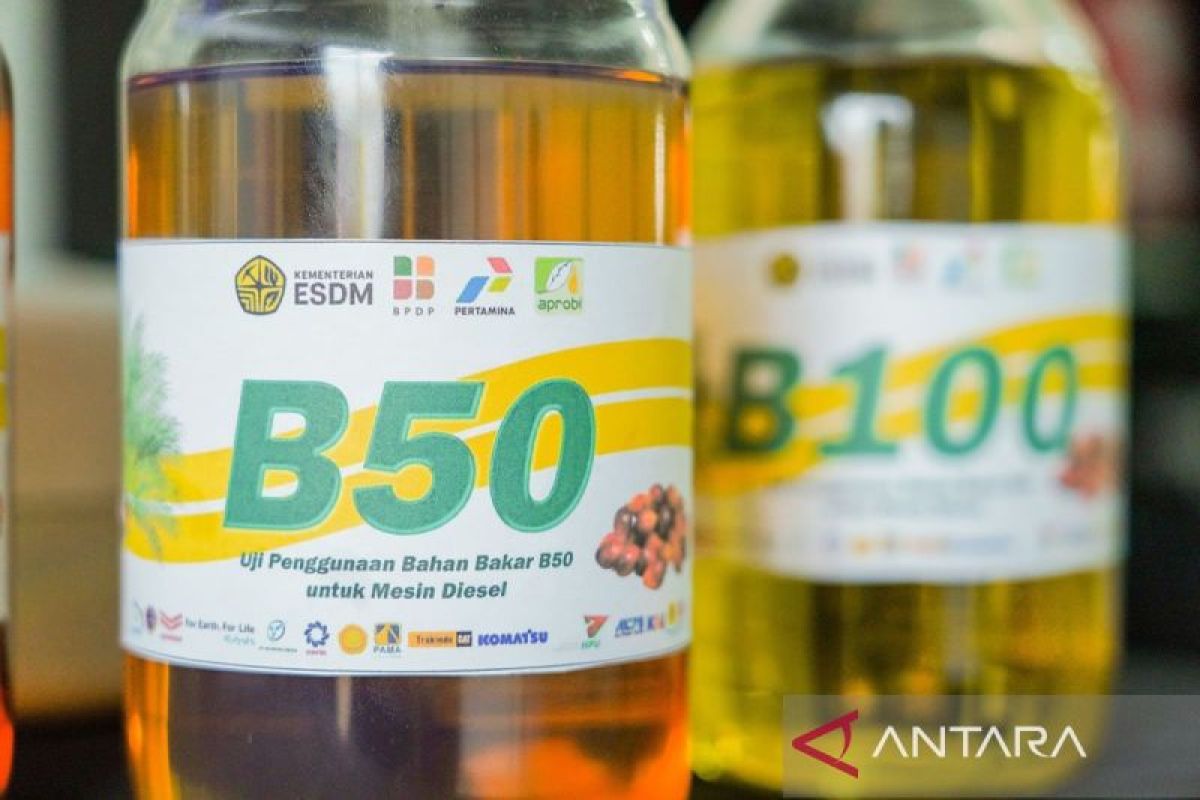
Jakarta (ANTARA) - Esther Sri Astuti, Executive Director of the Institute for Development of Economics and Finance (Indef), believes the B50 programme gives palm oil commodities in Indonesia bright prospects for downstreaming into other derivative products with high added value.
She said palm oil can be utilised not only as an energy feedstock but also developed for other sectors such as pharmaceuticals and food.
“In my view, the prospects for palm oil are very bright, especially as there are more than 200 types of palm oil derivative products. It can be processed not only into energy but also pharmaceuticals, food, and others,” Esther said when contacted in Jakarta on Friday.
She assessed that Indonesia has a great opportunity to strengthen palm oil downstreaming by developing various derivative products. However, this step must be accompanied by the development of a strong industrial ecosystem so as to enhance competitiveness in the global market.
“Indonesia has a great opportunity to continue downstreaming palm oil into various derivative products. But the most important thing is building the ecosystem,” she said.
Esther explained that the strategy for developing exports of palm oil derivative products needs to be directed towards product differentiation. Indonesia cannot rely solely on exports of crude palm oil (CPO) but needs to increase the production of value-added goods such as soap, detergent, biodiesel, and lubricants.
Beyond strengthening downstreaming, Esther urged industry players to pay attention to quality standards and international trade regulations. Palm oil derivative products, particularly those entering the food and cosmetics sectors, must meet the safety and sustainability standards applicable in destination markets.
Earlier, the Ministry of Energy and Mineral Resources (ESDM) stated that the implementation of B50 biodiesel delivers real economic benefits for the country while strengthening national energy independence.
Ministry of ESDM spokesperson Dwi Anggia, in a statement in Jakarta on Friday, explained that this transformation marks an era in which national energy sovereignty is driven directly by domestic commodities.
Under the new formula, she said, for every litre of diesel consumed by the public, half of it now comes from produce planted and produced directly by Indonesian local farmers.
According to her, the full involvement of domestic commodities is believed to strengthen the fundamentals of national energy resilience in facing global market turmoil.
“The B50 programme delivers real economic benefits for the country. The implementation of B50 is projected to save the state around Rp170 trillion in foreign exchange throughout 2026. Those savings are important capital to support development and strengthen the national economy. In addition, the programme is targeted to create up to 2.1 million new jobs for the public,” she said.