
B50 Officially Launched, Bahlil Says Indonesia Will No Longer Import Diesel
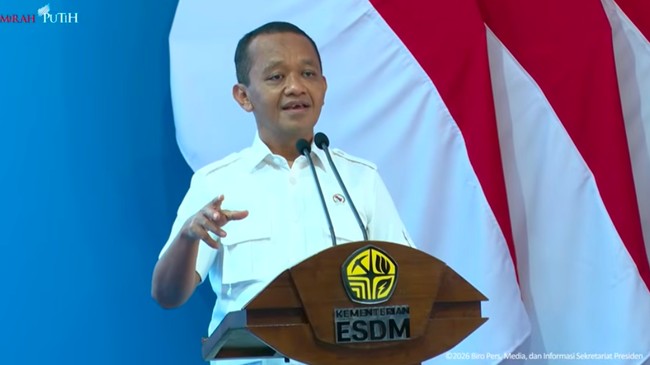
Minister of Energy and Mineral Resources (ESDM) Bahlil Lahadalia has asserted that with the implementation of the mandatory B50 biodiesel programme—a blend of 50% palm oil-based biofuel with diesel—Indonesia will cease diesel imports this year. In his speech, Bahlil noted that Indonesia’s diesel consumption reaches 38 to 40 million kilolitres per year. “Initially, we still imported around 3 to 4 million kilolitres per year. With the implementation of B50, we will no longer import diesel, this is the first time,” Bahlil explained at the launch of the B50 Mandatory Programme in Karawang on Thursday.
Bahlil explained that the B50 achievement was not an easy task. Typically, increasing the biodiesel blend takes up to ten years, including a three-year trial phase. “But the President’s instruction was to find a way to implement B50 in 2026. We interpret this not just as a technical issue, but as a matter of national sovereignty and energy independence,” Bahlil stressed.
The legal basis for the B50 Mandatory Programme is Minister of Energy and Mineral Resources Regulation Number 4 of 2025 concerning the Business and Utilisation of Biofuels, and Ministerial Decree Number 257.K/EK.01/MEM.E/2026 of 2026 concerning the Obligation to Blend 50% Biodiesel with Diesel Fuel through Financing by the Plantation Fund Management Agency. The policy mandates a 50% biodiesel blend for all diesel fuel types. Biofuel business entities, fuel business entities, and distributing business entities are required to apply the established standards and quality specifications.
Following the launch, the government has provided a three-month transition period until 30 September 2026 before B50 is available at public fuel stations (SPBU). This transition is intended to exhaust existing biodiesel stocks with the B40 blend specification. According to ESDM Ministry data, the readiness for B50 implementation has been ensured through comprehensive preparation covering technical aspects, supply and distribution, and regulation. From a technical perspective, the government has conducted tests on B50 usage across various diesel engine sectors to ensure performance, safety, and compatibility.
Regarding supply and distribution, the government has confirmed the readiness of biodiesel production capacity, raw material availability, and blending and distribution infrastructure. Comprehensive testing of B50 has been carried out across six diesel engine user sectors: automotive, agricultural tools and machinery, heavy mining equipment, marine transport, power generation, and railways. The B50 usage tests involved various parties, including ministries and agencies, business entities, associations, academics, technology owners, user industries, and other relevant stakeholders. “Some tests are still ongoing, but interim results show that B50 is safe to use and meets performance and compatibility aspects for various diesel engine applications.”
The implementation of B50 is expected to have significant economic and environmental impacts. In 2025, the B40 programme saved foreign exchange amounting to Rp133.3 trillion, and through the B50 Mandate in 2026, this is projected to increase to approximately Rp170 trillion. Additionally, B50 is expected to increase the added value of crude palm oil (CPO) from Rp20.92 trillion to around Rp23.49 trillion and absorb approximately 2.1 million workers. “The B50 mandatory programme will reduce greenhouse gas emissions by up to approximately 44.46 million tonnes of CO₂ in 2026,” the ESDM Ministry stated.