
B50 Mandate Takes Effect Tomorrow, Government Urged to Recalculate Risks
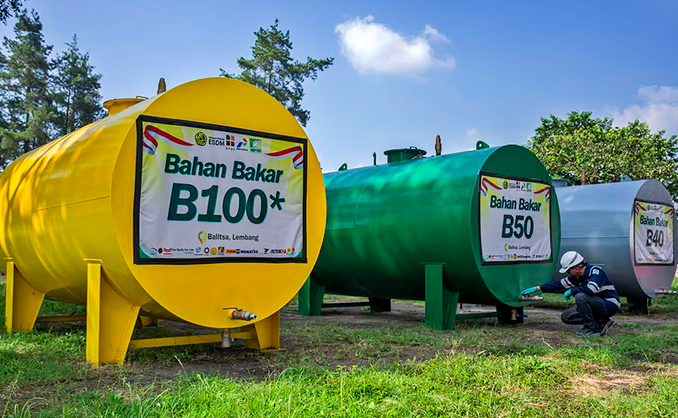
The Institute for Essential Services Reform (IESR) has urged the government to conduct a thorough evaluation of the mandatory 50 percent biodiesel blend (B50) policy, which takes effect on 1 July 2026. IESR Chief Executive Officer Fabby Tumiwa acknowledged that the blending policy could serve as a short-term transition strategy, particularly to reduce diesel imports. However, he stressed that B50 should not become the primary long-term energy transition strategy. Fabby noted that the accelerated B50 mandate was formulated during an energy crisis triggered by the closure of the Strait of Hormuz in late February, which caused global oil prices to surge and disrupted Indonesia’s oil imports. He argued that the government must assess the policy holistically, considering not only the reduction in diesel imports but also its impact on costs, raw material supply, food prices, smallholder farmers, and the environment. IESR highlighted potential cross-sectoral trade-offs from expanding the biodiesel mandate. Increased demand for crude palm oil to meet B50 requirements could affect raw material supplies for the food sector, cooking oil prices, inflation, and the welfare of small-scale farmers. The think tank also cautioned that rising demand for feedstock must be managed to avoid placing additional pressure on environmental carrying capacity and land governance. The institute further argued that the economic rationale for B50 needs re-evaluation, as the underlying conditions have shifted. Global oil prices and the risk of import disruptions have decreased, supply diversification efforts are underway, and domestic diesel production from refineries, including the Balikpapan refinery, has commenced. Meanwhile, CPO prices remain high, which could increase the cost of implementing B50, particularly if the price gap between biodiesel and diesel widens. IESR analysis indicates that electrification can reduce dependence on imported fuel, lower emissions, and strengthen energy independence if electricity supply increasingly comes from renewable sources. Modelling by IESR suggests that battery electric vehicle adoption could cut emissions by 46 million tonnes of carbon dioxide by 2060. The impact would be significantly greater if combined with vehicle age restriction policies, potentially increasing electric car adoption to 66 million units and electric motorcycles to 143 million units, reducing emissions by up to 210 million tonnes by 2060. Additionally, raising the public transport mode share from 16 percent to 40 percent could cut emissions by 101 million tonnes of carbon dioxide by 2060. In comparison, expanding the biodiesel mandate to B60 is projected to reduce emissions by around 88 million tonnes by 2060, though this estimate does not account for emissions from land-use change. IESR emphasised that the government must ensure the biodiesel policy does not divert focus from more structural energy transition agendas. Long-term decarbonisation of transport requires a stronger policy mix, including accelerating electric vehicle adoption, improving public transport, implementing vehicle efficiency standards, developing renewable energy, and providing widespread charging infrastructure. The institute urged the government to conduct an open evaluation of the benefits, costs, and risks of the B50 policy to ensure energy policies do not merely respond to short-term situations but align with decarbonisation targets, energy security, price stability, and public protection.