
B50 Era: From energy security to Indonesia's new position on the world stage
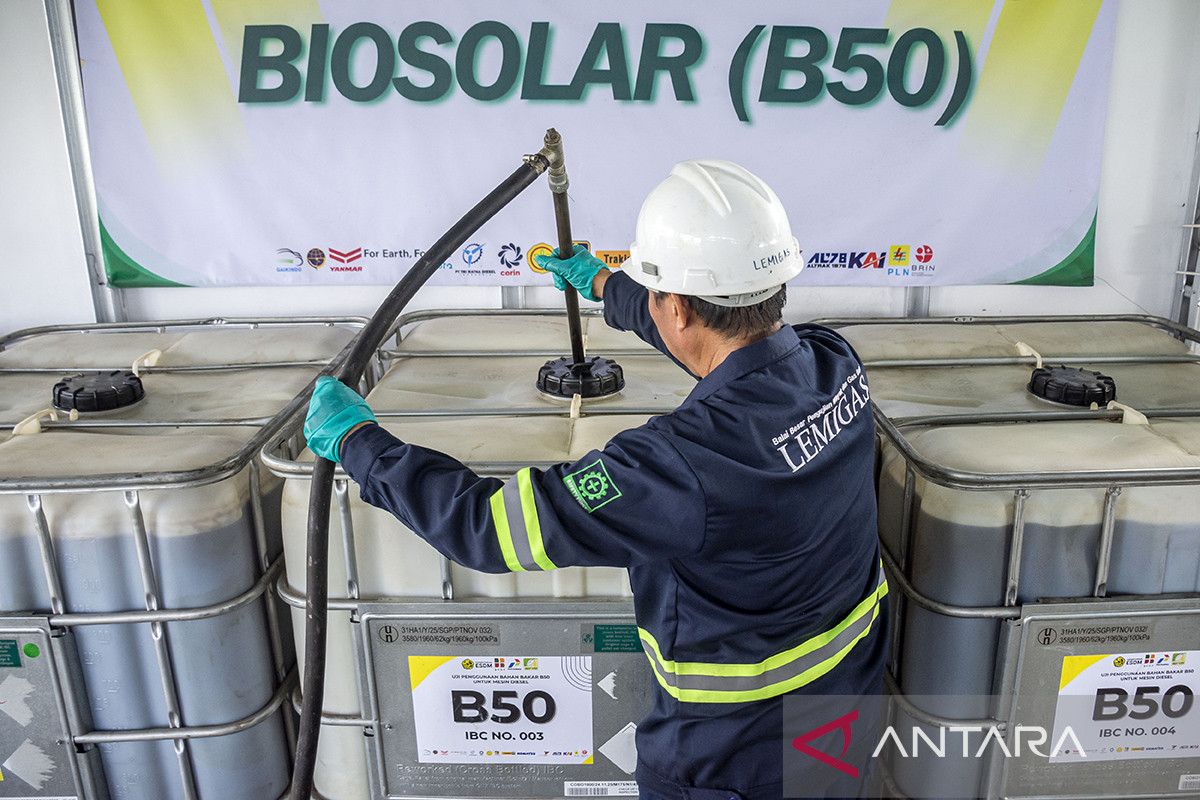
Jakarta (ANTARA) - Starting 1 July 2026, Indonesia will enter a new phase in national energy policy through the implementation of B50 biodiesel, which consists of a 50 per cent blend of palm oil-based biodiesel and 50 per cent fossil diesel.
With the government’s affirmation for the upcoming 1 July, Indonesia will become one of the countries with the highest biodiesel blending mandates in the world, following the conclusion of the B40 period which began in 2025.
In this regard, the government has undertaken thorough preparations through various feasibility trials for B50. It is reported that the government has conducted B50 tests on various types of vehicles and heavy machinery.
Consequently, the government is confident and has decided to increase the biodiesel blend level to 5lar 50 per cent to provide a more environmentally friendly driving experience and as part of efforts to strengthen national energy security.
This programme carries significant economic implications. The Ministry of Energy and Mineral Resources (ESDM) estimates that the implementation of B50 could save the state’s foreign exchange reserves by up to Rp157.28 trillion, or approximately 9.18 billion US dollars, in 2026.
These savings will stem from the reduced need for fuel imports, specifically diesel.
Spokesperson for the Ministry of ESDM, Dwi Anggia, during a press conference on the acceleration of strategic government programmes at the Government Communication Agency Auditorium in Jakarta on Wednesday (17/6), acknowledged that with the implementation of B50 in 2026, Indonesia could save Rp157.28 trillion in foreign exchange.
The use of B50 biodiesel is believed to be able to cut fossil-based diesel consumption by approximately 4 million kilolitres per year. As a result, pressure on the trade balance can also be reduced.
Thus, Indonesia’s dependence on energy supplies from abroad can be suppressed amidst the uncertainty of global oil prices and global geopolitical dynamics.
Global Attention
The utilisation of Indonesia’s natural resources through B50 biodiesel technology is poised to attract global attention. While several countries are still implementing biodiesel blends at the B10 to B20 level, Indonesia is making a leap to B50.
Furthermore, neighbouring countries, such as Malaysia, are currently operating under a B15 biodiesel mandate. This situation positions Indonesia as one of the pioneers in the large-scale use of palm oil-based biodiesel.
For the national palm oil industry, the B50 policy is expected to increase the absorption of crude palm oil (CPO) in the domestic market.
To date, Indonesia remains the world’s largest palm oil producer, with production reaching over 46 million tonnes per year.
The increased demand for biodiesel raw materials has the potential to provide a larger market for the national palm oil industry, while simultaneously reducing reliance on exports.