
B50 Biodiesel Tested on Mining Vehicles and Heavy Equipment for 1,000 Hours
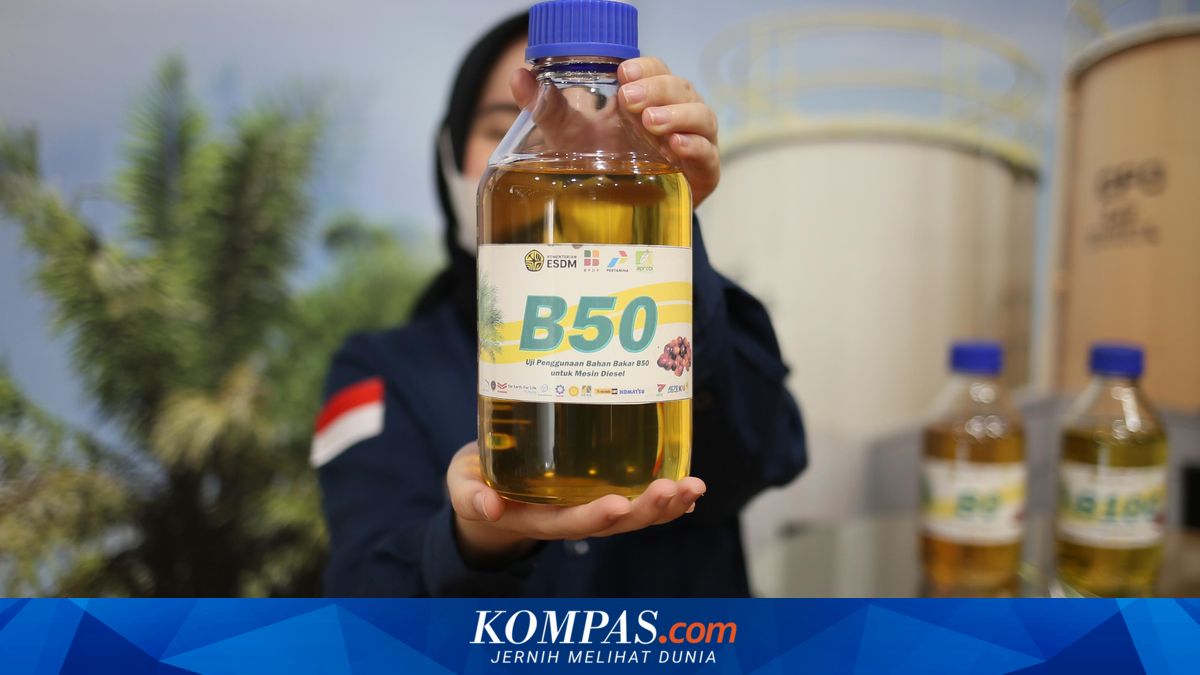
JAKARTA, KOMPAS.com – The Ministry of Energy and Mineral Resources has recorded promising results from trials of B50 biodiesel on mining vehicles and heavy equipment, a sector characterised by heavy workloads and high energy consumption.
These tests represent an important step in proving that plant-based fuel is not only suitable for light vehicles but can also be relied upon in heavy industrial sectors such as mining.
The Director General of New, Renewable Energy and Energy Conservation, Eniya Listiani Dewi, revealed that the ongoing trials show stable engine performance without significant disruptions.
“This is a positive indication that biodiesel can be relied upon to support industrial sector operations,” she said.
The testing is conducted comprehensively, covering fuel quality, engine performance, and long-term operational durability.
Similar results have been observed in the field. PT Harmoni Panca Utama, through its General Manager of Plant, Rochman Alamsjah, stated that the company has conducted direct testing by comparing the use of B40 and B50 on heavy equipment units.
“We have now been running for approximately 1,000 hours, comparing the performance of two Komatsu HD785 units, one consuming B40 and the other B50,” Rochman said.
Although there is a slight increase in fuel consumption, around 3.12 per cent compared to B40, this figure is still within acceptable limits and does not significantly affect heavy equipment productivity.
From a technical perspective, B50 fuel has also met various important parameters, such as water content, oxidation stability, and FAME content.
For information, B50 is a mixture of 50 per cent biodiesel based on vegetable oil, such as palm oil, and 50 per cent diesel. Its development is a continuation of the successful implementation of B40, which has been running nationally since early 2025.
In addition to strengthening energy resilience, the programme also brings economic and environmental benefits, from reducing fuel imports, increasing domestic palm oil absorption, to lowering greenhouse gas emissions.
In the future, the government will continue B50 trials in various other sectors. The results of this series of tests will later serve as the basis for formulating policies and technical standards for the national implementation of B50.