
B50 Biodiesel Implementation Set for 1 July 2026: Progress Update on Trials
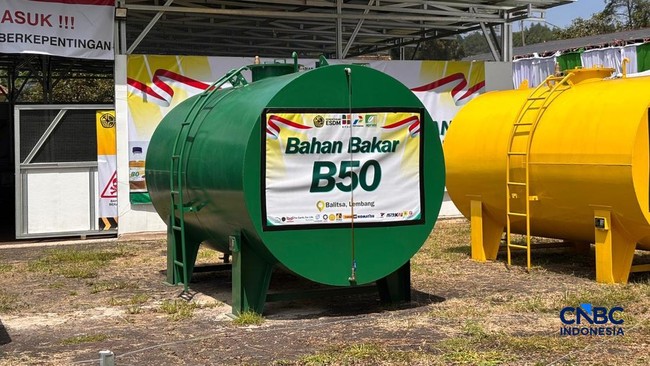
The Ministry of Energy and Mineral Resources (ESDM) has revealed the latest developments regarding the planned implementation of the 50% biodiesel blending mandate (B50) for diesel fuel. The government aims to implement B50 starting 1 July 2026.
The Minister of Energy and Mineral Resources, Bahlil Lahadalia, confirmed that the government is completing the final stages of technical testing to ensure vehicle engine readiness before B50 is officially launched nationally. Based on the tests conducted so far, field trials have shown results in line with targets.
“It will be implemented as of 1 July 2026. I will likely hold a meeting with the trial team in one week,” he said when met at the DPR RI Building, Jakarta, on Monday (8/6/2026).
According to the Minister, the success rate of the B50 trials has reached 80-90%. A key finding is that the quality of B50 fuel shows better characteristics in maintaining the operational stability of diesel engines.
“Currently, we are continuing trials, and everything is at 80 to 90%. Alhamdulillah, the results are good; even the water content in B50 is better compared to B40,” said Bahlil.
Bahlil emphasised that all detailed technical evaluation results will be presented to the public once the final analysis is completed.
Previously, the Director General of New, Renewable Energy, and Energy Conservation (EBTKE) at the Ministry of ESDM, Eniya Listiani Dewi, stated that the government is finalising regulations so that the policy can be implemented simultaneously across various sectors starting next July.
“With this 50% increase projected through December 2026, the potential foreign exchange savings could reach IDR 157.28 trillion, and the added value of CPO is also projected to rise by IDR 24.68 trillion,” she explained during a Hearing with Commission XII of the DPR RI, Jakarta, on Thursday (4/6/2026).
The government noted an increase in distribution targets alongside the transition from the current B40 programme to B50. The biodiesel allocation for 2026 is set at 15.64 million kilolitres (KL), with the new policy on 1 July 2026 projected to see that volume surge to 17.60 million KL by the end of the year.
Regarding the distribution scheme, the government ensured that the incentive scheme will remain the same as current policies. Incentives will only be provided for distribution within the Public Service Obligation (PSO) sector, while the non-PSO sector will follow market price mechanisms.
The implementation of B50 is also projected to have a broad social impact, with employment absorption estimated to reach 2.2 million people. From an environmental perspective, increasing the renewable energy mix is targeted to reduce greenhouse gas emissions by up to 46.72 million tonnes of CO2 throughout 20226.
“The benefits of the biodiesel mandate are well-known; the 40% biodiesel programme has been in place since 2025, achieving a total realisation of 14.94 million KL, with a 95.67% absorption rate across both PSO and non-PSO sectors,” she concluded.