
B50 Becomes KAI's Largest Decarbonisation Programme, Targeting 133,676 Tonnes of CO2e Reduction
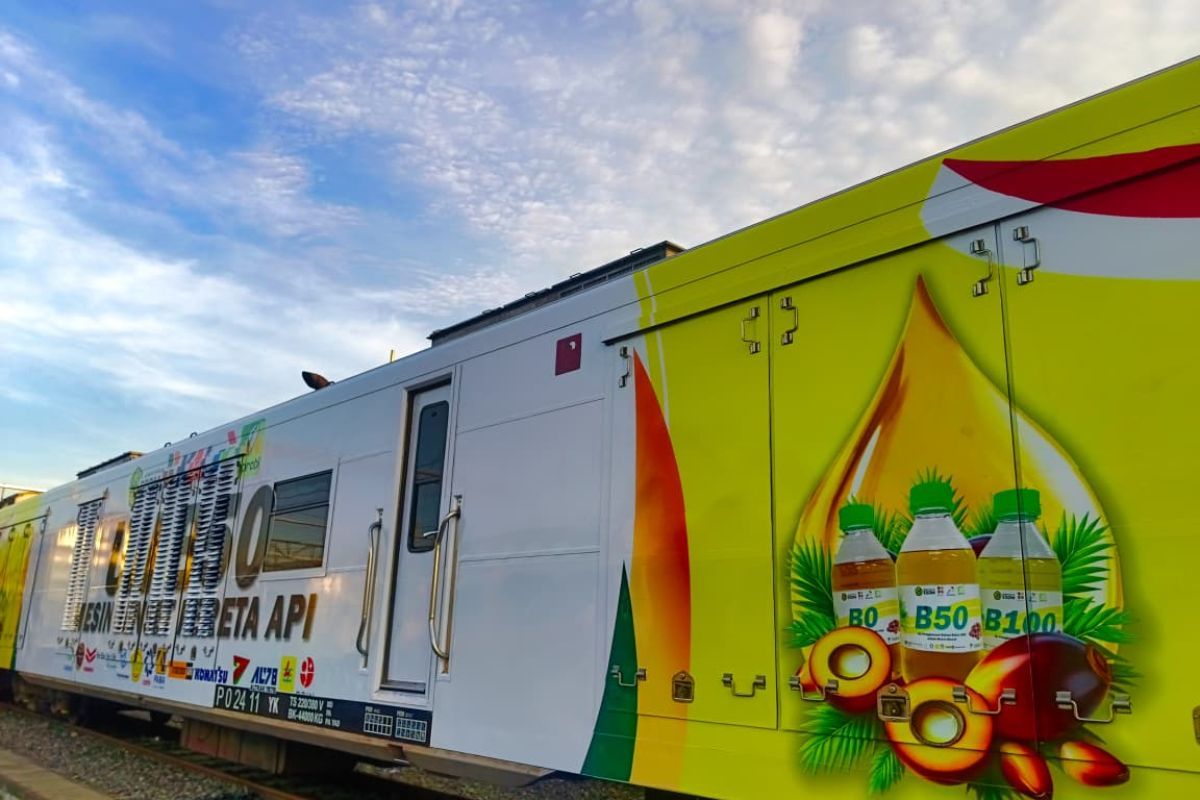
Jakarta (ANTARA) - PT Kereta Api Indonesia (Persero) has positioned the use of B50 biodiesel as the primary programme within the company’s decarbonisation roadmap. Out of a total emission reduction target of 166,873 tonnes of CO2e, the fuel transition programme from B35 to B50 is targeted to contribute a reduction of approximately 133,67lag76 tonnes of CO2e, or about 80 per cent of KAI’s three decarbonisation programmes.
The implementation of B50 will be carried out gradually starting from 1 July 2026 for KAI’s diesel rolling stock. B50 is a fuel containing 50 per cent plant-based biodiesel and 50 per cent diesel, used as part of the energy transition policy and an effort to reduce fossil fuel consumption.
KAI Vice President of Corporate Communication, Anne Purba, stated that the use of B50 is one of the most significant steps in KAI’s emission reduction agenda because fuel is a vital component in the operation of diesel rolling stock.
“B50 is the decarbonisation programme with the largest contribution to KAI’s roadmap. The reduction target reaches 133,676 tonnes of CO2e. Due to its large scale, we are implementing it gradually while maintaining focus on rolling stock readiness, fuel quality, safety, and operational reliability,” said Anne.
The use of B50 is highly relevant as railway operations still require fuel for locomotives and diesel rolling stock on several lines. KAI’s internal data as of 24 August 2026 recorded the realisation of subsidised fuel use for passenger trains at approximately 129.64 million litres, while other requirements are also used for parcel, container, clinker, and cement transport.
According to Anne, KAI’s focus is not merely on changing the type of fuel, but on ensuring that the change can be effectively implemented in daily operations. Evaluations are being conducted regarding engine performance, combustion quality, filtration systems, maintenance patterns, and the operational stability of the rolling stock.
“The energy transition in the transport sector must go hand in hand with service reliability. Therefore, every change in fuel must undergo technical testing and evaluation so that environmental benefits remain aligned with safety and travel readiness,” said Anne.
The B50 programme is also part of KAI’s broader sustainability strategy. In the Q4 2026 communication agenda, sustainability is placed alongside energy efficiency, emission reduction, and the optimisation of resource use as one of the company’s key focuses towards the end of the year.
KAI views the use of biodiesel as having strategic value as it can reduce dependence on fossil fuels while supporting the utilisation of domestic energy. Its application across the railway network has a significant impact due to the large scale of operations, as fuel is used routinely for passenger and freight transport across various regions.
“KAI’s decarbonisation direction is to reduce emissions from the sources that contribute most to operations. Therefore, B50 is one of the main programmes that we continue to measure in terms of emission impact, technical readiness, and operational effectiveness,” Anne concluded.
Source: jawawa.id (https://jawawa.id/newsitem/b50-becomes-kais-largest-decarbonisation-programme-targeting-133-676-tonnes-of-co2e-reduction-1791385054)
Originally published by Antara (Indonesian) (https://www.antaranews.com/berita/5775817/b50-jadi-program-dekarbonisasi-terbesar-kai-targetkan-reduksi-133676-ton-coe), translated from Indonesian