
B50 Assessed as Beneficial for Rupiah and Trade Balance, Economist Notes
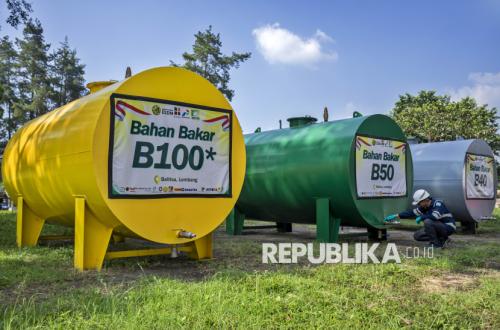
Permata Bank Chief Economist Josua Pardede believes that the implementation of mandatory B50 biodiesel could assist the movement of the rupiah exchange rate and the trade balance without burdening the State Budget (APBN). However, he noted that the primary condition for this scheme to succeed is good policy governance.
“If governance is well-managed, B5_0 can support the rupiah and the trade balance without excessively burdening the state budget,” Josua stated in Jakarta, as reported on Monday (6/7/2026).
Josua explained that, on a macro level, the implementation of B50 has the potential to provide significant benefits by directly reducing the need for diesel imports, particularly while the rupiah remains weak and global oil prices are vulnerable to increases.
The potential foreign exchange savings from this policy are likely to be greater than the direct additional costs to the government, especially if global oil prices are high, the rupiah is weak, and crude palm oil (CPO) prices do not surge too sharply.
However, Josua noted that the calculations would change if CPO prices rise sharply while global oil prices decrease.
“In such a condition, the cost of the biodiesel blend could become more expensive than imported diesel, meaning the government or the palm oil fund management agency would have to bear a larger deficit,” he said.
Another risk is that the increased demand for palm oil for energy could squeeze the supply of cooking oil or palm-based food products if supply governance is not robust.
Josua mentioned that the implementation of B50 would be beneficial if executed with discipline regarding supply, pricing, and funding; however, it could become costly if the target blend is pursued without ensuring that economic costs remain controlled.
On the fiscal side, the implications for the state budget are mixed. On one hand, B50 can help reduce pressure from oil and gas imports, curb the need for foreign exchange, and support the rupiah.