
B50 and E5 strengthen Indonesia's path to energy self-sufficiency
B50 and E5 are not merely policies increasing the blend of biofuel. They serve as a foothold for building a more self-reliant energy system by harnessing the advantages of domestic resources.
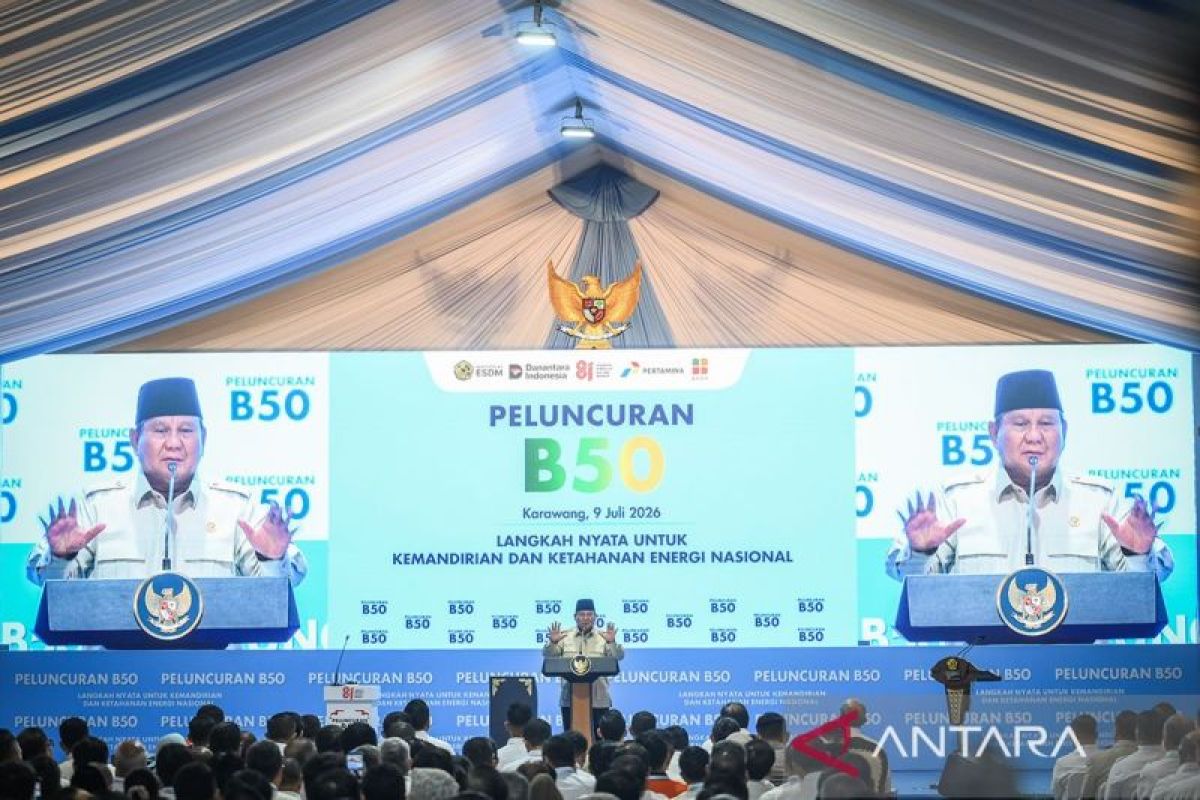
Jakarta (ANTARA) - The launch of the Mandatory B50 Biodiesel Programme on 9 July 2026 marks the start of the nationwide application of a 50 per cent biodiesel blend in diesel-type fuel oil.
The policy forms part of the government’s strategy to reduce dependence on imported energy whilst strengthening the use of domestic resources to achieve the energy self-sufficiency target.
At the programme launch at the KM 57 Rest Area in Karawang Regency, West Java, President Prabowo Subianto said Indonesia is the first country to implement the B50 mandate. The policy is one of the important steps towards energy self-sufficiency, targeted to be achieved within the next three years.
According to the President, strengthening the bioenergy mix must go hand in hand with downstreaming, so that strategic commodities are no longer exported as raw materials but processed domestically to generate greater added value for the national economy.
This policy direction emerged at a time when energy supply security has once again become a concern for many countries. Geopolitical turmoil and the potential disruption of global oil distribution routes show that dependence on imported energy can become an economic vulnerability.
President Prabowo previously also warned that escalating tensions in strategic regions such as the Strait of Hormuz could affect global energy supplies. In that context, expanding the use of domestic energy sources concerns not only economic efficiency but also strengthening national resilience.
B50 is one of the key instruments for achieving that goal. The policy does not merely raise the biodiesel blend from B40 to B50, but also increases the share of diesel demand met by biodiesel made from domestic palm oil.
The greater the use of energy sourced from domestic production, the smaller the dependence on diesel imports.
The government also projects that Indonesia will no longer require diesel imports, which previously reached around 3-4 million kilolitres per year out of total national consumption of around 38-40 million kilolitres.
The foreign exchange savings not only reflect reduced import value but also have the potential to improve the oil and gas trade balance and ease pressure on foreign exchange needs.
On the other hand, rising biodiesel demand will increase the absorption of palm oil in the domestic market, driving processing industry, distribution, and logistics activities that create added value at home.
The Ministry of Energy and Mineral Resources estimates that the implementation of B50 will increase the added value of crude palm oil (CPO) by around Rp23.49 trillion, absorb around 2.1 million workers, and reduce greenhouse gas emissions by around 44.46 million tonnes of CO2 in 2026.
This combination of economic and environmental benefits shows that biofuel has developed into a development instrument that supports not only the energy sector but also industry and employment.
Source: jawawa.id (https://jawawa.id/newsitem/b50-and-e5-strengthen-indonesias-path-to-energy-self-sufficiency-1783637470)
Originally published by Antara (Indonesian) (https://www.antaranews.com/berita/5643321/b50-dan-e5-memperkuat-jalan-indonesia-menuju-swasembada-energi), translated from Indonesian