
Azerbaijan Bans the Hijab; Commentator Says It Should Learn from Indonesia
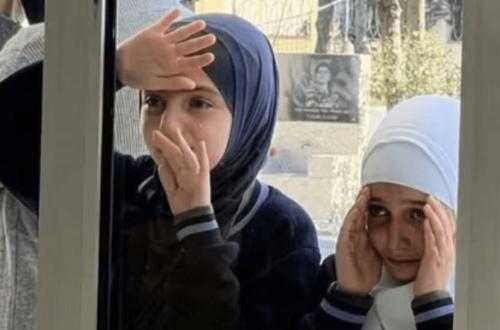
JAKARTA — The debate over restrictions on wearing the hijab in Azerbaijan has drawn attention from an Indonesian Islamic-economics analyst. The policy, which is linked to the country’s principle of secularism, is seen as potentially overlooking economic opportunities in the Muslim clothing industry, or modest fashion, which continues to expand in global markets.
Imas Damayanti, an Islamic-economics analyst at Paramadina University and junior researcher at INDEF’s Center of Sharia Economic Development (CSED), said the hijab should not be viewed as a threat to national sovereignty. Instead, it could be part of a country’s economic strength and an instrument of soft power.
“The hijab is not a threat. From an economic perspective, it can actually be a source of economic strength and soft power for a country. Indonesia has demonstrated this through its strong modest-fashion industry,” Imas said in a written statement received by Republika.
According to Imas, the debate in Azerbaijan shows that religious expression through clothing remains a sensitive issue in relations between the state and society. Yet the Muslim clothing industry can be developed as an inclusive economic sector without setting it against national identity.
Imas said Azerbaijan, whose population is majority Muslim, has the opportunity to develop a Muslim clothing industry, as Indonesia has done. The South Caucasus country could learn from Indonesia’s experience in building a halal-industry ecosystem within a diverse society.
Indonesia has shown, she said, that the hijab is not only an expression of religious faith but also an economic commodity that drives production, trade and the creative industries. This development has also created opportunities for small and medium-sized businesses, designers, textile manufacturers and exporters.
According to the State of the Global Islamic Economy (SGIE) 2024/2025 report, global Muslim consumer spending on clothing and footwear reached US$327 billion in 2023. It is projected to rise to US$433 billion by 2028, reflecting the scale of the global Muslim-fashion market.
The report also lists Indonesia as a significant player in the global modest-fashion industry. Imas said Indonesia ranked seventh among Organisation of Islamic Cooperation (OIC) member countries as an exporter in the sector.
“Indonesia still has a great deal of work to do to improve its modest-fashion industry, but it can serve as an example of a country with a diverse culture and religions that has made the hijab part of an inclusive economic cycle,” she said.
The hijab debate in Azerbaijan
The issue of the hijab in Azerbaijan has a long history connected to the application of secular principles in the education system. In December 2010, the government, through the Ministry of Education, issued a directive banning female students from wearing the hijab at school. The policy prompted protests and public opposition, although it was not applied uniformly across all educational institutions.
The debate returned to the spotlight after reports emerged of restrictions on wearing the hijab in Azerbaijan’s educational institutions. School-uniform rules and the implementation of secular education principles have been sources of tension between the government and some Muslim communities. However, restrictions in schools cannot automatically be interpreted as a nationwide ban on wearing the hijab.
Azerbaijan is constitutionally a secular state that separates religion from government, although most of its population is Muslim. Its constitution also guarantees freedom of religion, but the government imposes certain restrictions on religious activities on the grounds of public order and secular education principles. The tension between state policy and individuals’ right to express their beliefs is why the hijab remains a subject of debate in Azerbaijan.