
Ayatollah Khamenei's Funeral Procession to Span Six Days, Millions Expected
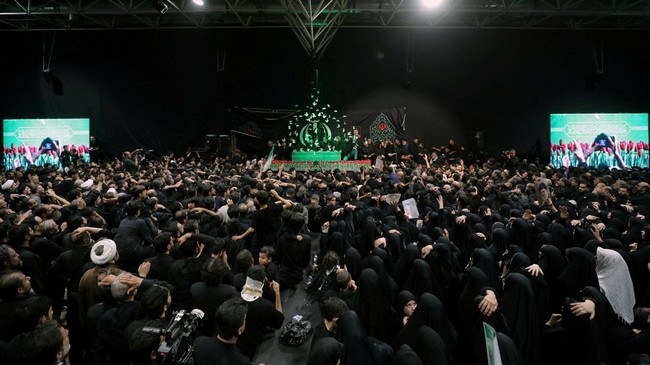
Iran will hold a massive funeral procession for Supreme Leader Ali Khamenei for six days, from Saturday to next Thursday. The series of ceremonies will take place in several cities across Iran, before concluding with the burial in Mashhad, Khamenei’s birthplace.
The Iranian government estimates that millions of citizens will attend the procession. Parts of the ceremony will also be held in the two Shia holy cities in Iraq, Karbala and Najaf, making it one of the largest funeral processions in the history of the Islamic Republic.
Iran’s First Vice President and chairman of the funeral organising committee, Mohammad Reza Aref, described the procession as the “most important event of this century” and expects it to be the largest gathering since the 1979 Iranian Revolution. According to him, the funeral is not merely a final tribute but also a symbol of national unity and Iranian resilience amidst foreign pressure.
Khamenei died in a joint attack by the United States and Israel last February. The funeral, originally scheduled for early March, was forced to be postponed due to the war. His casket will now lie in state at the Mosalla Grand Mosque in Tehran, before being processed through Qom, Karboala, and Najaf, ending in his birthplace, Mashhad, for burial on Thursday.
The Iranian government stated that the scale of the funeral is intentionally designed to send a political and religious message to the world.
Iranian Parliament Speaker Mohammad Bagher Ghalibaf said, “We must rise and convey the nation’s call to the world so that the world knows the Iranian nation will not remain silent in the face of oppression.” He also noted that the Iranian people would demonstrate their loyalty to the Supreme Leader through the procession.
The main procession is scheduled for Monday, following a route of approximately 10 kilometres from Imam Hossein Square to Azadi Square in Tehran. Tehran Mayor Alireza Zakani estimates that around 20 million people will attend the event, representing about one-fifth of Iran’s total population of 90 million.
In addition to Iran, Khamenei’s remains will also be taken to the two Shia holy cities in Iraq, Karbala and Najaf, at the request of several Iraqi political figures. Iranian Foreign Minister Abbas Araghchi has already visited both cities to discuss preparations intended to affirm Khamenei’s position as the spiritual leader of the Shia community.
Iran has also scheduled a special ceremony for foreign guests on Friday. The Secretary of the National Funeral Committee, Ali Akbar Pourjamshidian, stated that representatives from approximately 30 countries are expected to attend. However, no leaders from Europe or the United States have been invited.
The funeral proceedings take place amidst a 60-day ceasefire between Iran and the US. The government hopes the procession will demonstrate the unity of the Iranian people behind the state leadership while strengthening Tehran’s position in negotiations with Washington.
Nevertheless, security forces have been placed on full alert throughout the procession. The government has closed offices in Tehran for three days, restricted traffic, closed the capital’s airspace on the day of the main procession, and deployed fighter jets to anticipate potential security threats amidst the gathering of millions of mourners.