
Ayatollah Khamenei and the Death That Changed the World
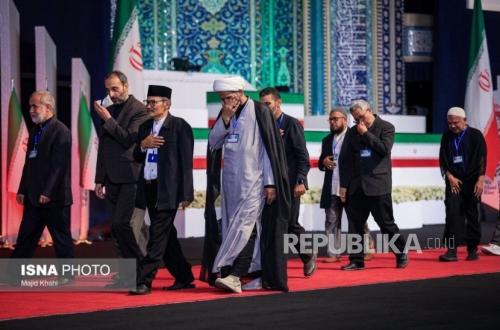
The morning sun had not yet appeared in the city of Tehran on Friday (5/6/2026) when my guests from Indonesia and I disembarked from the aircraft.
Still exhausted from the long journey, we were suddenly informed that we had been given the opportunity to pay our final respects to the remains of the martyr Ayatollah Ali Khamenei and his family at the Grand Musalla of Tehran.
The series of final respects in the main hall of the Musalla, which involved approaching five coffins directly, was actually intended for official state envoys. The official ceremony was scheduled to take place several hours later. I felt a sense of relief because, although the government had not sent a special envoy to be present in that room, at least we—ordinary citizens—could serve as ‘representatives’ of Indonesia.
In the courtyard outside the Musalla, crowds from various parts of the city in Iran had already begun to arrive. As the day progressed, the numbers grew. Iranian media reported that the number of citizens attending the Musalla in Tehran from Friday to Sunday reached millions.
Attendees were managed through a system of entry and exit, permitted to remain in the Musalla for only fifteen minutes before leaving to allow others their turn.
From Tehran, the bodies of the five martyrs will be transported to be prayed over in the city of Qom, then to Najaf and Karbala (Iraq), before returning to Iran to be buried in the city of Mashhad.
Estimates from Iranian officials, as cited by the media, suggest that the total number of people attending the funeral procession over these six days could reach 30 million.