
Awaiting Maturity in Law Enforcement: A Test of Transparency for the Police and Attorney General's Office
Indonesia is once again forced to swallow the bitter pill of increasingly complex corruption. At a time when the public hoped the state would intensify its war against graft, a shocking event has shaken perceptions of law enforcement institutions. A search operation by the National Police team drew public attention because one of the locations was linked to the private residence of the Junior Attorney General for Special Crimes at the Attorney General’s Office. This incident is seen not merely as a procedural matter, but as a severe test of the nation’s commitment to eradicating corruption.
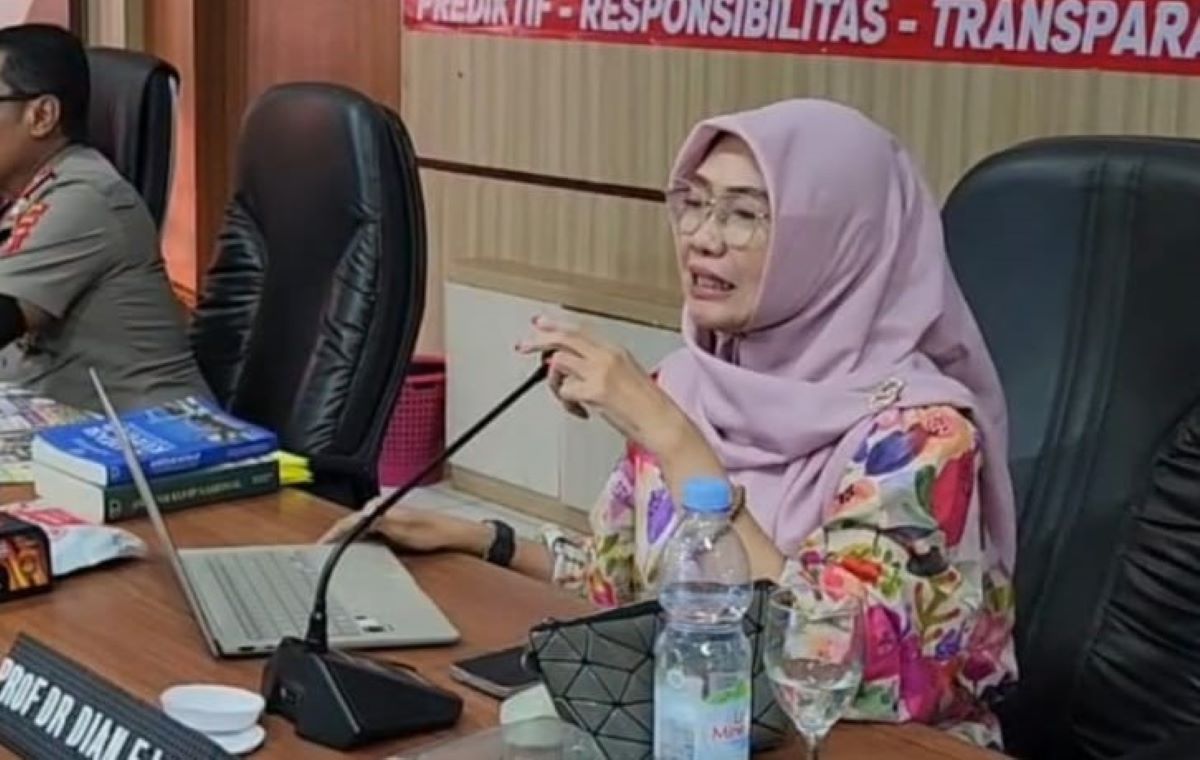
According to Professor Dian Ekawaty Ismail of Gorontalo State University, this is a test of the state’s integrity in fighting corruption. When law enforcement agencies intersect in handling corruption cases, public questions grow louder. ‘Is this purely part of law enforcement, or are there issues of coordination and authority that must be explained openly to the public?’ she asked. She stressed that the people should not be left as mere spectators in an inter-institutional struggle. A state of law cannot operate in a space filled with speculation. Every action by the authorities must be explained transparently, because what is at stake is not just a case, but public trust in state institutions.
The situation is made more sensitive by the fact that the issue of corruption in the country is at a worrying point, with numerous major cases involving staggering state losses continuing to surface. In a series of searches, the Police’s Corruption Eradication Task Force and the Metro Jaya Regional Police seized evidence of significant value, including gold bars, cash in various currencies, and documents. These figures demonstrate that corruption is no longer a petty crime; it has evolved into an offence involving massive assets, extensive networks, and complex interests. Yet, amidst this situation, there is a danger greater than the loss of state money: the loss of public confidence that the law truly works in their interest.
The legal observer reminded that law enforcement institutions must be symbols of certainty and justice. The police, the prosecutor’s office, and all anti-corruption bodies should stand united against the common enemy, which is corruption. National energy must not be wasted on displaying inter-institutional tensions while the corrupt enjoy the profits of the ensuing chaos. ‘The public does not need institutional drama. The public needs answers,’ she stated. If there are allegations of legal violations, the legal process must proceed without discrimination. If there are none, an open explanation must be given to prevent prejudice that further erodes trust.
This need for transparency also applies to major government programmes, such as the free nutritious meals initiative. Programmes that touch on the basic needs of the people and involve large budgets must be built on a foundation of transparency and strong oversight. The noble goal of improving the quality of the nation’s future generations must not turn into a new space for corrupt practices. The nation has seen this pattern too often: good programmes launched with the best intentions, only to stumble due to weak supervision and the poor integrity of some implementers.
Corruption is not just the theft of state money; it is the theft of the future. It robs children of better education, denies the public their right to decent healthcare, and steals the people’s trust in democracy. Therefore, all state institutions must realise that the main enemy is not another institution, but corruption itself. The fight against corruption must not become an arena for showing off strength, nor should the law lose its authority because the people see more conflict over jurisdiction than certainty of justice. Indonesia needs law enforcement that is brave but also mature: tough on corruptors, yet submissive to legal principles, transparent in action, and accountable to the people. In the end, the state is judged not only by how many cases it uncovers, but by whether the people still believe that the law truly sides with the truth.
Source: jawawa.id (https://jawawa.id/newsitem/awaiting-maturity-in-law-enforcement-a-test-of-transparency-for-the-police-and-attorney-generals-office-1783749023)
Originally published by Media Indonesia (https://mediaindonesia.com/politik-dan-hukum/909807/menanti-kedewasaan-penegakan-hukum-ujian-transparansi-polri-dan-kejagung), translated from Indonesian