
Awaiting Danantara's Magic to Achieve 8% Growth
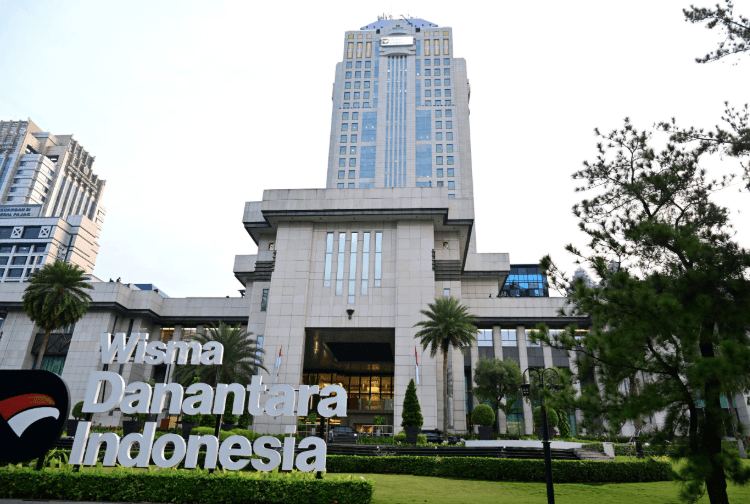
Investment is a key factor in achieving Indonesia’s economic growth target of 8%. For this reason, the role of the Daya Anagata Nusantara Investment Management Agency (BPI Danantara) is crucial. Danantara manages the country’s strategic investments by optimising state-owned enterprise (BUMN) assets, financing national development projects, reducing dependence on the state budget, and attracting foreign investment.
Minister of Investment and Downstreaming, who is also CEO of Danantara, Rosan Perkasa Roeslani, stated that Indonesia’s investment realisation during the 2014-2024 period reached approximately US$789.9 billion. “For the next five years, the figure is US$789.9 billion. That is the figure we must achieve to reach 8% growth. This can be achieved if we all work together, collaborate, and synergise,” he said during a discussion in Jakarta. Rosan also mentioned that around 30% of national investment realisation in 2025 comes from downstream programmes, particularly in the mineral and energy sectors. Consequently, the government continues to encourage downstreaming in various other sectors, including forestry, oil and gas, fisheries, marine, and agricultural commodities.
Danantara is currently supporting the development of 26 strategic national downstream projects to increase the added value of natural resources, with a total investment value reaching Rp225 trillion. These projects are projected to absorb 37,833 workers. “Downstreaming not only generates investment but also creates jobs, drives regional economies, and ensures the added value is enjoyed domestically,” said Head of the BUMN Supervisory Board and Danantara COO Dony Oskaria. The project implementation is carried out in two phases. Phase I, which began with a groundbreaking on 6 February 2026, includes six priority projects across 13 locations with an investment value of Rp109 trillion and the potential to absorb 11,456 workers. Phase II, which commenced with a groundbreaking on 29 April 2026, covers 10 priority projects in 13 locations with an investment value of Rp116 trillion and is expected to absorb 26,377 workers. “Downstreaming must provide tangible benefits for the national economy, not only in terms of investment but also its impact on society,” Dony stated. The 26 projects cover various strategic commodities, ranging from the mining sector, such as the construction of aluminium, stainless steel, and copper smelters, to the energy and food sectors through the development of bioavtur and bioethanol facilities, palm oil processing, coconut industry, and integrated poultry farming.
Beyond investment, the transformation of BUMN management is also a focus for Danantara. Through ongoing transformation, the BUMN Supervisory Board and Danantara are pushing state-owned companies to become healthier, more adaptive, and more competitive. Dony Oskaria noted that 274 state-owned companies had been restructured as of 31 July 2026. “We have now streamlined 274 companies. In total, we will eventually eliminate 652 companies, leaving us with only 250 companies,” he said. The simplification of corporate structures, strengthening of business strategies, and improvement of operational performance are expected to create greater added value for the national economy.
At the end of July 2026, President Prabowo Subianto expressed appreciation for Danantara Indonesia’s performance in reducing the number of BUMNs. Through consolidation and mergers, 250 BUMNs were cut during the first 18 months of his administration. According to the President, this consolidation is an initial step towards a larger target by the end of 2026. By 31 December 2026, the number of BUMNs is targeted to be reduced from 1,074 to between 250 and 300 through closures, mergers, and consolidation. All will be encouraged to become productive BUMNs that create added value. Based on a report received by the President, the closure and merger of 250 BUMNs has saved routine or overhead costs of around Rp50 trillion. “By 31 December, I think this savings figure could rise, perhaps approaching Rp70 trillion to Rp80 trillion,” President Prabowo said in his speech at the Plenary Cabinet Session at the State Palace, Jakarta.
Executive Director of the Institute for Development of Economics and Finance (Indef), Esther Sri Astuti, assessed that the merger or formation of BUMN holding companies eliminates duplication of corporate functions, making operations leaner and more agile. “Through mergers or the formation of holding companies, the elimination of functional duplication makes companies leaner, more agile, and more competitive in the global market,” she said. Esther believes that besides grouping BUMNs by classification, the government also needs to reduce the types of BUMNs to make it easier to control and monitor these state-owned companies. She considers BUMN restructuring necessary because some entities are financially healthy while others are ailing, meaning they are loss-making. “Financial restructuring saves BUMNs from debt and improves their balance sheets,” she said. Consequently, healthy BUMNs can provide more optimal dividends and support the financing of national strategic projects.
From the business sector, the Indonesian Chamber of Commerce and Industry (Kadin) affirmed its commitment to helping the government achieve the 8% economic growth target. This step is viewed as crucial to lifting Indonesia out of the middle-income trap. Kadin Indonesia Chairperson Anindya Novyan Bakrie also expressed Kadin’s readiness to cooperate with BPI Danantara to boost national capital flows. Kadin assesses that the government’s evaluation and strengthening of economic programmes have been positively received by the global market.