
Avoiding the Trump-Iran War, Farmers in Indonesia's Neighbouring Country Feel the Impact
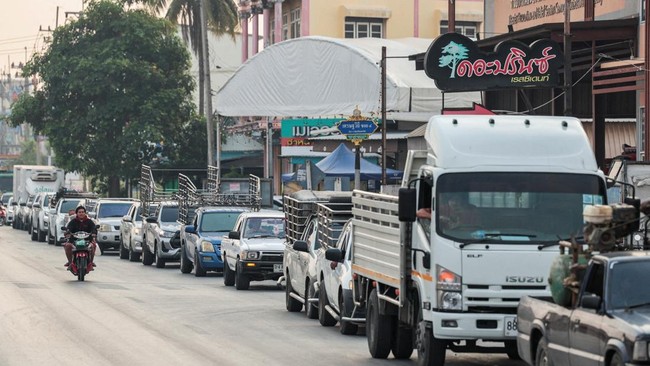
Rising fuel prices due to global geopolitical conflicts are beginning to hit Thailand’s agricultural sector. Farmers in the country are now facing diesel shortages and spikes in production costs, even though their nation is not directly involved in the war.
In the Ayutthaya region in central Thailand, a farmer named Thanadet Traiyot has had to queue for hours at public fuel stations to obtain diesel for operating water pumps in his rice fields. However, his efforts often end in vain.
He claims that for the past five days, he has been unable to refill his fuel stock to normal levels after the fuel station ran out of supply while he was in the queue.
“This is greatly affecting us as farmers because we rely on fuel for our operations. We need fuel to tend to crops and pump water to maintain the rice plants,” said Thanadet, as quoted by The Guardian on Saturday (28/3/2026).
This energy crisis is a heavy blow to Thailand’s agricultural and fishing sectors, which are among the world’s major exporters of rice, sugar, and fishery products.
Farmers are struggling to run agricultural machinery, including during harvest times, while many fishermen have halted their sea voyages. Fishermen’s groups have even warned that the multi-billion-dollar industry could come to a complete standstill in a matter of days without government assistance.
Pairote Rodpai, a farmer managing 11.2 hectares of land, expressed concern about future fuel price increases.
“In the next month, how high will the prices rise? During the upcoming harvest, fuel needs will be much greater,” he said.
His uncle, Theerasin Thanachawaroj, described the situation as the worst in three generations of his family’s farming.
In addition to energy, another threat comes from the fertiliser sector, which is heavily reliant on imports, particularly from the Persian Gulf region. A prolonged conflict could worsen fertiliser prices and availability.
Prices Surge, Supplies Tight
Not only shortages, but diesel prices have also surged sharply since the outbreak of the conflict involving the United States, Israel, and Iran. As of Thursday, diesel prices in Thailand reached 38.94 baht per litre, or approximately Rp17,500, up from the previous 29.94 baht per litre, or about Rp13,500.
This surge occurred after the government ended energy subsidies. Although the government claims to have energy reserves for 100 days, in the field, long queues and “out of stock” signs are becoming common at various fuel stations.
The impact is spreading to various sectors. Taxi services at Bangkok’s main airports have been reduced, tourist boats have stopped operating, and even some temples have reportedly delayed cremation processes due to fuel limitations.
Several countries in Southeast Asia are beginning to take energy-saving measures. The Philippines has implemented a four-day work system for some civil servants, while Laos is encouraging the use of bicycles and public transport.
In Thailand, the government is preparing assistance measures for farmers, including purchasing rice above market prices and fertiliser subsidies.
Source: jawawa.id (https://jawawa.id/newsitem/avoiding-the-trump-iran-war-farmers-in-indonesias-neighbouring-country-feel-the-impact-1774680677)
Originally published by CNBC Indonesia (https://www.cnbcindonesia.com/news/20260328103915-4-722103/tak-ikut-perang-trump-iran-petani-di-negara-tetangga-ri-kena-getahnya), translated from Indonesian