
Avoiding Dependence on PTPN, Puskopkar Develops New Business Lines
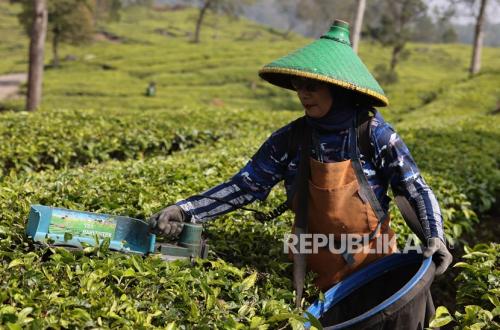
The PTPable VIII Employee Cooperative Centre (Puskopkar) has begun reducing its dependence on its parent company’s business by expanding its business lines into several new sectors, ranging from tea distribution and agrotourism to coin laundries and barbershops.
This move is intended to build more diverse revenue streams so that the cooperative’s business performance does not rely entirely on the condition of the parent company. Puskopkar PTPN VIII is a secondary cooperative that oversees 43 primary cooperatives.
Secretary of Puskopkar PTPN VIII, Dina Novelia Hidayat, stated that for many years, the cooperative’s business activities have relied heavily on the PTPN VIII business ecosystem, which is now part of PTPN I Regional II. While this business model provided a relatively stable market, dependence on a single ecosystem poses a challenge when the parent company’s business conditions change.
“Initially, Puskopkar was very dependent on PTPN’s business, which provided a very captive market. Our hope is to no longer be dependent on the parent company, so that when PTPN’s condition is low, we do not suffer as well. We must have other baskets,” said Dina.
Currently, Puskopkar still operates businesses related to the PTPN ecosystem, including production transport services. The cooperative transports tea leaves from plantations to factories and distributes finished tea products to buyers. Puskopkar also serves as a distributor for several PTPN tea products, such as Walini, Goalpara, and Gunung Mas. Its market is now being expanded to the hotel, restaurant, and cafe (Horeca) segment.
Beyond these businesses, Puskopkar is developing several new revenue sources. The cooperative is developing agrotourism businesses in the Ciwalini area and has entered the service industry, such as coin laundries and barbershops. This business diversification is a strategy for Puskopkar to build a more diverse business portfolio while optimising its existing assets.
According to Dina, developing new businesses requires greater capital support. So far, the cooperative’s internal capital has been sourced from member savings; however, capital requirements are increasing alongside expansion plans. Puskopkar has utilised revolving fund financing from the Cooperative Revolving Fund Management Agency (LPDB) Koperasi since 2021. The cooperative is now re-submitting a financing proposal to support the development of several business lines, including the optimisation of assets in the Ciwaruga area, West Bandung.
“We need larger and accountable capital. With the cooperation with LPDB, we hope our working capital becomes stronger so that the business can grow,” said Dina. She added that the financing application process also encourages the cooperative to be more disciplined in terms of administration, legality, governance, and risk management. She noted that this process is vital to ensure that business expansion can run healthily and sustainably.
“If the process follows Good Corporate Governance and includes complete documentation, it actually serves as a safeguard for us,” she added.
Moving forward, Puskopkar also plans to optimise assets in the Ciwaruga area. The area is planned for development for various business activities, including a cottage concept. The asset is also being considered as a permanent office for Puskopkar and a space to develop new business units to provide more optimal economic value.
The President Director of LPDB Koperasi, Krisdianto, stated that the development of Puskopkar shows that cooperatives can continue to grow by identifying business opportunities and developing new revenue sources. He noted that business diversification is a crucial step in building business resilience, especially for cooperatives that have historically had strong links to a single business ecosystem.
“Puskopkar PTPN VIII provides an example that cooperatives do not have to stop at existing businesses. Cooperatives can develop new businesses while still leveraging their existing strengths and building more diverse revenue streams,” said Krisdianto.
He stated that LPDB revolving fund financing is directed towards strengthening the business capacity of cooperatives so they can grow healthily, productively, and provide benefits to their members. “What we hope for is not just the disbursement of financing, but how that financing acts as a lever for productivity and cooperative independence. When business units expand, assets increase, and the business becomes stronger, ultimately the benefits must return to the members,” said Krisdianto.
Overseeing 43 primary cooperatives and thousands of members, most of whom originate from the PTPN ecosystem, Puskopkar is now striving to build a more diverse business portfolio. From production transport and tea distribution to agrotourism and service businesses, diversification is Puskopkar’s strategy to strengthen cooperative independence while expanding economic benefits for its members.