
Aviation Fuel Prices Surge: Government's Strategy to Control Airfare Increases
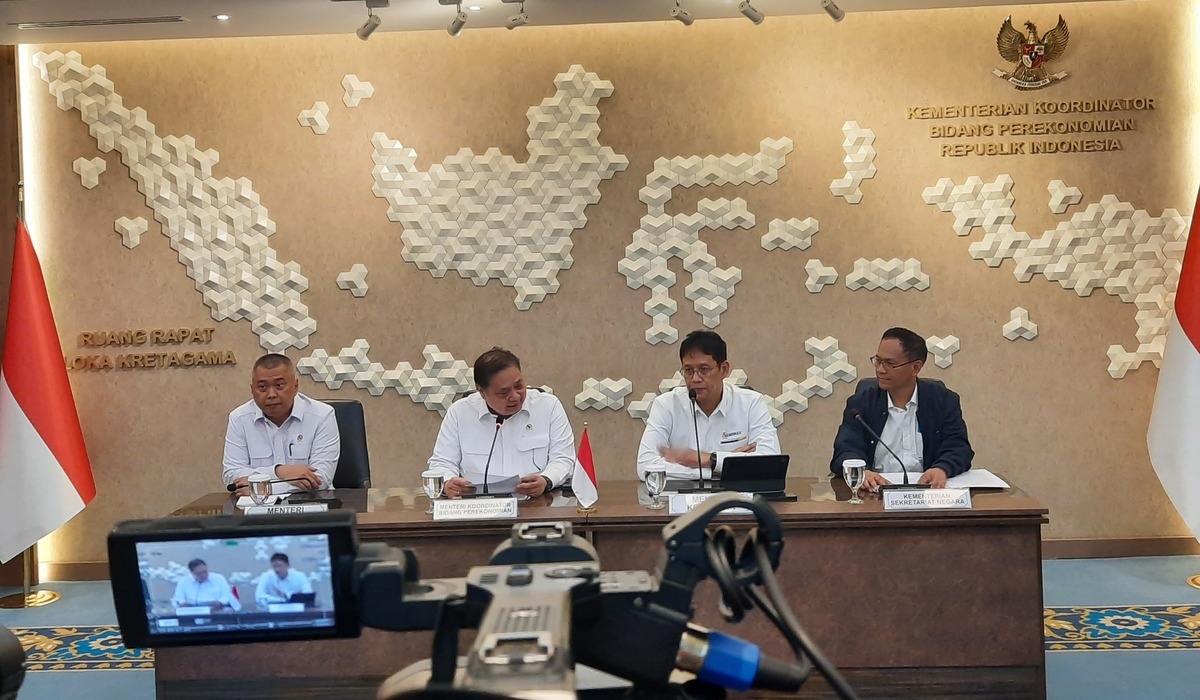
The government is swiftly preparing strategic mitigation measures to respond to the global surge in avtur prices triggered by geopolitical and geo-economic dynamics. Coordinating Minister for the Economy, Airlangga Hartarto, emphasised that the government’s primary focus is to keep airfares affordable for the public.
Airlangga revealed that avtur accounts for a significant 40% of airline operating costs. As of 1 April 2026, the price of avtur at Soekarno-Hatta Airport has reached Rp23,551 per litre. This figure remains more competitive compared to Thailand (Rp29,518/litre) and the Philippines (Rp25,326/litre).
“Various countries have already raised avtur prices, such as Thailand at Rp29,518 per litre and the Philippines at Rp25,326. At Soekarno-Hatta Airport, the avtur price as of 1 April was around Rp23,551 per litre. If we do not adjust, other airlines could take advantage of the price difference,” said Airlangga during a press conference in Jakarta on Monday (6/4).
Therefore, the government is preparing strategic mitigation steps to ensure airfares remain affordable for the public. “So, what the government is safeguarding is the ticket prices,” he stated.
First, the government through the Ministry of Transportation is increasing the fuel surcharge to 38%.
“If we do not adjust, various other airlines could exploit the price difference. So, what the government is safeguarding is the ticket prices,” Airlangga reiterated during the press conference in Jakarta on Monday (6/4).
“The fuel surcharge was previously raised by 10%, based on the upper limit of fares in 2019. It has now been adjusted to 38%. This applies equally to jets and propellers. Previously, jets were at 10% and propellers at 25%,” said Airlangga.
To keep domestic airfare increases affordable for the public, the government is limiting ticket price rises to between 9% and 13%. The first step involves implementing government-borne VAT of 11% for scheduled commercial air transport tickets in economy class domestically.
“With this calculation, the subsidy provided by the government amounts to around Rp1.3 trillion per month. We have prepared for two months, making it Rp2.6 trillion. This ensures the maximum ticket price increase is 9%-13%,” he explained.
The fuel surcharge and government-borne VAT policies will be implemented in line with the policy package announced yesterday, for two months. “We will continue to evaluate whether the geopolitical situation or the war in the Middle East persists,” said Airlangga.
Additionally, Pertamina has been granted payment system relaxations or business-to-business payment mechanisms with airlines under agreed terms.
Furthermore, to maintain and enhance the competitiveness of the aviation industry ecosystem, the government is also providing incentives by reducing import duties on aircraft spare parts to 0%. This is expected to lower airline operating costs.
“Last year, import duties on spare parts were around Rp500 billion or half a trillion. This policy is estimated to strengthen the competitiveness of the Maintenance, Repair, and Overhaul (MRO) industry. The potential economic activity could increase by around Rp700 million per year and support GDP output up to Rp1.49 billion. It could also create around 1,000 direct jobs and nearly three times that in indirect jobs,” explained Airlangga.
On the same occasion, Minister of Transportation Dudy Purwagandhi stated that in setting the fuel surcharge, his ministry had coordinated with all airlines operating in Indonesia, particularly domestic ones.
“Thus, we have set the fuel surcharge increase at 38%. We did not set this increase unilaterally; it was through coordination and input from stakeholders, especially the airlines,” he said.
In addition, Dudy noted that eliminating import duties on aircraft spare parts is expected to reduce the operational cost burden for national airlines.
“We hope that these policies will maintain a balance between the sustainability of our national aviation industry and protecting the public’s purchasing power. We hope this policy can be understood by the public and aviation industry players,” he concluded.