
Autopsy of the US-Iran MoU
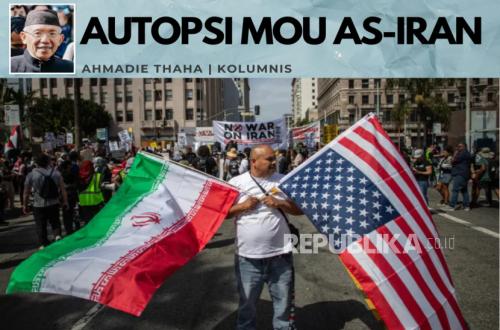
In old Middle Eastern tales, a carpet merchant could sell the same item to two different buyers with two different stories, and of course, at different prices. To the first buyer, he explained the intricacy of the thread weaving. To the second, he recounted the long journey of the camel that carried the carpet from the desert. The carpet was the same; only the accompanying story changed.
I recalled that tale when reading two versions of the Memorandum of Understanding between the United States and Iran. The first version circulated from Tehran via Iranian state media and was published by ABC. The second version was released by Washington and published by CNN as the official text. Interestingly, both parties spoke about the same document, yet each produced a different impression.
Iran seemed to want to show that America, the world’s greatest superpower, had finally come bearing concessions. Meanwhile, America appeared to want to demonstrate that all those concessions remained under the control of procedures they held. The difference was not glaring at first glance. The fourteen points of the MoU presented to the media were nearly identical. The ceasefire remained. The Strait of Hormuz remained open. Sanctions were still discussed. The nuclear programme remained the main agenda.
However, like a house sale contract, the fate of a building is often determined not by the title of the agreement, but by the small sentences written in smaller print at the bottom of the page. Therefore, the interesting question is no longer who won the war—The New York Times convicted the US of losing. The more interesting question is: who succeeded in embedding their interests into the sentence structure of the MoU?
The point regarding respect for each country’s sovereignty is the first example. Before the war began, Trump spoke as if regime change in Tehran was a reasonable objective. His rhetoric was harsh, his language full of optimism. Yet in the document now circulating, both countries actually pledge to respect each other’s sovereignty and not interfere in each other’s domestic affairs. In political language, that is not merely a change of sentence; it is a change of objective.
The section on the Strait of Hormuz reveals an even more subtle play of language. Iran’s version highlights that the reopening of the shipping lane is carried out through arrangements involving Iran. Washington’s version adds that commercial vessels will transit without levies for sixty days. The two sentences may appear complementary, but the emphasis differs. Iran wants the public to see it as the manager of the world’s energy gateway. America wants the public to see that freedom of navigation has been successfully restored.
A more significant difference emerges on the nuclear issue. In the version previously circulated by the Iranian side, public attention was drawn to the statement that Iran would not build nuclear weapons. That sentence sounded familiar because for years it had been Tehran’s official position. However, the text released by Washington included a far more specific element: the mechanism for handling enriched uranium and oversight by the International Atomic Energy Agency, or IAEA. The sentence about uranium dilution may sound technical and boring to the lay reader, and it has been discussed by both countries for years. Yet it is precisely there that the political heart of this document beats.
Wars in the 20th century were often understood as struggles for territory, ports, or oil fields. But 21st-century wars seem more often to display a struggle over procedures. What is contested is no longer hills and valleys, but the right to conduct inspections, the authority to carry out verification, the ability to regulate oversight mechanisms, and control over the implementation schedule of agreements. In the world of modern diplomacy, these seemingly administrative matters are often far more decisive than thunderous victory speeches on television.
From this angle, it is understandable why Washington appears to be trying to shift the battlefield from the war zone to a procedural space full of conditions, deadlines, and verification mechanisms. The same pattern is visible in almost all articles concerning sanctions and Iranian assets. At a glance, Iran gained many things: access to financial channels, easing of oil exports, release of frozen assets, and a reconstruction plan worth hundreds of billions of dollars. However, almost every promise is coupled with the same phrase: based on the final agreement, through a mutually agreed mechanism, or according to a schedule to be negotiated. In other words, Iran obtained the prospect of profit, while America sought to retain the levers of control.