
Automatic bank accounts at 17: here is the government's plan
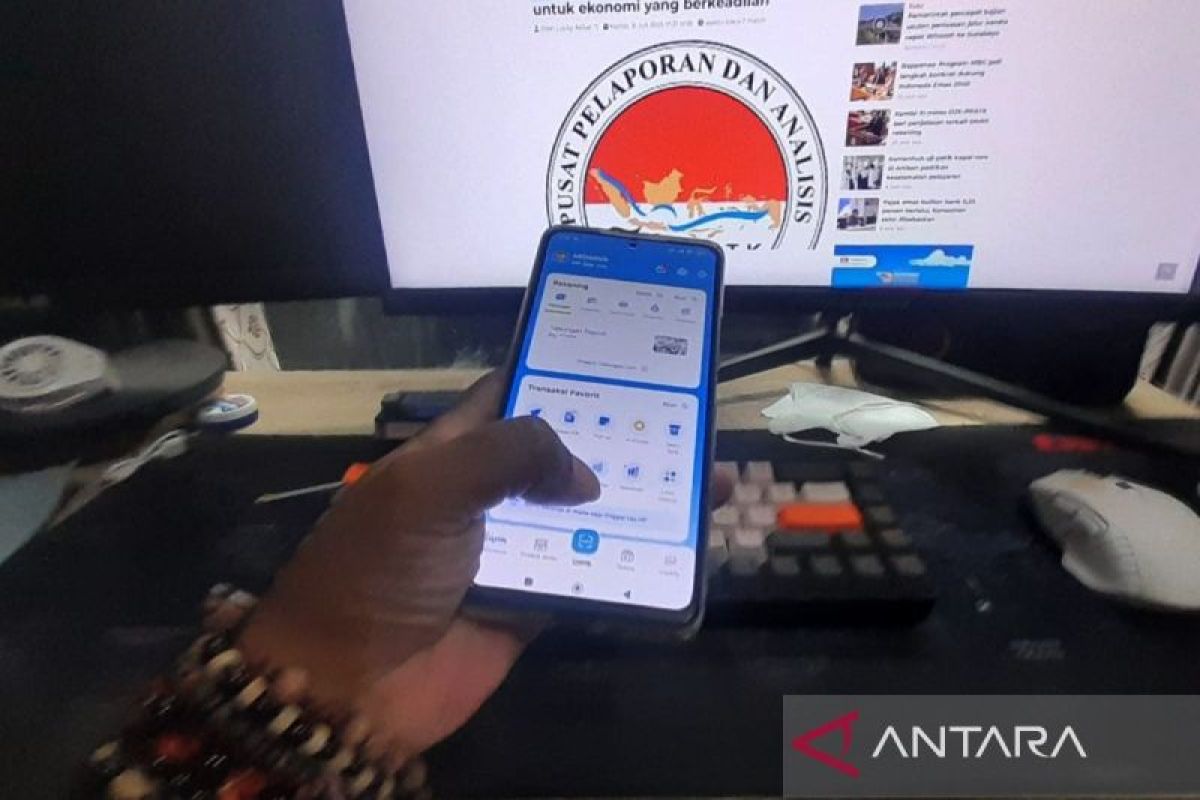
Jakarta (ANTARA) - Reaching the age of 17 is usually the phase when a person begins to acquire a population identity card and becomes more independent in managing their needs. The government is now preparing a policy so that Indonesian citizens (WNI) aged 17 who hold an ID card (KTP) will automatically receive a bank account.
The plan was announced by the government on Wednesday (9/9) and forms part of efforts to broaden financial inclusion. However, the implementation mechanism is still being drawn up, so the policy is not yet fully in force.
So, what is the account for and how is it planned to be used?
Account intended for citizens aged 17
Coordinating Minister for Economic Affairs Airlangga Hartarto said the government is preparing accounts for Indonesian citizens aged 17 who hold a KTP. Population data will be synchronised to support the account opening process.
The plan involves PT Bank Rakyat Indonesia (Persero) Tbk (BRI) and PT Bank Syariah Indonesia Tbk (BSI). BRI will handle account openings across various regions of Indonesia, while BSI will specifically serve Aceh.
Nevertheless, the government has not yet detailed the account opening mechanism, including the activation process and its implementation in the field. Danantara BPI CEO Rosan Roeslani said the technical aspects of the programme are still being designed with the relevant parties.
Boosting financial inclusion
One of the main aims of the policy is to improve public financial inclusion. As more citizens hold accounts at formal financial institutions, public access to banking services is expected to widen.
Efforts to expand account ownership have in fact been undertaken by the government and the Financial Services Authority (OJK) through various programmes. One of these is the One Student One Account programme (KEJAR), which aims to build a savings habit from school age.
OJK data for 2025 shows that around 88 per cent of Indonesian students, or 58.32 million students, already have savings accounts through the KEJAR programme, with total savings of more than Rp34 trillion.
The accounts are also designed to support the distribution of various government programmes. Airlangga said the accounts will be connected to government systems and databases so they can be used for various payment needs and assistance disbursement.
With broader account ownership, the government hopes assistance can be distributed more directly and efficiently to programme beneficiaries.
An initial balance of Rp50,000
Under the government’s plan, the new accounts will receive an initial balance of Rp50,000.
The funds are said to come from the State Budget (APBN). The government is also preparing regulations to ensure the initial balance is not reduced by administrative fees or other charges from banks.
However, the amount and mechanism for providing the balance remain part of technical discussions involving the government, Bank Indonesia (BI) and the OJK.
Can be used for saving and transactions
Beyond supporting government programmes, the accounts can essentially be used as a means of storing money and building a savings habit.
The government is also preparing a payment system based on the Quick Response Code Indonesian Standard (QRIS) that can be used free of certain charges under the scheme being designed. This is expected to broaden digital transaction usage while supporting people’s economic activity.
Account ownership from the age of 17 can also give young people the opportunity to learn to manage income, expenditure, savings and transactions more responsibly.
The plan is not only aimed at citizens who have never held an account. The government is also preparing a mechanism to consolidate the data of citizens who already have accounts.
Airlangga said accounts already held by the public will be reviewed and consolidated within the system the government is preparing. It therefore remains unclear whether citizens who already have an account will receive a new one or whether existing accounts will be integrated.
When will it take effect?
As of 10 September 2026, the government is still preparing the regulations and technical mechanisms for the programme. It targets the programme to begin before the end of 2026, but an exact implementation date has not been announced.
The public therefore does not yet need to visit a bank to open a special account under this policy. Information on the registration, activation and account distribution mechanisms, along with other provisions, still awaits official rules from the government and the banking regulators.
Ultimately, the plan to automatically provide accounts for Indonesian citizens turning 17 is aimed not merely at issuing new accounts, but also at widening public access to formal financial services. The accounts are expected to serve as a means of saving, conducting digital transactions and supporting more integrated distribution of government programmes.