
Automated Water and Feed Technology Boosts Catfish Farmer Productivity in West Bandung
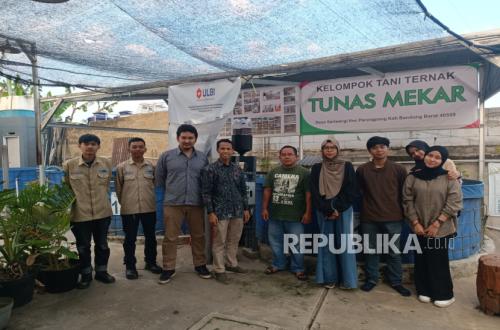
Universitas Logistik dan Bisnis Internasional (ULBI) and Politeknik Manufaktur Bandung are promoting the modernisation of freshwater aquaculture through a community service programme titled ‘Optimisation of Catfish Pond Management through the Utilisation of Water and Feed Automation Technology for Catfish Farmers in Bandung Barat’. The programme is a collaboration between ULBI lecturers Cahyo Prianto and Rukmi Juwita, alongside Politeknik Manufaktur Bandung lecturer M. Harry Khomas Saputra.
The initiative partners with the Tunas Mekar Farmers Group located in Sariwangi Village, Parongpong District, West Bandung Regency. It received funding from the Directorate of Research and Community Service, Directorate General of Research and Development, Ministry of Higher Education, Science, and Technology of the Republic of Indonesia for the year 2026.
Catfish is a leading fishery commodity due to its short production cycle, adaptability, and provision of affordable animal protein. For household and small-to-medium enterprises, catfish farming serves as a vital source of income, job creation, and local economic stimulus. However, the partner group’s pond management has been predominantly conventional and manual, particularly in water quality control and feeding. This system leads to suboptimal supervision and a high mortality rate of up to 20% just before harvest.
As a solution, the team developed and implemented two automation devices: the Automatic Water Exchange System (AWES) and the Automatic Feeding System (AFS). AWES automatically replaces pond water based on readings from water level, temperature, and pH sensors, maintaining ideal water quality for catfish growth. AFS dispenses feed automatically by calculating the biomass and age of the fish, ensuring precise and efficient feeding. Both devices are integrated into a control dashboard that allows farmers to easily monitor pond conditions and manage operations.
The programme runs from June to December 2026, starting with socialisation, training on the use and application of the technology, and ongoing mentoring. In June 2026, 3,000 catfish fry were stocked as the initial cultivation phase. Implementation of the devices has been completed with encouraging results, showing a significant reduction in fish mortality and an increase in harvest yields.
Team leader Cahyo Prianto stated that the application of automation technology aims not only to increase harvests but also to introduce a data-driven, real-time monitoring approach to small-scale farmers. The technology is expected to help farmers consistently maintain water quality and feeding precision, thereby boosting productivity and minimising fish deaths.
The AWES–AFS innovation is considered an engineering solution that directly contributes to increased fishery food production. The programme also supports the achievement of Sustainable Development Goals, particularly in reducing poverty and hunger. By stabilising catfish production, the community is expected to gain better access to healthy, sufficient, and balanced animal protein sources. Improved production efficiency also has the potential to strengthen the local food system’s sustainability in West Bandung.
Politeknik Manufaktur Bandung lecturer M. Harry Khomas Saputra noted that integrating sensors, automation, and a monitoring dashboard is a crucial step in transforming catfish farming from traditional methods to a technology-based enterprise. With this system, farmers no longer rely solely on manual observation but can make decisions based on measurable pond condition indicators.
The collaborative programme between ULBI and Politeknik Manufaktur Bandung is expected to become a model for appropriate technology application that can be replicated by other catfish farming groups across various regions. The implementation of AWES and AFS opens opportunities for a more modern, efficient, and sustainable aquaculture ecosystem while strengthening national food security through technology-based community empowerment.