
Author Explains 'Memburu Muhammad': This Work Was Born from Good Intentions
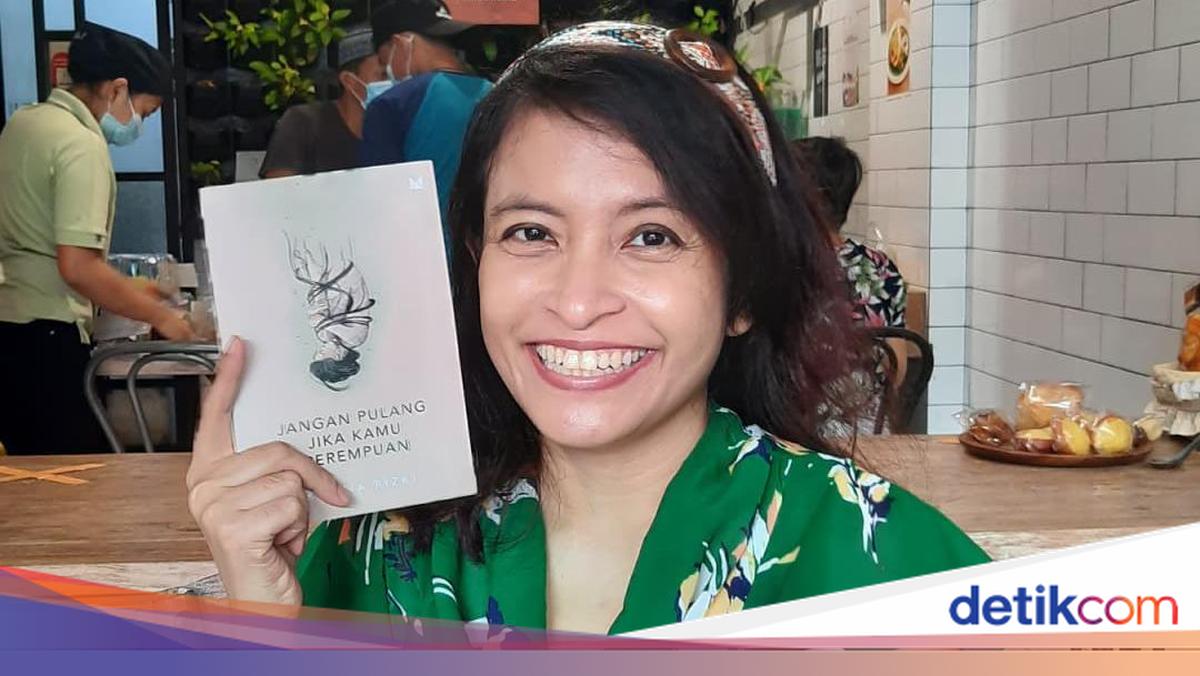
Feby Indirani, the author of the books ‘Membuit Muhammad’ and ‘Bukan Perawan Maria’—which have been contested by several parties—has spoken out regarding her two works. She stated that the works of fiction she created were born from good intentions.
Feby initially explained her background, having grown up as a Muslim. She noted that her works are deeply rooted in tradition, the richness of Islamic heritage, and the diversity of interpretations within the Islamic world.
“I was born and raised as a Muslim. My writing journey is deeply rooted in tradition, the richness of heritage, and the diversity of interpretations within the Islamic world. Since childhood, I have been accustomed to reading and hearing stories of wisdom that portray the world, humanity, and truth in a wise, reflective, and humorous manner, without being black and white,” Feby said when contacted on Monday (28/9/2026).
She added that both her works, which have recently been questioned and are being investigated by the police, stem from her daily experiences and observations as a Muslim. The books, she said, are an effort to reflect the complexities of religious practice.
“All the stories in ‘Bukan Perawan Maria’ (BPM) and ‘Memburu Muhammad’ (MM) are sourced from experiences and observations of the daily lives of Muslims in Indonesia. Both books are an effort to reflect the colours, dynamics, and complexities of our daily religious practices,” she said.
Consequently, she emphasised that literary works cannot be judged solely by reading news headlines or opinion articles. “As literary works, fiction operates through literary devices: it relies on the perspectives of fictional characters, symbols, and metaphors. Literary texts cannot be judged by reading news headlines or opinion articles,” she added.
She then discussed her book, ‘Memburu Muhammad’. Feby explained that the book uses the perspective of a fictional character, Abu Jahal, who was the primary enemy of the Prophet Muhammad but secretly acknowledged the Prophet’s greatness.
“For example, in the short story ‘Memburu Muhammad’—as with other stories in both books—I use the perspective of a fictional character, Abu Jahal, the main enemy of the Prophet Muhammad SAW. As an enemy, he would certainly be reluctant to acknowledge the Prophet’s prophethood, but he could not secretly deny his personal greatness. One of the highest measures of a person’s nobility is when even their enemy acknowledges their greatness. In this story, Abu Jahal is astonished to see so many people bearing the name Muhammad, yet failing to emulate his character,” she explained.
“What is truly being ‘hunted’ in this context are the noble qualities of the Prophet—aligned with the meaning of the word ‘memburu’ (to hunt) in the KBBI (Indonesian Dictionary), which means to strive hard to obtain or achieve something,” she continued.
She stated that her work is placed within the corridor of ‘dakwah literature’ and has even been discussed in various university forums. The impact of both her books, she noted, has been read normally by thousands of Muslims.
“Academically, studies of this book even place it within the corridor of dakwah literature (as noted in research from the STID Al-Hadid scientific journal). These works have also been discussed in various university forums, including UIN Syarif Hidayatullah Jakarta. The journey of both books has been long and they have been read normally by thousands of Muslims,” she said.
She mentioned that ‘Bukan Perawan Maria’ (BPM) was first published in 2017, where the then-Minister of Religious Affairs, Lukman Hakim Saifuddin, attended to deliver a cultural speech at its launch. The book was translated and published in Italy in 2019, and later re-published in Indonesia by Bentang Pustaka, part of the Mizan Group, a pioneer in Islamic publishing since the 1980s.
Meanwhile, the book ‘Memburu Muhammad’ was published in 2020 with a foreword by Gus Nadirsyah Hosen. During its online launch during the pandemic, the book was discussed in depth by Gus Ulil Abshar Abdalla, the Chairman of PBNU.
“I write from within the Muslim community itself. These works were born with good intentions, a creative effort to invite us to reflect, dialogue, and examine ourselves. Judging literary works solely from titles or snippets of text on social media, framed in an unbalanced manner, actually distances the mission of literature as a part of education and the welfare of the community,” she concluded.
As is known, social media has been stirred by the emergence of two books alleged to commit blasphemy against religion. The Jakarta Metropolitan Police (Polda Metro Jaya) will investigate the matter.
Both books were questioned by netizens because they are considered to contain elements of religious blasphemy. The two books in question are titled ‘Buku Bukan Perawan Maria’ and ‘Memburu Muhammad’.
In posts circulating on social media, the controversial books are narrated as being written by someone described as pro-LGBT. Social media posts also show excerpts of writing from the books that are considered blasphemous to certain religions.
When confirmed regarding this matter, the Head of Public Relations for Polda Metro Jaya, Kombes Budi Hermanto, said that the police had only just received this information. He stated that the books would be investigated by the police.
“This will certainly be investigated, both by the Cyber Directorate if it is indeed in the digital realm, and it will also be handled by the Criminal Investigation Directorate,” said Kombes Budi Hermanto to journalists at Bundaran HI, Central Jakarta, on Thursday (24/9).
Budi Hermanto stated that misleading information that often triggers public disorder is a concern for the police, especially when it involves elements of SARA (ethnicity, religion, race, and inter-group relations).
“We see how there is information that misleads the public, especially regarding ethnicity, religion, and race. This is a shared concern for all of us,” he said.