
Austria Turns Hitler's Birthplace into Police Station Amid Heated Debate
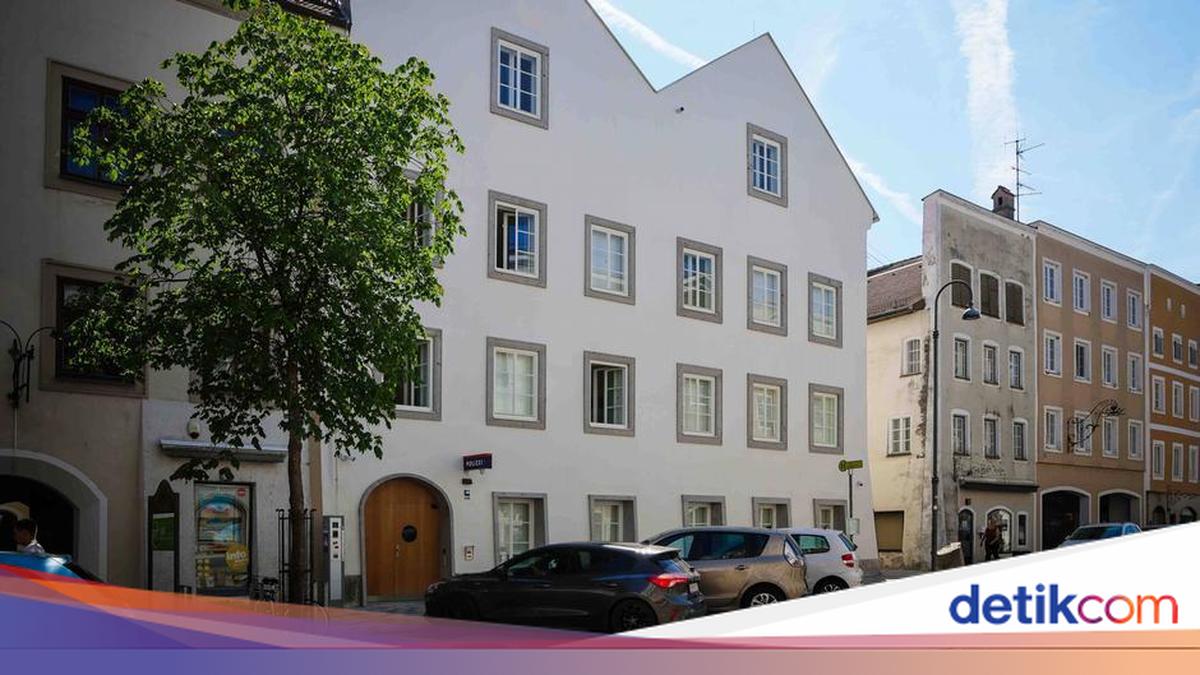
As of Wednesday (22 July), the police in Braunau am Inn, Austria, have a new headquarters.
The local police station and police command are now located at Salzburger Vorstadt number 15. The address would not attract anyone’s attention, were it not for the fact that Adolf Hitler was born there in April 1889.
Hitler, who appointed himself Führer or leader of the German Reich, triggered the Second World War, which killed tens of millions of people. He was also the mastermind behind the Holocaust, the systematic murder of around six million Jews.
Hitler’s parents rented the unit and lived there for several months. The building has a long and complicated history. In 1938, when the Nazi Party, the NSDAP, annexed Austria and incorporated it into the Reich, or German Empire, the NSDAP also took ownership of the building, turning it into a cultural centre steeped in Nazi ideology.
After the war, the building was returned to its original owners. The Austrian government rented it and used it as a library, a school and, most recently, as a workshop for people with disabilities.
Since 2011, Hitler’s birthplace has stood empty. In 2016, the Republic of Austria decided to take ownership of the building and neutralise it to prevent neo-Nazi groups from turning the site into a place of pilgrimage.
€20 million renovation
The Interior Ministry established a Special Commission for the Historically Appropriate Handling of Adolf Hitler’s Birthplace and tasked it with developing a concept for the further use of the historically significant property. The commission proposed using the building for ‘government social or administrative services’.
Oskar Deutsch, President of the Jewish Community of Vienna and a member of the special commission, explained to DW in 2023: ‘The key point is that this house must not become a pilgrimage site for Nazis.’
Deutsch added that he could in fact imagine other uses. However, he noted ‘that what is being built here is a police station in a democratic state under the rule of law, one of whose tasks is to combat the resurgence of National Socialist ideology’.
Historian Oliver Rathkolb, also a member of the commission, said: ‘As a first option, we unanimously proposed an institution that promotes life-affirming values, such as Volkshilfe (a humanitarian aid organisation). However, that proposal was rejected,’ he explained in writing. The presence of a police station will prevent Hitler admirers from taking selfies in front of the fully renovated building.
To that end, the government carried out a total renovation of the building at a cost of around €20 million (roughly Rp400 billion), including a deliberately simple facade. Braunau residents are divided over the decision.
‘A unique historic opportunity to use the birthplace of the greatest mass murderer in the history of humanity in a sustainable and historically responsible way has been squandered,’ said Eveline Doll, a Braunau resident and spokesperson for a local citizens’ initiative, Diskurs Hitlerhaus, in an interview with DW.
‘Of course the town is not responsible for this, but around the world, Braunau is associated with the fact that the greatest mass murderer in the history of humanity was born here,’ she said.
According to a 2023 survey, only six per cent of respondents agreed with the plan.
The police’s dark history in the Nazi era
‘For more than 25 years, there have been plenty of ideas and initiatives to use this building as a gathering place for peace, freedom, democracy and tolerance. All of these messages, especially now, are once again extremely important for the future,’ Doll explained. ‘Yet all these ideas were rejected, and now a police station is being established here — an institution that has itself been the target of criticism in many respects.’
That criticism refers, among other things, to the role of the police during the National Socialist era. After Adolf Hitler appointed Heinrich Himmler as Chief of German Police in 1936, the relationship between the police and the SS (the German security and military organisation) became increasingly integrated. The Gestapo in particular, the Nazi secret police, became the regime’s main instrument of terror for suppressing political opponents and committing Nazi crimes.
Florian Kotanko, Chairman of the Braunau Association for Contemporary History, rejected the comparison with the Nazi era. ‘We live in a democratic state under the rule of law and the police are one of its instruments. As long as the police can be held accountable for any violations committed and police officers can be prosecuted, fundamental distrust of the police as an institution is not appropriate,’ Kotanko told DW.
For decades, Austria has continued to grapple with its dark past with Nazism. In 1938, Hitler annexed the country. The Anschluss, or annexation that united Austria with the German Reich at the time, was greeted with cheers by many Austrians.
During the Nazi era, around 65,000 Austrian Jews were murdered and a further 130,000 were forced to flee. Austria has repeatedly been accused of failing to fully acknowledge its responsibility for the Holocaust.
The right-wing populist Austrian Freedom Party (FPÖ), founded in 1956 by former Nazi members, won the most votes in the 2024 National Council election but failed to form a government.
According to an online survey conducted by the opinion research institute Unique Research for the magazine Pragmaticus in 2025, 39 per cent of Austrians surveyed agreed or tended to agree with the statement ‘it is time to end the discussion of the country’s Nazi past’.
The memorial stone remains
The redesigned facade will not feature an information board. A team of experts from the commission recommended that the memorial stone, which originates from Mauthausen, Austria’s largest concentration camp, and which stands in front of the building, be moved to another location in Braunau. The stone bears the inscription: ‘For peace, freedom and democracy. Never again fascism. Millions of victims remind us.’
However, the municipal government decided to leave the stone where it is.
Coincidentally, the address of Hitler’s last residence in Germany, Prinzregentenplatz 16 in Bogenhausen, Munich, is also a police station. Hitler owned the house until his death. After the end of the Second World War, the building became the property of the State of Bavaria and was used for government offices.
A police station began operating there in 1998. In recent times, the station has begun opening its doors for certain public events, demonstrating that democratic values can be reflected — even in a place with such a dark past.
This article was first published in German. Adapted by Sorta Caroline.
Source: jawawa.id (https://jawawa.id/newsitem/austria-turns-hitlers-birthplace-into-police-station-amid-heated-debate-1784865173)
Originally published by detikcom (https://news.detik.com/dw/d-8588036/heboh-austria-ubah-rumah-kelahiran-hitler-jadi-kantor-polisi), translated from Indonesian