
Australian Expert Finally Discovers Reason Why Indonesia is Divided into Two
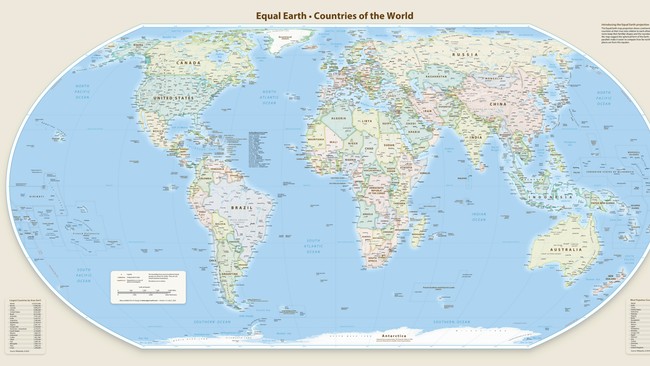
Indonesia possesses a geographical boundary that divides the distribution of fauna into two distinct regions. This boundary is known as the Wallace Line, which stretches from Southeast Asia to Australia and has served as a reference in biodiversity research for over 160 years.
The Wallace Line was mapped by Alfred Russel Wallace in 1863. During his research travels, Wallace traversed numerous regions, ranging from Indonesia, Singapore, and the Philippines to Papua New Guinea.
Wallace realised there were differences in species across each region. However, this became the beginning of a mystery that remained unsolved for hundreds of years.
The mystery lies in the fact that Asian species are able to cross the Wallace Line to the other side, whereas the reverse is not true for species originating from Australia.
According to researchers, this phenomenon occurred due to extreme climate change caused by tectonic activity 35 million years ago. This activity caused Australia to separate from Antarctica and collide with Asia, an event that ultimately gave birth to the Indonesian archipelago.
To explain the climatic effects of this collision, researchers utilised computer models. Using these models, they accounted for dispersal capabilities, ecological preferences, and evolutionary relationships across more than 20,000 species on both sides of the Wallace Line.
“When Australia moved away from Antarctica, it opened up deep-sea areas surrounding Antarctica that now host the Antarctic Circumpolar Current (ACC),” said the study’s lead author and evolutionary biologist at the Australian National University, Alex Skeels, as quoted from Live Science.
The ACC in Antarctica is the world’s largest ocean current, playing a vital role in regulating the Earth’s climate.
The model revealed that these climatic changes did not affect all species equally. For instance, the climate in the Southeast Asian Peninsula and Indonesia became warmer and wetter, whereas Australia experienced colder and drier seasons.
Ultimately, these seasons influenced the adaptability of living creatures in those regions. Species in Asia were able to adapt to Indonesia and cross the Wallace Line into the Australian zone, but the same did not apply to species living on the Australian continent.