
Australian Ambassador Meets Deputy Agriculture Minister to Explore Fertiliser Imports from Indonesia
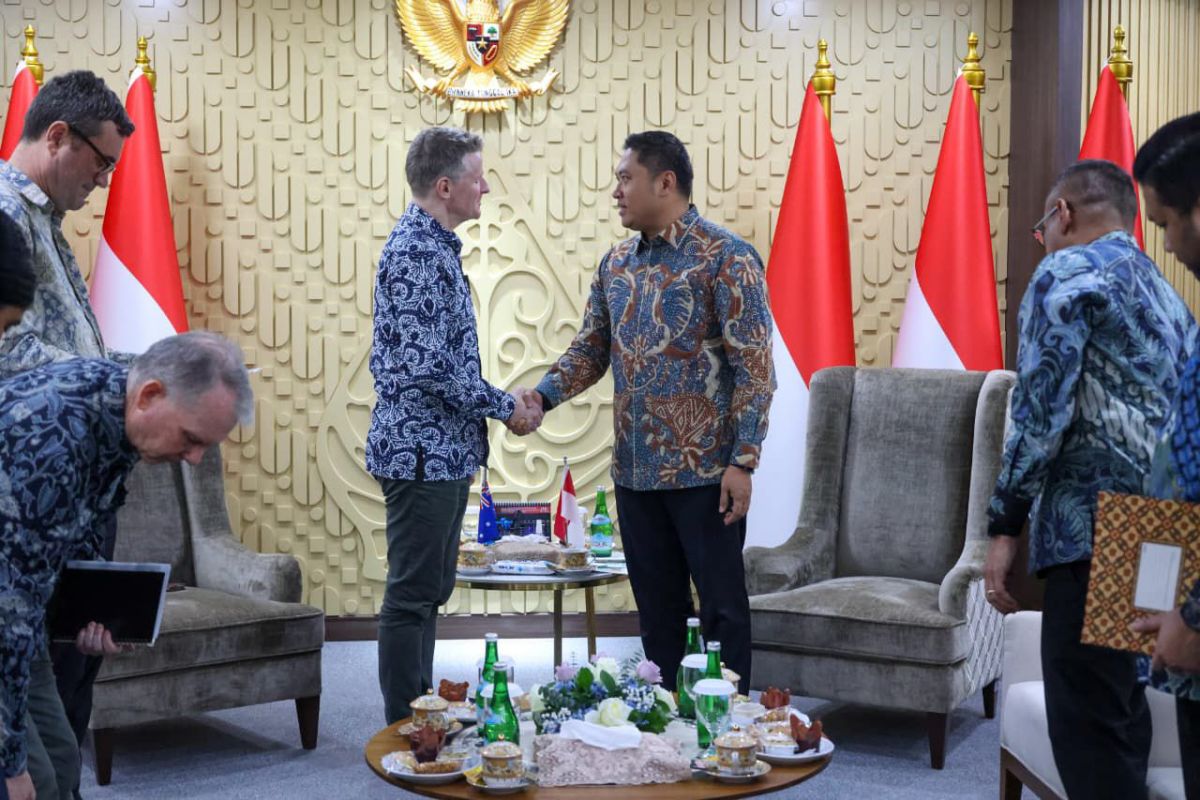
Jakarta (ANTARA) - The Australian Ambassador to Indonesia, Roderick Brazier, met with the Deputy Minister of Agriculture of the Republic of Indonesia, Sudaryono, to explore opportunities for importing fertiliser from Indonesia amid rising needs due to global geopolitical turbulence.
“So I received the Australian Ambassador to Indonesia who is in Jakarta. We discussed many things, particularly agricultural matters and specifically regarding fertiliser,” said the Deputy Minister in a statement in Jakarta on Thursday.
Sudaryono stated that his side had received a visit from the Australian Ambassador to Indonesia at the Ministry of Agriculture’s office on Wednesday (15/4), to discuss cooperation opportunities in the agricultural sector, particularly related to importing urea fertiliser from Indonesia.
The meeting took place amid global dynamics resulting from disruptions in the world’s fertiliser supply chain. According to him, the global geopolitical situation, including the impact of the closure of the Strait of Hormuz, has affected the distribution of fertiliser worldwide.
“With this disruption, many countries need urea. Indonesia has an advantage because it can produce urea from domestic natural gas, so we do not rely on imports for that commodity,” stated the Deputy Minister.
The national urea fertiliser production capacity managed by PT Pupuk Indonesia (Persero) reaches around 9.36 million tonnes to 9.4 million tonnes per year.
He mentioned that in 2026, urea production is targeted at 7.8 million tonnes, with subsidised needs of 6.3 million tonnes and potential exports of 1.5 million tonnes to secure domestic stocks. This surplus opens up export opportunities to various countries, including Australia.
“The need for fertiliser for Indonesian farmers is a super priority. Only after that is fulfilled can the remaining production be allocated for export,” he emphasised.
According to him, interest in Indonesian urea is not only from Australia but also from several other countries such as India, the Philippines, and Brazil. Nevertheless, the government remains cautious not to promise supplies exceeding the national production capacity.
Sudaryono also explained that trade relations in fertiliser between Indonesia and Australia are reciprocal. Indonesia, on one hand, exports urea, but on the other hand, also imports raw materials such as phosphate, including DAP (Diammonium Phosphate), from Australia.
Furthermore, he assured that the availability of domestic fertiliser, particularly subsidised fertiliser, is in a safe condition. The high uptake of fertiliser by farmers is said to be an indicator of increasing planting activities in various regions.
“If there are farmers who cannot find fertiliser at kiosks, it is more due to distribution that is proceeding quickly. Within 1–2 days, it is usually available again. That means fertiliser is available and sufficient,” he clarified.
In the future, the government also plans to rejuvenate old fertiliser factories to increase national production efficiency and capacity, while maximising export opportunities amid high global demand.